|
Honduras Mini Guide Source: World Travel Guide
Overview
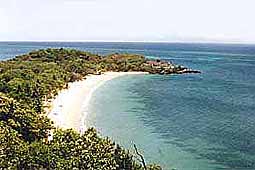
Honduras is a country of lowlands and fertile valleys and, indeed, La Ceiba (a major banana port) even looks to tourism as a future major industry. There are good hotels and beaches, and an international airport to boot. Trujillo itself was once a thriving port, with a fascinating pirate history and superb tropical beaches.
Hurricane Mitch devastated much of the country in 1998 but an international effort quickly rebuilt much of the country's infrastructure. However, the economy is still very weak. Many people live in poverty and crime levels and drug trafficking have soared.
Passport/Visa
|
Passport Required? |
|
British |
Yes |
|
Australian |
Yes |
|
Canadian |
Yes |
|
USA |
Yes |
|
Other EU |
Yes |
|
Visa Required? |
|
British |
No |
|
Australian |
No |
|
Canadian |
No |
|
USA |
No |
|
Other EU |
No |
|
Return Ticket Required? |
|
British |
Yes |
|
Australian |
Yes |
|
Canadian |
Yes |
|
USA |
Yes |
|
Other EU |
Yes |
Passports
Passport valid for three months from date of arrival required by all nationals referred to in the chart above.
Passport Note
Honduras is party to the Central America Border Control Agreement (CA-4). Under the terms of this agreement, tourists may travel within any of the CA-4 countries (Honduras, Nicaragua, El Salvador and Guatemala) for a period of up to 90 days, without completing entry and exit formalities at border immigration checkpoints. This period begins at the first point of entry in to any of the CA-4 countries. Fines are applied for travellers who exceed this 90-day limit, although a request for a 30-day extension can be made before the 90 days limit expires.
Visas
Not required by all nationals referred to in the chart above for stays of up to 90 days.
Note: Nationals not referred to in the chart above are advised to contact the embassy to check visa requirements (see Contact Addresses).
Money
Currency
Lempira (HNL; symbol L) = 100 centavos. Notes are in denominations of L500, 100, 50, 20, 10, 5, 2 and 1. Coins are in denominations of 50, 20, 10, 5, 2 and 1 centavos. A real is one-eighth of a Lempira, and is used colloquially, though there is no such coin.
Currency Exchange
Pounds Sterling cannot normally be exchanged; visitors should therefore take US Dollars, which are easily exchanged in banks, major hotels, airports and bureaux de change. The bureaux de change usually offer a quicker service and better rate than banks.
Credit/Debit Cards and ATMs
American Express, Diners Club, MasterCard and Visa are accepted. Some banks offer cash withdrawal with Visa or Mastercard.
Traveller's Cheques
To avoid additional exchange rate charges, travellers are advised to take traveller's cheques in US Dollars.
Banking Hours
Mon-Fri 0900-1600 (some banks open until 1800). Some branches open Sat 0900-1200.
Exchange Rate Indicators
|
Date |
Jul 08 |
|
£1.00= |
L37.83 |
|
$1.00= |
L19.05 |
|
€1.00= |
L30.24 |
Health
Vaccinations
|
|
Special Precautions |
|
Diphtheria |
Sometimes |
|
Hepatitis A |
Yes |
|
Malaria |
Sometimes* |
|
Rabies |
Sometimes |
|
Tetanus |
Yes |
|
Typhoid |
Yes |
|
Yellow Fever |
No** |
|
Inoculation regulations can change at short notice. Please take medical advice in the case of doubt. Where 'Sometimes' appears in the table above, precautions may be required, depending on the season and region visited. |
* Malaria risk is a variable risk throughout the year in 80% of the municipalities, especially in the rural areas such as Roatán and the other Bay Islands.
* *A yellow fever vaccination certificate is required from all travellers arriving from areas in the endemic zone.
Food and Drink
All water should be regarded as being potentially contaminated. Water used for drinking, brushing teeth or making ice should first be boiled or otherwise sterilised. Milk is unpasteurised in rural areas and should be boiled. Powdered or tinned milk is available and is advised. Avoid dairy products that are likely to have been made from unboiled milk. Only eat well-cooked meat and fish. Vegetables should be cooked and fruit peeled.
Other Risks
Dengue fever and American trypanosomiasis (Chagas disease) may occur. Hepatitis B is present. HIV/AIDS is a growing problem.
Health Care
Health insurance is recommended. There are hospitals in Tegucigalpa and all the large towns. Mosquito nets are recommended for coastal areas.
Getting There
Getting There by Air
American Airlines (website: www.aa.com) operates daily flights to Honduras from Miami. There are no direct flights from the UK; connections are generally via the USA.
Approximate Flight Times
From Miami to Tegucigalpa is 2 hours 20 minutes.
Main Airports
Tegucigalpa (TGU) (Toncontín) is 5km (3 miles) southeast of the city. To/from the airport: Taxis and buses are available to the city. Facilities: Bar, restaurant, duty-free shop, bank, car hire, post office and first aid facilities.
There are also international airports at San Pedro Sula (SAP) (La Mesa International Airport), at La Ceiba (LCE) (Golosón) and at Roatán (RTB) (Dr Juan Manuel Galvez).
Departure Tax
US$25 is levied on all passengers aged 12 years of age and over. Exempt are transit passengers leaving within 12 hours.
Getting There by Water
Main ports: Amapala, El Henecan, La Ceiba, Puerto Cortés, and Roatán.
Some ships and vessels have limited passenger accommodation. Cruise liners stop at some ports, most commonly Roatán.
Getting There by Rail
There are no rail services between Honduras and neighbouring countries.
Getting There by Road
Road routes run from El Salvador and Nicaragua via the Pan-American Highway, and from Guatemala on the Western Highway. Visas must be obtained before the journey is undertaken. Border crossings can be fraught with long delays. Areas around the border can be dangerous.
Bus: Ticabus (tel: 220 0579/0590; website: www.ticabus.com) runs international services to all Central American capitals, but these comfortable coaches are often booked days in advance.
Climate
The climate is tropical with cooler, more temperate weather in the mountains. The north coast is very hot with rain throughout the year, and though the offshore breezes temper the climate, the sun is very strong. The dry season is from November to April and the wet season runs from May to October.
Required Clothing
Lightweight cottons and linens; warmer clothes are recommended between November and February and in the mountains. Waterproofs are needed for the wet season.
|