|
|
 |
|
|
Yellowstone Pack Trips
Montana
USA
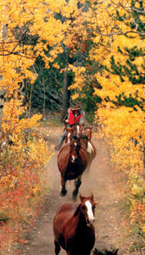
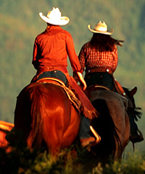
A true horseback riding
adventure and fishing vacation into the backcountry of Yellowstone National
Park. This is a unique vacation experience, whether you are an educationally
oriented family, a fisherman looking for a remote trout fishing experience, or
if you are just looking to get away from the hustle and bustle of ordinary life
while enjoying the wilderness of Yellowstone, we can accommodate you.
We provide professionally guided and accredited horseback trips inside the
boundaries of Yellowstone National Park - all starting and venturing into
different corners of the park. The gentle horses and mules will carry both you
and your belongings to comfortable camps surrounded by the pristine scenery of
our favorite National Park. Well trained guides will prepare delicious meals,
see to your comforts, and create a cozy camp atmosphere.
We invite you to come join us on your next vacation and experience Yellowstone
National Park on horseback!
2009 Pack Trips
Spring Flora & Fauna: Black Butte Trail - 3 Days
Sportsman's Lake - 3 Days
Slough Creek - 4 Days
Washburn Expedition Yellowstone Lake - 5 Days
Mirror Plateau - 5 Days
Fishing on the Bechler River - 5 Days
Hoodoo Basin - 5 Days
Slough Creek - 4 Days
Thorofare River - 7 Days
Bechler River - Photography - 5 Days
Fan Creek - Photography - 3 Days
|
Meeting:
|
at the Trailhead of each trip
|
|
Airport:
|
BozemanMT or Jackson WY
|
|
Transfer:
|
Best to rent a car and drive to trailhead
|
|
Riders:
|
Min
4 riders
Max
8 riders
|
|
Trip Rating
|
|
|
|
Rates and Dates for 2010
Rates include:
Fully guided trips, sleeping bag, tent, sleeping pad, all meals during riding tour
| A | 2010 | 5 day wilderness pack trips | 5d / 4n | $1750 |
| B | 2010 | 7 day wilderness pack trips | 7d / 6n | $2450 |
| C | 2010 | 4 day wilderness pack trips | 4d / 3n | $1400 |
| D | 2010 | 3 day wilderness pack trips | 3d / 2n | $1050 |
Minimum Deposit:
~$0.50
per person
Rates Note:
Each trip has a 50% deposit requirement
Transfer Option:
|
2010
|
Transfers are not available - drive to trailhead on Day 1
|
Tour Dates
Check here for details and availability
|
| D |
2010
|
07/01
- 07/03
|
3d / 2n
|
3 day wilderness pack trips
|
4
/8
|
Reserve
|
| C |
2010
|
07/06
- 07/09
|
4d / 3n
|
4 day wilderness pack trips
|
4
/8
|
Reserve
|
| C |
2010
|
07/13
- 07/16
|
4d / 3n
|
4 day wilderness pack trips
|
4
/8
|
Reserve
|
| D |
2010
|
07/20
- 07/22
|
3d / 2n
|
3 day wilderness pack trips
|
4
/8
|
Reserve
|
| A |
2010
|
07/27
- 07/31
|
5d / 4n
|
5 day wilderness pack trips
|
4
/8
|
Reserve
|
| A |
2010
|
08/03
- 08/07
|
5d / 4n
|
5 day wilderness pack trips
|
4
/8
|
Reserve
|
| A |
2010
|
08/10
- 08/14
|
5d / 4n
|
5 day wilderness pack trips
|
4
/8
|
Reserve
|
| A |
2010
|
08/17
- 08/21
|
5d / 4n
|
5 day wilderness pack trips
|
4
/8
|
Reserve
|
| C |
2010
|
08/24
- 08/27
|
4d / 3n
|
4 day wilderness pack trips
|
4
/8
|
Reserve
|
| B |
2010
|
09/06
- 09/12
|
7d / 6n
|
7 day wilderness pack trips
|
4
/8
|
Reserve
|
| A |
2010
|
09/14
- 09/18
|
5d / 4n
|
5 day wilderness pack trips
|
4
/8
|
Reserve
|
|
|
Rates do not include:
Night before or after the trip (often necessary). Gratuities (15% recommended), transfers
Sample 5-day itinerary
Day 1: Guests arrive and are greeted. Horse and mules have been secured
in an area away from vehicle and people traffic and wait patiently. Then we
divided your gear into packs to be placed on the pack animals. We then have
a safety talk addressing the risks of the backcountry. Finally the guests
get to observe me handle the horses and explain to them horse safety. They
are introduced to their horses fitted to their horse and saddle, and given a
short personal lesson in horse safety and how to maneuver their animal. They
dismount and eat lunch off to the side while we pack the mules and prepare
to ride out.
On our rides one guide rides in front of the riders, while a second rides
behind them all of whom follow the pack string (6 mules packed with all our
gear, led by me, and strung together).
Upon arrival in camp, the guests dismount with one of the guides who help
them unsaddle their horses in the meadow and the guests then walk up to
camp.
In the mean time, the other two guides unpack and unsaddle the pack stock
and turn the loose. Camp is set up. The guest’s tents and gear were dropped
100 yards away from the cooking area to help in the avoidance of bear
problems.
All guests and guides sleep 100 yards away from the cooking area. All food
and scented materials stays in the cooking area where it is hung from a
“bear pole” high in the air to keep scents and bear attractants out of reach
of the bears and to keep bears away from the guests. Bear problems are rare.
Bears do not like large horse herds, or groups of humans. The hanging of the
food and the clean kept camp help avoid any bear attractants
Dinner is cooked in the core camp area, where the bear pole is and the food
is kept.
Tables and chairs are set up, table cloths and dishes are set, the camp cook
prepares his meals in a clean outdoor kitchen and he has been trained in
food service and cleanliness.
The food has been transported in dry boxes and coolers. Once meals have been
prepared and consumed the guides wash the dishes and discard leftover foods
in a separate garbage sack. The guests are entertained around the fire in
the evening, and finally prepare for bed by brushing their teeth and washing
up in the core camp area to keep all odors in the core camp. Then they go
off to bed and sleep in their tents, which have all been set up in a
generally close proximity.
Day 2: After a great breakfast we clean up camp and head out to
either fish or explore the backcountry. Our lunches are packed and ready to
go and we make it back to camp in time for dinner. Tonight we have a chicken
dinner and again go to bed with full bellies.
Day 3: Today we move camp. It's much like Day One, however we have
breakfast first! We tear down camp, pack it up and head down the trail. We
stop for a scenic lunch along the way and arrive in camp in time to set up
and have dinner. Grilled salmon fills our plates and after the evenings
entertainment our comfortable tents and sleeping bags await us.
Day 4: This day resembles day two only in a new location. We can
fish or explore after breakfast, have lunch out and return to camp in time
for Pepper Steak! If we haven't had one yet, a visit from a ranger is in
order. He comes to inspect camp and visit for awhile. Our last evening in
camp is spent around the campfire and then off to bed.
Day 5: After a quick breakfast, we pack up camp. We load up, move
out and head down the trail towards home. We stop for lunch along the way
and get out in time to go our separate ways.
"An Amazing Adventure Awaits You" - Your vacation on horseback into
Yellowstone National Park will be a memorable trip and one that lasts a
lifetime.
What about children?
Not only do we take them, we love them. But do ask about the rigors of the
trips. Some are tough for little ones and we can help you choose a trip just
right for your family (usually the shorter ones). For those without children
we can couple you on trips with or with out child just check on
availability.
In 2010 we offer a variety of multi-day pack trips for your ultimate
Yellowstone National Park vacation.
The listing below is our schedule for the 2010 season.
Please click the title to get a description of the trip. Please be aware
trips are subject to change based on conditions in the park that require us
to change trails. Please book your trip early.
2010 rates are all $350 per riding day.
2010 Schedule
|
|
07.01.- 07.03.
|
Spring
Flora & Fauna: Black Butte Trail - 3 Days |
|
07.06.- 07.09.
|
Snake River - 4 Days |
|
07.13.- 07.16.
|
Slough
Creek - 4 Days |
|
07.20.- 07.22.
|
Sportsman's Lake - 3 Days |
| 07.27.- 07.31. |
Hoodoo Basin - 5 days
|
|
08.03.- 08.07.
|
Mirror Plateau - 5 Days |
|
08.10.- 08.14.
|
Lamar River - 5 Days |
|
08.17.- 08.21.
|
Bechler
River - 5 Days |
08.24.-08.27.
|
Slough Creek - 4 days
|
|
09.06.- 09.11.
|
Thorofare River - 7 Days |
|
09.14.- 09.18.
|
Bechler
River - Photography - 5 Days |
Spring Flora &
Fauna: Black Butte Trail - 3 Days
One of the best times for photo opportunities in Yellowstone National Park
is springtime. Come to Yellowstone in the spring for a photographer’s paradise.
We offer a special 3 day trip in Black Butte geared for photographers looking
for that perfect shot.
In the spring Yellowstone National Park explodes with a rainbow of colored wild
flowers: Indian paintbrush, sulfur paintbrush, yellow monkey-flower, Lewis’
monkey-flower, elephant’s head, shooting star, marsh marigold and blue penstemon
to name a few. Colors in Yellowstone are at their peak in early July. Besides
spectacular flowers, you will also see spring animals like mule deer, moose,
American bison, bighorn sheep, elk and others. The sky will be painted with
spectacular sunrises and sunsets. See why this is called Big Sky country.
Ride around the last of the drifted snow to the top of Bighorn Mountain carpeted
in a profusion of flowers and gentle green grasses. Behold the majestic splendor
of the Madison, Absaroka and Gallatin Ranges from 9000 feet, or relax in camp
and capture streamside microcosms of unique plants such as a variety of grasses
and ferns, and smaller animals like raccoons, river otters, shrews and others.
Yellowstone National Park hosts as many as 200 species of birds including bald
eagles, Peregrine falcons, and a plethora of ducks varieties.
This trip offers many choices for catching that perfect wilderness shot whatever
your interests may be.
-------------------
back to Top
--------------------------
Sportsman's Lake - 3 Days
Join us for your vacation on a three day family oriented trip by horseback to
Sportsman’s Lake in Yellowstone National Park, where a hungry host of captive
West Slope Cutthroat trout await family fishing.
We will ride twelve miles into the camp where we will stay the remainder of the
time. Guests can fish and play at their leisure in the family oriented camp
site. There are places for kids to play including the ranger cabin porch to
explore. There is a wide open meadow and the woods and rocks in nature’s play
ground.
Or, if you desire, day rides out of camp will be possible to see local points of
interest like Electric Pass with its spectacular view from 9000 feet. The more
adventurous can head out to the Yellowstone National Park boundary on forgotten
trails near Mol Heron Creek.
Wildlife is always plentiful in this area. Sportsman’s Lake is often home to
moose which come out in the early morning or late evening to feed around the
lake. Wolves, bears, mule deer, and elk are known to frequent the area.
We invite you to join us in this family playground and enjoy the backcountry of
Yellowstone in the process.
-------------------
back to Top
--------------------------
Slough Creek - 4 Days
This Yellowstone vacation trip will thrill fisherman and horseback riders alike
with the great fishing and the spectacular scenery of Yellowstone National Park.
For the fisherman, you can ride into camp and spend the next three days fishing
until your heart is content. The cutthroat trout are impressive, averaging 18 –
20 inches, and they are hungry. They can be caught with a variety of different
flies and is a prime dry fly fishery. While cutthroat is the most plentiful
fish, you may also catch rainbow and cutbow trout. The water is slow and clear
at this time of year.
Sough Creek flows out of the Beartooth and Absaroka wilderness and makes its way
into Yellowstone National Park. The creek cuts its way through short steep
canyons and beautiful open meadows plentiful with lush vegetation and American
bison. You may see other wildlife as well. The Slough Creek eventually empties
into the Lamar River.
For the rider we can head up to Bliss Pass to see some of the most extraordinary
scenery as we look over Pebble Creek at 9,000 feet and the Absaroka range in the
distance.
If you are planning a vacation to Yellowstone National Park and love fly fishing
mixed with spectacular views, this trip cannot be missed.
This trip takes us along the South Boundary Trail where we will follow the Snake
River into some beautiful deep bends and some great cutthroat fishing. Here we
stay in one camp site and, with a small group of no more than six. If you are an
avid fly fisherman, this will be the fishing trip of a lifetime and the best
part is traveling thru Yellowstone National Park on horseback.
-------------------
back to Top
--------------------------
Washburn Expedition
Yellowstone Lake - 5 Days
Enjoy your Yellowstone National park vacation by horseback with our trip
entitled “The Washburn Expedition”. The Washburn Expedition is a progressive
travel trip of fifty to sixty miles following the route of General Henry Dana
Washburn as he and several other men “discovered” the Upper Yellowstone and
worked diligently to make it a national park. This trip will both explore the
rugged wilderness of this region and discuss the history that has helped to
shape this area.
A native of Vermont, General Henry Dana Washburn, following the Civil War, was
appointed surveyor general of Montana in 1869. In 1870 he headed the
Washburn-Langford-Doane expedition to find the headwaters of the Yellowstone
River and discover what is now known as Yellowstone National Park.
Joining us for this expedition is special guest Dr. Kim Alan Scott, author of
Yellowstone Denied: The Life of Gustavus Cheney Doane (University of Oklahoma
Press, 2007). Captain Gustavus Cheney Doane was a member of the
Washburn-Langford-Doane expedition.
We will stay along Lake Yellowstone our first night, then move down and ford the
Yellowstone River, each day discussing the trip and trials of the Washburn,
Langford, Doane party. Our last night will be spent on the shores of Heart Lake
discussing the perils of Truman Everts, one of Washburn’s party, who was lost
for 37 days and faced life and death perils. We will also discuss the current
values of the National Park system set in motion by this historic party. Our
information is pulled from the published journals and papers of the members of
this party.
Come follow the trail by of the founders of Yellowstone National Park via
horseback. It will be an educational trip you will never forget.
-------------------
back to Top
--------------------------
Mirror Plateau - 5 Days
For the curious adventurer seeking sights few have traveled to see, this horseback vacation trip is for you. This pack trip will take you to secluded areas of Yellowstone National Park which have limited access. The landscape is pristine with remote thermal areas few have seen. The land is also dotted with old buffalo salt licks leftover from the time when the park service used to ranch buffalo.
This horse pack trip is designed for fun exploration. We are working to schedule a retired ranger to be our guide. Check back here often as we will update the site with further information.
Our trail will start out at Pelican Creek Trailhead, head 12 miles through the bear management area to Astringent Creek, and then onto the Mirror Plateau. Once on the Plateau we will camp at two different sites and explore outward from them each day until we return home down our original trail.
The history up on the Mirror Plateau is fantastic. It was one of the possible hiding places for Chief Joseph when he fled from the army in 1877. There are tipi rings left by them on the rim of the plateau over looking the Lamar Canyon.
When the Park service was raising buffalo to save the almost extinct herd they ran bison up here. The evidence still lies in the form of carved out logs used as salt lick and old trails. There is also evidence of new and historic forest fires that have shaped the landscape in this wild place. You will see all of this and plentiful wildlife including buffalo, grizzly bear, elk, moose, deer, wolves, and coyotes.
If you are looking for an intimate look at wildlife off the beaten path of Yellowstone National Park, this is the adventure for you.
-------------------
back to Top
--------------------------
Fishing on the Bechler River
- 5 Days
Thousands of years ago when the Yellowstone National Park region was a caldera,
after the volcano blew, it began to fill with water collecting from snow melt
and summer rains. Eventually the walls of the old volcano could no longer
withstand the weight of the water and a fissure erupted allowing that water to
rush out. That rushing water came down a canyon we now call the Bechler River
Canyon named for Gustav Bechler who was a topographer who rode with the 1871
Hayden Survey as they verified the findings of the Washburn, Langford F. Doane
expedition of 1870.
The area is acclaimed for wide meadows containing tall grasses and shallow
sloughs with spectacular views of the Teton Mountains to the south, and the
Madison Plateau to the north. To the east is the rim of the mysterious
Pitchstone Plateau, a place with only few sketchy watering holes making travel
across it nearly impossible.
The Bechler region is called the Cascade Corner. Waterfalls drop from the
plateaus into the meadows. The canyon is spectacular, one water fall after
another broken in between by cascades and cataracts. When we ride up the canyon
we will stop and feel the mist from some of the falls and you will have the
opportunity to take some very exciting photos. After this we will ford the river
at a number of places, leading the pack string up to their bellies through the
clear cold waters. The fish here are generally good sized rainbow trout that can
be elusive but once you have one of these rascals hooked, hold on, you’re in for
a fight! We also fish at Mountain Ash Creek, below Union Falls for brook trout.
Bechler is a photographer’s paradise. There is nowhere one can look without
finding something worth capturing on film. Wild flowers, wild life, waterfalls,
horse and people, hot springs or the Grand Tetons, all are right here.
Beside fishing and photography, the Bechler region is filled with swimming holes
for the family or just friends. There are hot springs, warm water falls, and
comfortable pools to swim in. Whether cooling off on a hot summer day or taking
a warming dip on a cool fall day, the water is always inviting.
Join us for great fishing as we camp along the shores of the Bechler River and
pursue 20 – 24 inch rainbow trout. When you get one on the line you know it!
Come fish the still, glassy, deep waters of the Bechler River with the Teton
Mountains in the distance. Experience moose walking through the meadows and
eagles nesting in trees over looking the river. This is a once in a lifetime
wilderness experience. When we’re not fishing, we’ll be finding some of the
hidden warm water treasures of the backcountry of Yellowstone National Park to
swim in and relax.
-------------------
back to Top
--------------------------
Fishing on the Lamar River - 5
Days
Join us for your vacation fishing trip by horseback as we explore the Lamar
River Valley. The Lamar River Valley within Yellowstone National Park is the
most common place for watching wolves, bear, and American bison interact. From
where the Lamar River leaves the upper Lamar Canyon and flows to join the
Yellowstone, visitors can see spectacular wild life interactions on a daily
basis from the safety of their cars. However, for the more adventurous, ride
with us up the upper Lamar and see the wildlife in a more intimate setting as
buffalo stroll down the trail 100 yards from our campsite watch bears forage on
the hillsides, and wolves dog trot along in search of prey.
This trip is an adventure fisherman’s paradise with scenery as wild as the
animals. Our trail starts at the Soda Butte Trailhead, where the Lamar River
meets the road. We’ll travel up the Lamar River, ford Cache Creek. Beyond this
we will ford Calfee Creek traveling up to a camp near Miller Creek where you’ll
find the fishing excellent. Fishing the Lamar rivals that of Slough Creek. Big
deep pools abundant with healthy size cutthroat trout are scattered throughout
the river. Actively feeding fish and nice hatches characterize this fishing
trip.
On this trip you will see where one of the hottest and most violent fires of
1988 began which was caused by a lightning strike on Clover Creek across from
where we will fish. At night we will discuss many things from fire ecology to
the effects of the reintroduction of the wolves. We will discuss the rich
history of the Nez Perce Indians who were native to this area. They fled down
the drainage with 600 men, women, and children and twice that many horses. Other
topics of interest are wildlife management, buffalo, brucellosis, the Army
managing the Park and the Folsom Peterson Cook expedition of 1869.
Our rides will be 10 to 12 miles a day which will take us to designated fishing
spots. You are invited to a fishing trip that rivals few and will leave a
lasting impression of Yellowstone National Park on your memories.
Bechler is a photographer’s paradise. There is nowhere one can look without
finding something worth capturing on film. Wild flowers, wild life, waterfalls,
horse and people, hot springs or the Grand Tetons, all are right here.
Beside fishing and photography, the Bechler region is filled with swimming holes
for the family or just friends. There are hot springs, warm water falls, and
comfortable pools to swim in. Whether cooling off on a hot summer day or taking
a warming dip on a cool fall day, the water is always inviting.
Join us for great fishing as we camp along the shores of the Bechler River and
pursue 20 – 24 inch rainbow trout. When you get one on the line you know it!
Come fish the still, glassy, deep waters of the Bechler River with the Teton
Mountains in the distance. Experience moose walking through the meadows and
eagles nesting in trees over looking the river. This is a once in a lifetime
wilderness experience. When we’re not fishing, we’ll be finding some of the
hidden warm water treasures of the backcountry of Yellowstone National Park to
swim in and relax.
-------------------
back to Top
--------------------------
Slough Creek - 4 Days
This Yellowstone vacation trip will thrill fisherman and horseback riders alike
with the great fishing and the spectacular scenery of Yellowstone National Park.
For the fisherman, you can ride into camp and spend the next three days fishing
until your heart is content. The cutthroat trout are impressive, averaging 18 –
20 inches, and they are hungry. They can be caught with a variety of different
flies and is a prime dry fly fishery. While cutthroat is the most plentiful
fish, you may also catch rainbow and cutbow trout. The water is slow and clear
at this time of year.
Sough Creek flows out of the Beartooth and Absaroka wilderness and makes its way
into Yellowstone National Park. The creek cuts its way through short steep
canyons and beautiful open meadows plentiful with lush vegetation and American
bison. You may see other wildlife as well. The Slough Creek eventually empties
into the Lamar River.
For the rider we can head up to Bliss Pass to see some of the most extraordinary
scenery as we look over Pebble Creek at 9,000 feet and the Absaroka range in the
distance.
If you are planning a vacation to Yellowstone National Park and love fly fishing
mixed with spectacular views, this trip cannot be missed.
This trip takes us along the South Boundary Trail where we will follow the Snake
River into some beautiful deep bends and some great cutthroat fishing. Here we
stay in one camp site and, with a small group of no more than six. If you are an
avid fly fisherman, this will be the fishing trip of a lifetime and the best
part is traveling thru Yellowstone National Park on horseback.
-------------------
back to Top
--------------------------
Thorofare River - 7 Days
Experience your horseback vacation in Yellowstone National Park’s most secluded
and beautiful landscape first hand. Thirty-three miles from any road in any
direction, this is one of the most remote locations in the lower 48 states.
Come with us as we follow the trails of fur traders and trappers who traveled
north and south through this area between 1806 and the 1840s. Sit before our
campfire and learn the stories of mountain men who have passed through this area
like Jim Bridger and Osborne Russell. Hear the stories of rangers capturing
poachers who tried to take advantage of these remote places.
This trip is a progressive travel trip where we will move every day and see new
scenery and new places. Our gentle horses will cover some miles as we wind along
the Yellowstone Lake, then follow the Upper Yellowstone River where few people
go. We’ll ride below the Trident, along the Thorofare River or at least to its
confluence with the Yellowstone River. It will be some of the most amazing
scenery you will ever see in your life. For the photography enthusiast, bring
your camera. We will ride an average of 12 miles a day and cover close to 70
miles by the end of the trip.
And although this trip isn’t a designated trout fly fishing trip, bring your fly
rod along. There will be places every evening to fish, and the resident
Yellowstone Cutthroat here, though small in numbers, are not small in size.
You will have the opportunity to see abundant wildlife. While guiding trips in
the area I have seen grizzly bears, gray wolves, moose, elk, mule deer, bison
and black bear.
If you are ready to take an amazing trip into some of the most remote landscape
in the United States or if you are interested in finding out more information, I
encourage you to drop us an email or call. We will be happy to assist you with
your questions and help get you started on your own amazing adventure.
This is a once in a lifetime wilderness experience. When we’re not fishing,
we’ll be finding some of the hidden warm water treasures of the backcountry of
Yellowstone National Park to swim in and relax.
-------------------
back to Top
--------------------------
Hoodoo Basin - 5 Days
On this vacation by horseback, we will explore a remote and often forgotten part
of Yellowstone National Park. Retired park ranger John Lounsbury will join us in
our exploration of the Lamar River Canyon. The canyon is home to wolves, bear,
and buffalo. Our destination will be the base of Parker Peak where we’ll explore
the Hoodoo Basin with its wonderful wind weathered formations and haunting
solitude. This is a progressive trip that will take us to Yellowstone’s eastern
boundary deep in the Absaroka Range.
The Hoodoo Basin lies at the head of the Lamar River within the farthest reaches
of the Upper Lamar region below Parker Peak. A Hoodoo is an eerie looking wind
eroded geological feature cut into erodible rock.
Our journey will begin at the Soda Butte trailhead. From here we will head into
the Lamar River Canyon. We will cross Cache Creek and the Calfee Creek before
turning up Miller Creek to its head waters. From here we will head up the
switchback trail toward Parker Peak before dropping down into the Upper Lamar
region below Hoodoo Peak where the wildlife is abundant. Elk, deer, moose and
buffalo all roam within the canyon. There are abundant predators as well:
wolves, grizzly bear, and black bear.
This region’s history is rich with Native American tales. We will travel
portions of Chief Joseph’s trail as he fled from the U.S. Army in 1877 trying to
save his people. There are places high within the mountains where local tribes
went to knap flint into knives, spear points, and arrowheads. You can still see
evidence of these places today. Gathered around the evening campfire, we’ll
discuss tales of the Sheep Eater Indians and Chief Joseph’s flight. We will also
discuss how the army tried to protect the fledgling Yellowstone National park,
poachers and their part in the wild life management, as well as fire ecology,
and the Folsom, Peterson, Cook Expedition of 1869.
Join us and become mesmerized by the solitude of Yellowstone’s Hoodoo Basin
-------------------
back to Top
--------------------------
Bechler River - Photography -
5 Days
Thousands of years ago when the Yellowstone National Park region was a caldera,
after the volcano blew, it began to fill with water collecting from snow melt
and summer rains. Eventually the walls of the old volcano could no longer
withstand the weight of the water and a fissure erupted allowing that water to
rush out. That rushing water came down a canyon we now call the Bechler River
Canyon named for Gustav Bechler who was a topographer who rode with the 1871
Hayden Survey as they verified the findings of the Washburn, Langford F. Doane
expedition of 1870.
The area is acclaimed for wide meadows containing tall grasses and shallow
sloughs with spectacular views of the Teton Mountains to the south, and the
Madison Plateau to the north. To the east is the rim of the mysterious
Pitchstone Plateau, a place with only few sketchy watering holes making travel
across it nearly impossible.
The Bechler region is called the Cascade Corner. Waterfalls drop from the
plateaus into the meadows. The canyon is spectacular, one water fall after
another broken in between by cascades and cataracts. When we ride up the canyon
we will stop and feel the mist from some of the falls and you will have the
opportunity to take some very exciting photos. After this we will ford the river
at a number of places, leading the pack string up to their bellies through the
clear cold waters. The fish here are generally good sized rainbow trout that can
be elusive but once you have one of these rascals hooked, hold on, you’re in for
a fight! We also fish at Mountain Ash Creek, below Union Falls for brook trout.
Bechler is a photographer’s paradise. There is nowhere one can look without
finding something worth capturing on film. Wild flowers, wild life, waterfalls,
horse and people, hot springs or the Grand Tetons, all are right here.
Beside fishing and photography, the Bechler region is filled with swimming holes
for the family or just friends. There are hot springs, warm water falls, and
comfortable pools to swim in. Whether cooling off on a hot summer day or taking
a warming dip on a cool fall day, the water is always inviting.
Come to Yellowstone National Park’s Cascade Corner and photograph the
magnificent waterfalls. This time of year is spectacular in Yellowstone National
Park. The brilliant colors of autumn, the bright blue skies and crisp white
clouds create the perfect back drop for photography here in America’s
wonderland. Take time to capture the people, horses, wildlife and scenery. In
the off time, relax in the warm waters of this area to rest your bones and
rejuvenate your soul.
-------------------
back to Top
--------------------------
Fan Creek - Photography - 3 Days
This trip will feature the less traveled season of late summer / early fall in
Yellowstone National Park. The wildlife will be very active and the scenery
breathtaking. Bring your camera! Up here we have seen moose grazing with our
horses, elk crossing the creek below camp and wolves trotting down the trail.
Take time to catch the perfect shot of the aspens in their full golden glory on
a day ride to the high mountain Sportsman’s Lake.
-------------------
back to Top
--------------------------
Meeting:
at the Trailhead of each trip
Airport:
BozemanMT or Jackson WY
Transfer:
Best to rent a car and drive to trailhead
|
Tack:
|
|
Western
|
|
Horses:
|
|
Quarter, Appaloosa, Morgan, Paint, Mule
|
|
Pace:
|
|
Walk and trot over mountain terrain. 3 to 5 hrs of riding each day. Ride can be physically tiring.
|
Walk |
|
|
Level:
|
|
(1
to
2
out of 5) All riding levels
|
|
Age:
|
|
Min
7
|
|
|
Weight:
|
|
Max
250 lbs
|
|
Riders:
|
|
Min
4 riders
|
Max
8 riders
|
|
Can I bring my own livestock?
We do not advise our guests to use their own livestock. Our herd has a definite routine and pecking order, and does not like to be disrupted.
Can I bring my own saddle?
You may bring your own saddle provided it fit’s the horse we have for you to ride. An ill-fitting saddle is very hard on horses who work everyday.
What is the youngest guest you will take?
Age is not our requirement but maturity. All of our guests need to be able to follow directions and have the stamina and strength to steer and command their own horse. Our horses are well trained and it takes very little strength to steer them. I have had five-year-olds who were able to hand their horses and six year olds who were not able. It depends on the child.
How safe are your horses?
These horses have been in the business of carrying guests for quite some time. They are very gentle, and are chosen for this line of work because of their particular gentle temperment. All horses are still to be considered living free thinking animals and must be treated with care and respect for their size, but we do all we can to minimize and trouble between our horses and our guests.
Passport and Visa Requirements:
Valid passport required by all nationals referred to in the chart ; validity varies - for most countries the passport must be valid for at least six months from the date on which the holder enters the. more
Summer:
Average maximum summer temperatures are usually in the 70s (25C) and occasionally in the 80s (30C) in the lower elevations. Nights are cool and temperatures may drop into the 30s and 40s (0-10C). Depending on the elevation, temperatures may even fall into the 20s (-5C) with a light freeze. June can be cool and rainy; July and August tend to be somewhat drier, although afternoon thundershowers and lightning storms are common. During lightning storms get off water or beaches and stay away from ridges, exposed places, and isolated trees. At any time of year, be prepared for sudden changes; unpredictability, more than anything else, characterizes Yellowstone's weather.
Fall Colors
© National Park Service We recommend that you bring a warm jacket and rain gear even in the summer. If you plan to visit Yellowstone during spring or fall, call ahead for current weather and road information since sudden storms may result in cold temperatures, snow and/or temporary road closures. In summer, stop at visitor centers or ranger stations for weather forecasts. Always carry extra clothing when hiking. Good walking shoes and layers of clothing are recommended throughout the year.
Fall:
Autumn weather can be pleasant, although temperatures average 10 to 20 degrees lower than summer readings--highs in the 40s to 60s (5-20C). Over-night temperatures can fall into the teens and single digits (10 to -20C). Snowstorms increase in frequency and intensity as the weeks go by. At any time of year be prepared for sudden changes; unpredictability, more than anything else, characterizes Yellowstone's weather.
Sudden storms can cause a drop in temperature or result in precipitation. Always carry extra clothing when hiking. Good walking shoes and layers of clothing are recommended throughout the year. If you plan to visit Yellowstone during spring or fall, call ahead for current weather and road information since sudden storms may result in cold temperatures, snow and/or temporary road closures.
We are in a mountainous environment, so clothing needs to reflect that. We usually ride in some type of blue jean for pants, and a light weight shirt in the day time. The days can range in temperature form 60’s to low 80’s. The nights get into the 30’s nearly every night. Dress in layers. Bring some type of rain coat and pants or use one our cowboy slickers to keep you dry while riding. Bring a heavy coat for the evenings to keep you warm. We provide warm sleeping bags but, warm pajamas or sweats are a must.
Your personal belongings should not exceed 20 lbs.
We will provide the appropriate duffle bag for your gear at the trailhead.
Personal Items:
All toiletries should be neutral or unscented as much as possible
_ Shampoo / Conditioner
_ Deodorant
_ Toothbrush / Toothpaste
_ Soap
_ Razor / Shaving Cream
_ Sunscreen
_ Lip Balm
_ Brush / Comb
_ Small Mirror
_ Wash Cloth / Towel
_ Medications
_ Contacts / Glasses
(The West is a very dry climate, if you are wearing contacts, we recommend bringing your glasses as well).
Clothing:
_ Clean T-Shirt, Underwear and Socks for each day of trip
_ 2-3 pair of jeans (1 pair for every 2 days)
_ 1 Long Sleeve / Flannel / Quilted / Sweat Shirt
_ Sweats or Warm Pajamas
_ Swim Wear
_ Spare Pair of Warm Socks
_ Soft / Lightweight Camp Shoes
_ Riding Shoes (Need to have a heel on them and toes covered. Boots are preferred – no tennis shoes!)
_ Hat (Cowboy / Ball Cap / Bucket Style)
_ Rain Gear – absolutely NO PONCHOS; no umbrellas
_ Warm Cold Weather Coat
Sporting Goods (for fishing trips only): Fishing Gear Weight limit is 15 lbs. ALL FISHING GEAR MUST BE CLEANED AND DRIED BEFORE ENTERING YELLOWSTONE NATIONAL PARK WATERS in order to prevent aquatic contamination.
Yellowstone National Park Fishing Permit (available at main entrances and ranger stations of YNP)
Fly Rod (hard case only – pack rod or 4 or 5 piece preferred)
Waders (lightweight and breathable)
Wading Shoes or Boots
Fishing Vest
Fly box with wet and dry flies
Spare leader
Spare tippets (4X ; 5X ; 6X)
Spare reel
Miscellaneous:
Camera
Insect Repellant
Canteen / Water Bottle
Leather gloves
Flashlight
Sunglasses
Bear Spray
If there is an item you would like to bring that is not listed please call or email and we will confirm if it is necessary or allowed. If you would prefer, you may bring your own sleeping bag, tent, sleeping pad, etc., please contact us though so we can verify size and weight.
What do you do in case of bears?
We take all precautions to avoid bear contact. We start with our camp lay out. The sleeping area is 100 yards or more from the main core camp area where all of the cooking is done. We keep all things with a sweet smelling odor in the core camp, hung 10 feet in the air from the bear pole, where we store all of our food over night. The guides carry bear spray, and are trained for what to do incase of a bear encounter. We rarely have bear encounters due to the fact that bears do not like the large herd of horses that are around our camp.
Do you help fishermen?
We guide fishermen who need help, whether it is their first time casting a fly-line or just help fishing new waters for wily fish. We want to meet your needs.
What should a fisherman bring in fishing gear?
We would first advise you to bring a fishing rod. We prefer pack able rods in a hard case. If you have a 3 or 4 piece rod you can carry it on your own saddle, otherwise we can pack two piece rods on our fishing gear mule. We advise lightweight waders, and wading boots or shoes. A fishing vest or small fishing pack with your basics of fly boxes or lures, spare leaders and tippets, etc is vital. A net is useful but not required. All gear should be lightweight and gent on the fish because most if not all fishing is catch and release. We want our fish to survive for future generations of fishermen and women. We will provide a list of useful flies depending on the area.
Sorry, no video is currently available for this tour.
*Important Notice: The following ratings have been submitted by guests and do not necessarily represent the views of Hidden Trails, its partners or employees.
Every care is taken to ensure accuracy but Hidden Trails is not liable for any errors or omissions.
| |
| Name |  |  |  |  |  |  | Date |
|
nancy jurgensen
|
|
|
|
|
|
|
8/22/2009
|
|
..view other reports for different trips
Overnights are in tent camps along the way. Well trained guides will prepare delicious meals, see to your comforts, and create a cozy camp atmosphere.
If you have a dietary restriction, we are very willing to change the menu for you or if it is very restrictive we can cook separately just for you. You are our guest and we want you to feel as such.
We set up a sun shower for our guests to shower in a private area, away from streams to prevent soap from contaminating the waters of our favorite national park.
At every camp we set up a latrine where our guest may refresh themselves and use sanitary wipes in a secluded area.
The guest’s tents and gear are100 yards away from the cooking area to help in the avoidance of bear problems. All guests and guides sleep 100 yards away from the cooking area.
All food and scented materials stays in the cooking area where it is hung from a “bear pole” high in the air to keep scents and bear attractants out of reach of the bears and to keep bears away from the guests. Bear problems are rare. Bears do not like large horse herds, or groups of humans. The hanging of the food and the clean kept camp help avoid any bear attractants
Dinner is cooked in the core camp area, where the bear pole is and the food is kept.
Tables and chairs are set up, table cloths and dishes are set, the camp cook prepares his meals in a clean outdoor kitchen and he has been trained in food service and cleanliness.
The food has been transported in dry boxes and coolers. Once meals have been prepared and consumed the guides wash the dishes and discard leftover foods in a separate garbage sack. The guests are entertained around the fire in the evening, and finally prepare for bed by brushing their teeth and washing up in the core camp area to keep all odors in the core camp. Then they go off to bed and sleep in their tents, which have all been set up in a generally close proximity.
Dietary restrictions
If you have a dietary restriction, we are very willing to change the menu for you or if it is very restrictive we can cook separately just for you. You are our guest and we want you to feel as such.
Lodgings before or after the trip: There are hotels, motels, and cabins in most major towns around the Park, as well as in the Park. We would be glad to help you arrange accommodations if you need them.
This trip includes
and can accommodate special dietary requests.
Can I bring my own livestock?
We do not advise our guests to use their own livestock. Our herd has a definite routine and pecking order, and does not like to be disrupted.
Can I bring my own saddle?
You may bring your own saddle provided it fit’s the horse we have for you to ride. An ill-fitting saddle is very hard on horses who work everyday.
What is the youngest guest you will take?
Age is not our requirement but maturity. All of our guests need to be able to follow directions and have the stamina and strength to steer and command their own horse. Our horses are well trained and it takes very little strength to steer them. I have had five-year-olds who were able to hand their horses and six year olds who were not able. It depends on the child.
How safe are your horses?
These horses have been in the business of carrying guests for quite some time. They are very gentle, and are chosen for this line of work because of their particular gentle temperment. All horses are still to be considered living free thinking animals and must be treated with care and respect for their size, but we do all we can to minimize and trouble between our horses and our guests.
|
Tack:
|
|
Western
|
|
Horses:
|
|
Quarter, Appaloosa, Morgan, Paint, Mule
|
|
Pace:
|
|
Walk and trot over mountain terrain. 3 to 5 hrs of riding each day. Ride can be physically tiring.
|
Walk |
|
|
Level:
|
|
(1
to
2
out of 5) All riding levels
|
|
Age:
|
|
Min
7
|
|
|
Weight:
|
|
Max
250 lbs
|
|
Riders:
|
|
Min
4 riders
|
Max
8 riders
|
|
Can I bring my own livestock?
We do not advise our guests to use their own livestock. Our herd has a definite routine and pecking order, and does not like to be disrupted.
Can I bring my own saddle?
You may bring your own saddle provided it fit’s the horse we have for you to ride. An ill-fitting saddle is very hard on horses who work everyday.
What is the youngest guest you will take?
Age is not our requirement but maturity. All of our guests need to be able to follow directions and have the stamina and strength to steer and command their own horse. Our horses are well trained and it takes very little strength to steer them. I have had five-year-olds who were able to hand their horses and six year olds who were not able. It depends on the child.
How safe are your horses?
These horses have been in the business of carrying guests for quite some time. They are very gentle, and are chosen for this line of work because of their particular gentle temperment. All horses are still to be considered living free thinking animals and must be treated with care and respect for their size, but we do all we can to minimize and trouble between our horses and our guests.
Passports
Valid passport required by all nationals referred to in the chart ; validity varies - for most countries the passport must be valid for at least six months from the date on which the holder enters the USA. If not, the holder will be admitted until the expiration date on the passport; check with the embassy (see Contact Addresses).
Passport Note
(a) For nationals included in the Visa Waiver Program (see below), passports must be valid for at least 90 days from date of entry.
(b) All travellers entering the USA under the Visa Waiver Program require individual machine-readable passports. Children included on a parent's passport also now require their own machine-readable passport. Travellers not in possession of machine-readable passports will require a valid USA entry visa.
(c) Passports issued on or after 26 October 2005 will need to have a biometric identifier in order for the holder to travel visa free under the Visa Waiver Program (VWP). Machine-readable passports issued between 26 October 2005 and 25 October 2006 require a digital photograph printed on the data page or an integrated chip with information from the data page. Machine-readable passports issued on or after 26 October 2006 will require an integrated chip with information from the data page (e-passport).
The US has announced new measures that require all travellers to provide details online 72 hours prior to travel.
ESTA: The Electronic System for Travel Authorization (ESTA) came into force on 12 January 2009. It is a fully automated, electronic system for screening passengers before they begin travel to the United States under the Visa Waiver Program. ESTA applications must be submitted at least 72 hours before travel to the USA. Some websites may charge you for the service but you can apply online for free at www.dhs.gov. The granting of an ESTA does not guarantee entry to the USA.
New Requirements for Travellers: As of 23 January 2007 all persons, including US citizens, travelling by air between the USA and Canada, Central and South America, the Caribbean and Bermuda are required to present a valid passport, or other approved document, when entering or re-entering the USA. Similar requirements for those travelling by land or sea will be introduced on 1 June 2009.
For further details about the Western Hemisphere Travel Initiative, visit the website of the US Department of State: (website: http://travel.state.gov/travel/cbpmc/cbpmc_2223.html).
Visas
Not required by nationals referred to in the chart above for stays of up to 90 days except:
1. nationals of Bulgaria, Cyprus, Greece, Hungary, Lithuania, Malta, Poland, Romania and Slovak Republic, who do require a visa.
Visa Note
(a) Landed Immigrants of Canada and British residents of Bermuda who are citizens of, and have valid passports from, Commonwealth countries or Ireland are not eligible to enter the USA without a visa. (b) All passengers using US airports for transit purposes are required to obtain a transit visa. This does not affect qualified travellers travelling visa free under the Visa Waiver Program. (d) To qualify for visa-free travel under the Visa Waiver Program, nationals must travel on a valid passport, for holiday, transit or business purposes only and for a stay not exceeding 90 days. (e) Passengers must have the full address and ZIP code of where they are staying in the USA to be able to fully complete the I-94W form. Note: Airlines are also required to collect passenger details, including the address of their first night's accommodation in the USA, before they board the aircraft. (f) 2. Holders of UK passports with the endorsement British Subject, British Dependent Territories Citizen, British Protected Person, British Overseas Citizen or British National (Overseas) Citizen do not qualify for the Visa Waiver Program. A passport which states holder has right of abode or indefinite leave to remain in the UK does not qualify for visa free travel. (g) A visa does not expire with the expiry of the holder’s passport. An unexpired, endorsed visa in an expired passport may be presented for entry into the USA, as long as the visa itself has not been cancelled, is undamaged, is less than 10 years old and is presented with a valid non-expired passport, provided that both passports are for the same nationality. (h) Nationals of countries not referred to in the chart above are advised to contact the embassy to check visa requirements (see Contact Addresses).
Types of Visa and Cost
Tourist, Business, Transit and Student: US$131.
Validity
Visas may be used for travel to the USA until the date it expires. Some visas are valid for multiple entries. The length of stay in the USA is determined by US immigration officials at the time of entry but is generally six months; there is, however, no set time.
Applications to:
Embassy or consulate (see Contact Addresses).
Working Days Required
Usually five after interview. Some cases may take up to 12 weeks – check with embassy/consulate.
| Passport Required? |
| British |
Yes |
| Australian |
Yes |
| Canadian |
Yes |
| USA |
N/A |
| Other EU |
Yes |
| Visa Required? |
| British |
No/2 |
| Australian |
No |
| Canadian |
No |
| USA |
N/A |
| Other EU |
1 |
| Return Ticket Required? |
| British |
Yes |
| Australian |
Yes |
| Canadian |
No |
| USA |
N/A |
| Other EU |
Yes |
This information is not being updated on a regular basis. Hidden Trails does not
take any responsibility for the accuracy of the above information. Please, consult
the embassy or consulate for updated info.
|
 |
|
|
Yellowstone Pack Trips
Tour Code: RTMT10
6 days /
5 nights
~$0.00
Trip Rating :
Difficulty :
Lodging:
Introduction
Day to Day Itinerary
Rates |
Dates
Accomodation
Tack:
Western
Horses:
Quarter, Appaloosa, Morgan, Paint, Mul...
Pace:
Walk and trot over mountain terrain. 3...
Walk,
Airport:
BozemanMT or Jackson WY
Google Map
Image Gallery
Image Slide Show
Customer Trip Rating
Climate
What To Bring
|