|
Horseback riding tours
Rides in
South Africa
Intro to South Africa
![]() Waterberg Waterberg![]() Waterberg/Mashatu Waterberg/Mashatu
Africa Overview
Botswana
Mozambique
Namibia
Zambia
Zimbabwe
|

|
|

|
|
|
African Explorer Horse Safari
Waterberg/Mashatu
South Africa
The African Explorer is one of the most varied African safaris, as it goes to two countries (Botswana and South Africa) in one trip and covers a lot of different topography and terrain, combined with excellent and wide ranging game viewing.
This safari gives international horse lovers a chance to explore the rugged central highlands of the Waterberg mountain range of South Africa and the vast Mashatu Game Reserve of Botswana's Tuli Block, known as the "Land of the Giants," due to the large presence of the "giant" wildlife: The African Elephant, the Lion, the Giraffe, the Eland, the Ostrich, the Kori Bustard, and the iconic Mashatu aka Baobab Tree! Spend four nights at a safari camp that has been built high up in the bushveld above the Matlapeng Valley before transferring over the Pont Drift border and the mighty Limpopo River into Botswana for a turn at camping in lion and elephant country!
In the late 19th century Ted Davidson, one of the first members of the pioneering Baber family to settle in the Waterberg, was a young man trading by ox wagon to remote cattle outposts of a young ranching area. Living in the Waterberg meant a life by the campfire! Triple B Ranch has captured this early camp atmosphere in their re-creation of Camp Davidson, and this is where your African horseback adventure begins. The wilderness here soon becomes a great stepping stone to your next adventure; the second half of your safari takes you north, into the Limpopo Valley in the Tuli Block in Botswana. The riding trails here cover both the riverine terrain and the mopane bushveld, including the stunning sandstone formations of the Tuli. The area is famous for its elephant herds, but you should also see many sprightly species of antelope both small and large, skittish zebra herds, roaming wildebeest (gnus), skulking hyena, lounging lions, mischievous baboons, vervet monkeys, lurking crocodiles and water monitors, and it is possible (but a sometimes a bit harder) to find the leopard, cheetah, and wild dogs here as well!
Both camps provide high quality tent accommodations with comfy cots complete with pillows and linens and raised securely off the ground on wooden platforms. Each tent has a private en-suite bathroom (with plumbing). The food is plentiful and delicious, the drinks are merry, and the hospitality is superb! The guides are knowledgeable locals who love to share their passion for horses and their countryside with you!
|
Camping Ride with vehicle support
Safari Ride
|
|
Meeting:
|
Camp Davidson
|
|
Airport:
|
O.R. Tambo International Airport (JNB)
|
|
Transfer:
|
O.R. Tambo International Airport (JNB)
|
|
Riders:
|
Min
2 riders
Max
8 riders
(per riding group)
Max Capacity
8
|
|
Trip Brochure (PDF)  Trip Rating
 Video
Video
|
|
|
|
Rates and Dates for 2025
Rates include*:
Accommodations, All meals with drinks, Activities as described in the itinerary & 7 riding days.
Helmets can be provided
| A | 2025 | 8 day trip (High) | 8d / 7n | £3205 | $4100 |
| Single supplement | £1430 | $1830 |
| B | 2025 | 8 day trip (Low) | 8d / 7n | £2515 | $3220 |
| Single supplement | £1430 | $1790 |
| C | 2025 | 8 day Safari - Special (High) | 8d / 7n | £3205 | $4100 |
| D | 2025 | 8 day Safari - Special (Low) | 8d / 7n | £2515 | $3220 |
* prices are per person based on double/twin occupancy
Rates Note:
Only road transfer available from December to February
Transfer and Other Charges:
|
2025
|
Tourism Levy of US$30 to be paid on arrival in Botswana
- to be paid locally
|
$
30
|
$30
|
|
2025
|
Return airport transfers by road and air, pp
|
£
595
|
$765
|
On Day 1, in order to meet the transfer, we ask that you do not land after 9:30 am in Johannesburg International Airport (JHB).
Please book flights that depart from Johannesburg International airport no earlier than 8:00pm on Day 8!
Tour Dates for 2025
Check here for details and availability
|
| A |
2025
|
05/09
- 05/16
|
8d / 7n
|
8 day trip (High)
|
2
/8
|
Expired
|
| C |
2025
|
05/13
- 05/20
|
8d / 7n
|
8 day Safari - Special (High...
|
2
/8
|
Expired
|
| A |
2025
|
05/16
- 05/23
|
8d / 7n
|
8 day trip (High)
|
2
/8
|
Expired
|
| A |
2025
|
05/23
- 05/30
|
8d / 7n
|
8 day trip (High)
|
2
/8
|
Expired
|
| C |
2025
|
05/27
- 06/03
|
8d / 7n
|
8 day Safari - Special (High...
|
2
/8
|
Expired
|
| A |
2025
|
05/30
- 06/06
|
8d / 7n
|
8 day trip (High)
|
2
/8
|
Expired
|
| A |
2025
|
06/06
- 06/13
|
8d / 7n
|
8 day trip (High)
|
2
/8
|
Expired
|
| C |
2025
|
06/10
- 06/17
|
8d / 7n
|
8 day Safari - Special (High...
|
2
/8
|
Expired
|
| A |
2025
|
06/13
- 06/20
|
8d / 7n
|
8 day trip (High)
|
2
/8
|
Expired
|
| A |
2025
|
06/20
- 06/27
|
8d / 7n
|
8 day trip (High)
|
2
/8
|
Expired
|
| C |
2025
|
06/24
- 07/01
|
8d / 7n
|
8 day Safari - Special (High...
|
2
/8
|
Expired
|
| A |
2025
|
06/27
- 07/04
|
8d / 7n
|
8 day trip (High)
|
2
/8
|
Expired
|
| A |
2025
|
07/04
- 07/11
|
8d / 7n
|
8 day trip (High)
|
2
/8
|
Expired
|
| C |
2025
|
07/08
- 07/15
|
8d / 7n
|
8 day Safari - Special (High...
|
2
/8
|
Expired
|
| A |
2025
|
07/11
- 07/18
|
8d / 7n
|
8 day trip (High)
|
2
/8
|
Reserve
|
| A |
2025
|
07/18
- 07/25
|
8d / 7n
|
8 day trip (High)
|
2
/8
|
Reserve
|
| C |
2025
|
07/22
- 07/29
|
8d / 7n
|
8 day Safari - Special (High...
|
2
/8
|
Reserve
|
| A |
2025
|
07/25
- 08/01
|
8d / 7n
|
8 day trip (High)
|
2
/8
|
Reserve
|
| A |
2025
|
08/01
- 08/08
|
8d / 7n
|
8 day trip (High)
|
2
/8
|
Reserve
|
| C |
2025
|
08/05
- 08/12
|
8d / 7n
|
8 day Safari - Special (High...
|
2
/8
|
Reserve
|
| A |
2025
|
08/08
- 08/15
|
8d / 7n
|
8 day trip (High)
|
2
/8
|
Reserve
|
| A |
2025
|
08/15
- 08/22
|
8d / 7n
|
8 day trip (High)
|
2
/8
|
Reserve
|
| A |
2025
|
08/22
- 08/29
|
8d / 7n
|
8 day trip (High)
|
2
/8
|
Reserve
|
| C |
2025
|
08/26
- 09/02
|
8d / 7n
|
8 day Safari - Special (High...
|
2
/8
|
Reserve
|
| A |
2025
|
08/29
- 09/05
|
8d / 7n
|
8 day trip (High)
|
2
/8
|
Reserve
|
| A |
2025
|
09/05
- 09/12
|
8d / 7n
|
8 day trip (High)
|
2
/8
|
Reserve
|
| C |
2025
|
09/09
- 09/16
|
8d / 7n
|
8 day Safari - Special (High...
|
2
/8
|
Reserve
|
| A |
2025
|
09/12
- 09/19
|
8d / 7n
|
8 day trip (High)
|
2
/8
|
Reserve
|
| A |
2025
|
09/19
- 09/26
|
8d / 7n
|
8 day trip (High)
|
2
/8
|
Reserve
|
| C |
2025
|
09/23
- 09/30
|
8d / 7n
|
8 day Safari - Special (High...
|
2
/8
|
Reserve
|
| A |
2025
|
09/26
- 10/03
|
8d / 7n
|
8 day trip (High)
|
2
/8
|
Reserve
|
| A |
2025
|
10/03
- 10/10
|
8d / 7n
|
8 day trip (High)
|
2
/8
|
Reserve
|
| C |
2025
|
10/07
- 10/14
|
8d / 7n
|
8 day Safari - Special (High...
|
2
/8
|
Reserve
|
| A |
2025
|
10/10
- 10/17
|
8d / 7n
|
8 day trip (High)
|
2
/8
|
Reserve
|
| A |
2025
|
10/17
- 10/24
|
8d / 7n
|
8 day trip (High)
|
2
/8
|
Reserve
|
| C |
2025
|
10/21
- 10/28
|
8d / 7n
|
8 day Safari - Special (High...
|
2
/8
|
Reserve
|
| A |
2025
|
10/24
- 10/31
|
8d / 7n
|
8 day trip (High)
|
2
/8
|
Reserve
|
| A |
2025
|
10/31
- 11/07
|
8d / 7n
|
8 day trip (High)
|
2
/8
|
Reserve
|
| C |
2025
|
11/04
- 11/11
|
8d / 7n
|
8 day Safari - Special (High...
|
2
/8
|
Reserve
|
| A |
2025
|
11/07
- 11/14
|
8d / 7n
|
8 day trip (High)
|
2
/8
|
Reserve
|
| A |
2025
|
11/14
- 11/21
|
8d / 7n
|
8 day trip (High)
|
2
/8
|
Reserve
|
| C |
2025
|
11/18
- 11/25
|
8d / 7n
|
8 day Safari - Special (High...
|
2
/8
|
Reserve
|
| A |
2025
|
11/21
- 11/28
|
8d / 7n
|
8 day trip (High)
|
2
/8
|
Reserve
|
| A |
2025
|
11/28
- 12/05
|
8d / 7n
|
8 day trip (High)
|
2
/8
|
Reserve
|
| C |
2025
|
12/02
- 12/09
|
8d / 7n
|
8 day Safari - Special (High...
|
2
/8
|
Reserve
|
| B |
2025
|
12/05
- 12/12
|
8d / 7n
|
8 day trip (Low)
|
2
/8
|
Reserve
|
| B |
2025
|
12/12
- 12/19
|
8d / 7n
|
8 day trip (Low)
|
2
/8
|
Reserve
|
| D |
2025
|
12/16
- 12/23
|
8d / 7n
|
8 day Safari - Special (Low)
|
2
/8
|
Reserve
|
| B |
2025
|
12/19
- 12/26
|
8d / 7n
|
8 day trip (Low)
|
2
/8
|
Reserve
|
| B |
2025
|
12/26
- 01/02
|
8d / 7n
|
8 day trip (Low)
|
2
/8
|
Reserve
|
|
It is possible to add some extra nights in South Africa - please inquire
|
Rates do not include:
Botswana tourism levy, Gratuities (payable only in cash) & Airport transfers
 IMPORTANT NOTE:
Before we can confirm your booking, we will need all riders to send a video of themselves riding on the flat, including upwards and downwards transitions between walk, trot and canter and changes of direction.
On the first afternoon ride in South Africa, there will be a short, simple riding test out in the bush. Guests will be asked to take part in a single file group canter. Then they will ride their horse away from the group between three points, varying the pace between a collected and an extended canter. The first exercise is to demonstrate that the rider is able to control their horse at an even pace within a group canter, without overtaking or allowing large gaps to develop within the group. The second is to demonstrate their ability to control their horse independently from the group.
Those that fail will not be allowed to ride in the group. They will be brought down to the lodge once a day for a smaller, slower ride, either on their own or with other riders of similar ability staying in the lodge. They will not be allowed to ride to Savannah or Seringa Lodges.
There will still be a test in Botswana and someone who passes in South Africa may still fail the Botswana requirements. Those who fail the test in South Africa will not be able to ride in Botswana.
Sample Itinerary - subject to changes
Combining Camp Davidson, Waterberg, South Africa & Mashatu Game Reserve, Tuli Block, Botswana
No game drive is included in this package. However, it is possible to book a Game Drive in Mashatu for an extra fee (subject to availability).
NOTE: Please note that due to changes in weather and other unforeseen events, the itinerary and accommodation used may change at the last minute.
Day 1 (Friday): Arrival
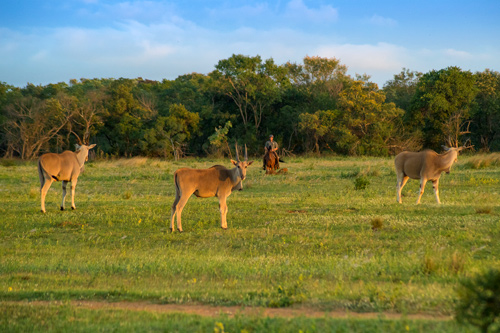
Guests will be met at Johannesburg International Airport and transferred to Camp Davidson in time for a late lunch. That afternoon you will be introduced to your safari horse. We will ensure that you are matched with a horse to suit your ability and experience before heading off on your ride. This first introductory ride is a relaxed affair, giving riders the opportunity to settle into their new surroundings. Crossing the plains, enjoy your first close encounter with wildlife on horseback: ostrich, impala, zebra, kudu, eland, giraffe, warthog and jackal are all frequently seen in the open bushveld.
A stunning lookout spot for sundowner drinks is a welcome moment to take in your first taste of Africa after a long journey. A three course supper is served at Camp Davidson that evening.
Meals included: Lunch & Dinner
Overnight at Camp Davidson
Day 2 (Saturday): South African Game Ride
Today’s ride sets off from the high country overlooking a beautiful wilderness area to the east, and heads south, winding along the banks of Sunset Lake with its resident pod of hippos and the odd sly crocodile, before trekking upstream to an adjoining reserve. The lake itself is rich in birdlife, including the impressive Fish Eagles, dainty Dabchicks, elegant Jacanas and a variety of geese. Later, riding through the open savannah, wildebeest and zebra can be encountered. The riding is varied, from canters along sandy tracks to winding through rocky outcrops and densely wooded areas. The ride then crosses the reserve and returns to Camp Davidson in time for lunch. Guests can then relax by the pool, before a shorter afternoon ride.
In the evening there is the option of a night sky safari with a local astronomer, Dr Calcott, who will guide you through the amazing constellations (subject to weather conditions and availability - Additional cost R300 pp, Min. 4 pax). The absence of light pollution enables us an incredible chance to view some of the amazing wonders of the universe.
Meals included: Breakfast, Lunch & Dinner
Overnight at Camp Davidson
Day 3 (Sunday): Game Ride, Jumping & Swimming with the Horses
Setting off in a westerly direction, this ride tracks past a brown hyena den, skirts past the upper reaches of the Horizon dam before crossing a wide grassy valley. At one point, the ride enters into dense woodland, home to shy species such as kudu, bushbuck and Vervet monkeys. Emerging from the woods, the horses have a chance to stretch their legs along open sandy tracks. Finally the ride swings back to the
north, through mixed bushveld and fascinating rock formations.
Two highlights of this ride are the jumping lanes and the chance for riders to swim their horses bareback in the Horizon dam next to the main lodge. For many guests, this is an exhilarating and unforgettable experience. Once dried off and back in the saddle, the ride climb back up to Camp Davidson is particularly intriguing, as it follows a mountain pass cut through boulders and outcrops.
After lunch, enjoy a sundowner ride across the plains on the reserve. We are very fortunate to have a large herd zebra. Over the years, the herd has become quite habituated to the horses and it is now possible to ride really close and experience being part of the zebra herd. A wonderful way to watch the foals frollick.
Meals included: Breakfast, Lunch & Dinner
Overnight at Camp Davidson
Day 4 (Monday): Camp Davidson to Savannah Lodge
We will pack up and leave Camp Davidson after breakfast, and go to Savannah Lodge. The bags will go ahead whilst we make our way to the Lodge.
Having left Camp Davidson for the final time, this ride heads south to the Game Conservancy. The ride traverses a wide wetland, home to reedbuck and grass owls, before entering dense woodland dotted with wild fig trees and large fruited bush willows. Here it crosses the watershed and descends through open grasslands with sweeping views to the upper reaches of the
Conservancy’s main water system. The route passes the favored habitat of waterbuck and Cape buffalo. The open plains that follow are aptly known as “Little Serengeti”; large herds of blesbuck, eland, wildebeest and kudu are all on view, as are groups of elegant sable, swift red hartebeest and impressive journeys of giraffe and Cape buffalo.
After a lunch at the lodge and a rest by the pool, the afternoon ride continues to explore this game rich area, closing with sundowners overlooking the African plains.
Meals included: Breakfast, Lunch & Dinner
Overnight at Savannah Lodge
Day 5 (Tuesday): Transfer to Botswana
We depart the lodge early and enjoy an exhilarating ride back to the Horizon Lodge in time to change before departing for Botswana at 09:30 am.
We arrive in Botswana in time for a light lunch. Enjoy an introductory ride to check you are suited to your horse, before embarking on your first ride out to our Two Mashatus Camp. This will be your first opportunity to experience the beauty of the Mashatu Game Reserve and view the wildlife on horseback. Mashatu Game Reserve is home to the largest herd of wild free-roaming elephants on private land in Africa, and, although not a guarantee, it is almost assured that there will be great viewing of these incredible creatures.
This evening, you overnight at the Tree Camp.
Meals included: Breakfast, Lunch & Dinner
Overnight at Two Mashatu
Day 6 (Wednesday): Game Ride & Optional Game Drive
After breakfast, it’s time to mount and depart from the dense woodland that hugs the Limpopo River and head towards the rocky hills that delineate the edges of the great river valley. As the ride traverses the heartland of Mashatu, you will encounter plentiful game: plains game, many giraffe and herds of elephants.
You will arrive back at Two Mashatus Camp in time for lunch and a cooling afternoon rest in the shady camp or lazing by the pool. That afternoon the group has the choice of an afternoon ride or a game drive to the south western side of the reserve. This is an area not reached on horseback during the African Explorer safari. It is rich in game with a resident pride of lion. The highlight of the drive is a sundowner in the ancient landscape of rock formations or the Mmamagwa hills, which vast vistas into the setting sun.
Meals included: Breakfast, Lunch & Dinner
Overnight at Tree Camp
Day 7 (Thursday): Morning Ride & Bush Walk
Ride out following the movements of wildlife in the area. The tempo of the rides is always varied and depending on the terrain, there are opportunities to enjoy the spirit and fitness of the horses.
The afternoon brings a chance to again choose between another ride or a bush walk in the northern area of Mashatu Game Reserve and enjoy the rich birdlife, spot crocodile in the pools and learn about the magnificent trees lining the banks.
Meals included: Breakfast, Lunch & Dinner
Overnight at Tree Camp
Day 8 (Friday): Departure
The last ride in the Limpopo Valley is a great opportunity to take one last picture of elephants and enjoy a long and winding canter through the scattered Mustard bush with your guides.
Arriving back at the stables and reception mid-morning, there is plenty of time for a quick shower, before saying farewell to safari companions and new found friends. Transfer back to Johannesburg International Airport.
Meals included: Brunch
 Sample Itinerary: SPECIAL
 - subject to changes
No game drive is included in this package. However, it is possible to book a Game Drive in Mashatu for an extra fee (subject to availability).
NOTE: Please note that due to changes in weather and other unforeseen events, the itinerary and accommodation used may change at the last minute.
Day 1 (Tuesday): Arrival
Guests will be met at Johannesburg International Airport and transferred to Camp Davidson in time for a late lunch. That afternoon you will be introduced to your safari horse. We will ensure that you are matched with a horse to suit your ability and experience before heading off on your ride. This first introductory ride is a relaxed affair, giving riders the opportunity to settle into their new surroundings. Crossing the plains, enjoy your first close encounter with wildlife on horseback: ostrich, impala, zebra, kudu, eland, giraffe, warthog and jackal are all frequently seen in the open bushveld.
A stunning lookout spot for sundowner drinks is a welcome moment to take in your first taste of Africa after a long journey. A three-course supper is served at Camp Davidson that evening.
Meals included: Lunch & Dinner
Overnight at Camp Davidson
Day 2 (Wednesday): South African Game Ride
Today’s ride sets off from the high country overlooking a beautiful wilderness area to the east, and heads south, winding along the banks of Sunset Lake with its resident pod of hippos and the odd sly crocodile, before trekking upstream to an adjoining reserve. The lake itself is rich in birdlife, including the impressive Fish Eagles, dainty Dabchicks, elegant Jacanas and a variety of geese. Later, riding through the open savannah, wildebeest and zebra can be encountered. The riding is varied, from canters along sandy tracks to winding through rocky outcrops and densely wooded areas. The ride then crosses the reserve and returns to Camp Davidson in time for lunch. Guests can then relax by the pool, before a shorter afternoon ride.
In the evening there is the option of a night sky safari with a local astronomer, Dr Calcott, who will guide you through the amazing constellations (subject to weather conditions and availability - Additional cost R300 pp, Min. 4 pax). The absence of light pollution enables us an incredible chance to view some of the amazing wonders of the universe.
Meals included: Breakfast, Lunch & Dinner
Overnight at Camp Davidson
Day 3 (Thursday): Camp Davidson to Savannah Lodge
We will pack up and leave Camp Davidson after breakfast and go to Savannah Lodge. The bags will go ahead whilst we make our way to the Lodge.
Having left Camp Davidson for the final time, this ride heads south to the Game Conservancy. The ride traverses a wide wetland, home to reedbuck and grass owls, before entering dense woodland dotted with wild fig trees and large fruited bush willows. Here it crosses the watershed and descends through open grasslands with sweeping views to the upper reaches of the
Conservancy’s main water system. The route passes the favored habitat of waterbuck and Cape buffalo. The open plains that follow are aptly known as “Little Serengeti”; large herds of blesbuck, eland, wildebeest and kudu are all on view, as are groups of elegant sable, swift red hartebeest and impressive journeys of giraffe and Cape buffalo.
After a lunch at the lodge and a rest by the pool, the afternoon ride continues to explore this game rich area, closing with sundowners overlooking the African plains.
Meals included: Breakfast, Lunch & Dinner
Overnight at Savannah Lodge
Day 4 (Friday): Transfer to Botswana
This morning is an early start leaving the Lodge by 7 am for a brisk ride back to the stables where the minibus awaits for your onward journey to Botswana. We depart the stables at 9.30 am and travel to the Mashatu stables where we will enjoy a light lunch on the banks of the Limpopo River, receive a safety briefing and meet the horses. We take great care to match horse to rider based on a guest’s riding experience and ability. However, before embarking on the safari, each guest will be given a simple riding test in order to ensure that they are suitably balanced in the saddle and are able to direct their horse in an independent manner. While the journey is not an endurance test, it does involve long hours in the saddle and, with the possibility of close encounters with elephant and the big cats, riders need to be able to gently and confidently control their mounts.
The route on this afternoon is from the Mashatu stables to Tree Camp (about 2 hours). The trail rises from the Limpopo River floodplains, with good opportunities for those first exciting encounters with elephant, giraffe, zebra and wildebeest. The route, following ancient elephant paths, winds upwards towards the centre of the Reserve and the upper reaches of the Majali River where the extraordinary Tree Camp awaits. Wrapped around the trunks of a giant mashatu and two ancient leadwood trees, Tree Camp perches several meters up, out of "trunks reach" overlooking the banks of the Majale River and offers spectacular panoramic views of the adjacent cliffs and floodplain opposite where Mashatu's legendary herds roam. Sleeping quarters are five beautiful and spacious canvas roofed areas with four-poster beds, each facing into the spacious dining and resting area. The elevated platform offers a unique camp you will remember for years to come.
Meals included: Breakfast, Lunch & Dinner
Overnight at Tree Camp
Day 5 (Saturday): Tree Camp to the Kgotla
The safari passes through the center of Mashatu to the ancient rock formations synonymous with the Limpopo Valley. Giant Baobab trees continue to scatter the landscape as they have for centuries and ancient elephant trails make for wonderful tracks for long canters through open bush veld. Whilst riding alongside the banks of the Motloutse River, discover the old Leadwood ‘Kgotla’ (or enclosure used for the traditional law court of a Botswana village). This open-air enclosure forms the perfect, secure camp for the night.
In the afternoon, we search for the area’s resident lions on a game drive and draw the day’s adventures to a close with sundowners at the ancient “Amphitheatre” rocks. Back at the Kgotla, dinner is enjoyed around a large log fire. The night is spent with a ceiling of stars and Africa’s nighttime melody to sing you to sleep; a veraciously rare experience which is just about as far away from city life and the modern world as anyone can imagine.
Meals included: Breakfast, Lunch & Dinner
Overnight at The Kgotla
Day 6 (Sunday): Ride around The Kgotla
The sandstone formations, including the famed Solomon’s Wall, one of the numerous dolorite dykes in the area, are explored on horseback. Some of the oldest civilizations in southern Africa settled in this valley. Archaeological evidence in the area includes middle and late stone age tools, rock art and the legendary Mapungubwe Dynasty. Mapungubwe means “Place of the Jackal” in the Venda language and this dynasty existed around 1220 AD. The Mapungubwe topography itself is ancient and timeless, and combined with marvelous wildlife sightings, it makes for an incredible riding experience. This afternoon enjoy a short drive to the Mmamagwa Hills.
For the most visually stunning and ethereal sundowner, we visit the Mmamagwa Hills. A short climb up the sandstone ridge, brings us to the site of the Mmamagwa Ruins, which is of a similar period to Mapungubwe (13th century). To date these ruins have not been excavated and have been left alone. It is conceivable that similar treasures to those found at Mapungubwe (for example the golden rhino) could be buried here. After a short climb, enjoy sundowners beneath a beautiful baobab tree with a breath-taking view of the area.
Meals included: Breakfast, Lunch & Dinner
Overnight at The Kgotla
Day 7 (Monday): The Kgotla to Tree Camp
Wind up Elephant Valley along ancient trails stamped into the soil by centuries of migrating elephants, before heading north towards upper reaches of the Majale River. This area is peppered with enormous baobab trees and is one of the more remote areas of the reserve.
After an exhilarating ride through this timeless countryside, enjoy a relaxing lunch at Tree Camp.
An afternoon ride, a bush walk or, subject to availability, a game drive to enjoy the central area of the reserve.
Meals included: Breakfast, Lunch & Dinner
Overnight at Tree Camp
Day 8 (Tuesday): Departure
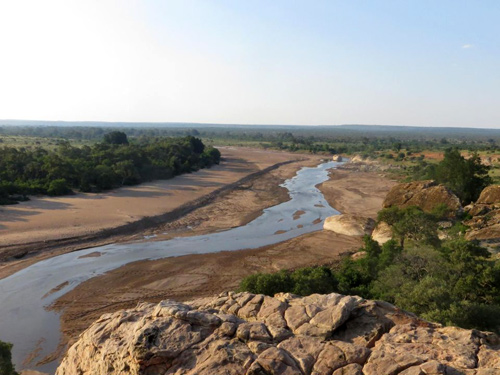
With an early departure from Tree Camp, this ride offers sweeping views to the east and south, bathed in early morning light, as it traverses along the edge of a ridge near the centre of the reserve. The path then descends to a game rich area along the Majali River. The deep river pools are the favourite haunt of baboon and impala. Sooner or later the great herds of elephant come past for their daily drink, to play in the water and enjoy a dust bath. The final part of the ride is first across open plains with some fast canters, and then through cool riverine vegetation along the approaches to Two Mashatus Camp.
Arriving back at the stables, you get to say farewell to safari companions and newfound friends, it’s time for your onward journey.
Meals included: Breakfast & Lunch
----
Non-Riders
In South African an accompanying non rider can enjoy onsite bush walks and a variety of excursions such as, guided hike pp $30pp, elephant riding $100, local town and township visit $20pp, big five game drives $40pp.
Meeting:
Camp Davidson
Airport:
O.R. Tambo International Airport (JNB)
Transfer:
O.R. Tambo International Airport (JNB)
Distance:
272 km / 169 miles
On Day 1, in order to meet the transfer, we ask that you do not land after 9:30 am in Johannesburg International Airport (JHB).
Please book flights that depart from Johannesburg International airport no earlier than 8:00pm on Day 8!
|
Tack:
|
|
South African Mcllelans
|
|
Horses:
|
|
Boerperd,Warmblood thoroughbred, Appaloosas and Shire Cross
|
|
Pace:
|
|
A fast challenging ride with gallops, jumping trees. In Botswana, you are riding in areas of dangerous game. This ride is therefore only suitable for experienced riders with a spirit of adventure. 4-6 hrs a day (20-30 km daily)
|
Walk |
Trot |
Canter |
Gallop |
Jumps |
|
|
Level:
|
|
 (3.5
to
5
out of 5) Strong Intermediate
(3.5
to
5
out of 5) Strong Intermediate
|
|
Age:
|
|
Min
16
|
|
|
Weight:
|
|
Max
190 lbs / 85 kg
|
|
Riders:
|
|
Min
2 riders
|
Max
8 riders
(per riding group)
|
Max Capacity
8
|
|
|
|
Riding helmets are mandatory for this ride.
|
 Riding Experience
Guests must be experienced riders. They must ride regularly (at least once or twice a week) and be comfortable at posting trot, light seat canter and gallop as well as being able to do small jumps should they have to. They must be able to control a horse independently of the group at all paces.
On arrival in Botswana, you will be asked to do a simple independent riding test. The guides in South Africa will be able to assess your riding skills and will advise on your suitability to ride in Botswana. Should they deem you not able to ride in Botswana you will stay at the lodge for the three days and carry on with the safari riding.
Horses
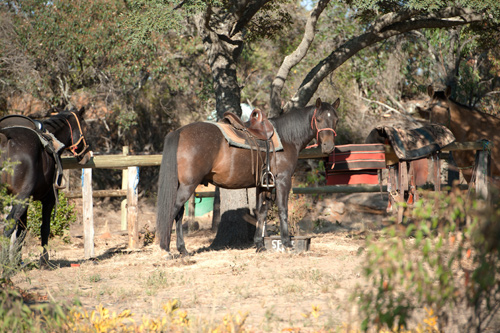
We have a herd of 96 horses in South Africa and 53 horses in Botswana. The herd is comprised of Boerperds, Throroughbreds, Warmbloods and Arab crosses. They range in size from 14.3hh to 17 hh. Their schooling generally concentrates on English style, although the horses neck rein when in the bush. They respond easily and lightly to the aids.
All of the horses have been individually selected for their temperament and "ride-ability" on safari. They are from the various South African breeds, which are well known for being of a hardy nature and able to cope under extreme conditions. Our safari horses have been hand selected for their endurance, courage and responsiveness.
Our philosophy has entailed managing our horses as a free roaming herd within large tracts of natural pasture, rather than in stables or paddocks. Our horses are at ease with each other and within their environment, which generates calm and contented natures. As a result, we can offer our guests responsive, subtle and honest rides.
Tack
Saddles are South African McClellan’s, a cavalry saddle designed for long hours of riding, they offer particular comfort and airflow for the horses back and padded seats and fenders for the rider's comfort.
Guides & Safety
Guides leading the safari have many years’ experience and most have grown up in the area and know the bush like the back of their hand. Our guides have either professional or assistant guiding licenses with the Botswana Qualifications Authority. They are qualified to use firearms and qualified in first aid.
All rides are conducted by two experienced professional guides. The lead guide is armed with a rifle and a bull whip. All management staff and guides do regular first aid training with a specialized doctor for remote areas. The lead guide has a local phone and a radio for use in emergencies.
Hard Hat
Hard hats are compulsory and you will not be able to ride without one. We can provide helmets (limited quantities), but suggest that clients bring their own. We do not provide half chaps but might have the odd pair should clients need.
Non-Riders
Non-riders are welcome on this trip. One very good option is to relax by the pool with a good book taking in Africa. For the more active there are excursions available at additional fees. South African Excursions include, guided hike, ziplining, elephant riding, local town and township visit and big five game drives. Whilst in Botswana, non-riders can do a morning guided bush walk, or cycle (min 2 pax). Afternoons in Botswana will be a drive to camp on the first day, a guided walk with the group on the second day a full Mashatu game drive and on the last afternoon.
Passport and Visa Requirements:
Passport valid for at least 30 days after the intended date of departure required by all nationals referred to in the chart.Passport NotePassport must have at least two blank pages for entry stamp. Th. more
Polokwane area
|
Month
|
Jan
|
Feb
|
Mar
|
Apr
|
May
|
Jun
|
Jul
|
Aug
|
Sep
|
Oct
|
Nov
|
Dec
|
|
Average High Temperature (°F)
|
84
|
84
|
82
|
79
|
75
|
70
|
70
|
75
|
80
|
82
|
83
|
84
|
|
Average Low Temperature (°F)
|
63
|
62
|
60
|
54
|
47
|
41
|
41
|
45
|
51
|
56
|
59
|
62
|
|
Average High Temperature (°C)
|
29
|
29
|
28
|
26
|
24
|
21
|
21
|
24
|
27
|
28
|
28
|
29
|
|
Average Low Temperature (°C)
|
17
|
17
|
16
|
12
|
8
|
5
|
5
|
7
|
11
|
13
|
15
|
17
|
|
Average Precipitation (days of rain)
|
10
|
8
|
8
|
6
|
1
|
0
|
0
|
0
|
1
|
6
|
10
|
11
|
Source: NOAA
Seasons
The climate over most of Southern Africa is temperate. Hot, dry conditions are usually encountered in the Tuli region. Heavy summer thunderstorms of short duration in the late afternoon and evening may be experienced. Rainfall occurs mostly during the summer months (October - March).
Summer (December to February)
The temperatures are high and there is a lot of humidity in the air. The chances of convectional thunderstorms are great. Some of the summer migrant birds begin to arrive. The characteristic call of the Red-chested Cuckoo rings out clearly, heralding the approach of better times for all. Once good rains have fallen, the small, drab, but extremely vocal Monotonous Lark keeps the bush awake day and night with its irritating call, as they perch on every treetop.
Kudus calve and there is a good chance of seeing late Impala lambs, tottering along on spindly, wobbling legs behind their mothers. Due to the heat, the animals wisely begin to seek shade before 8 o’clock in the morning, only becoming active again in the late afternoon, just prior to sunset. Tropical thunderstorms are a regular afternoon feature and there is a high probability of flooded rivers to add some excitement to game drives.
Autumn (March to May)
The transition from summer to winter occurs rapidly in the Limpopo Valley. Finally the searing heat of summer begins to abate and there is less likelihood of rain. This is a truly splendid time of the year. It is now Autumn and the daily temperatures are most pleasant with balmy days and nights. Temperatures begin to drop rapidly after sunset and both evening and morning game drives require warmer clothing. Although chilly in the morning, the days are clear and pleasant with crisp blue skies. Now that the rains are over, the veldt begins to dry out and game begins to congregate around the major watercourses, such as the Limpopo and associated wetlands, as well as the artificial waterholes scattered throughout the reserve.
A few late Kudu calves may make a bemused appearance in the beginning of March. Large nursery herds of gawky Impala young are found, kept under some control by the watchful eyes of their mothers.
The bush is still dense, but the bright shades of green are starting to become duller as the year progresses. As the vegetation begins to thin, the elusive leopard is more frequently seen. Lions, which dispersed with the game during the wet season, now begin to concentrate their activities in the central area of Mashatu.
Winter (June to August)
Winter is now upon us and has spread its chilly grip on Mashatu. The days are still good, with crisp mornings. The nights can be very cold.
Most of the natural pans and pools have now completely dried up. Elephant and a host of other species begin to frequent the artificial waterholes at both Main and Tent Camps, which makes for exciting mealtime viewing. Predator sightings are good at this time of the year, due to the thinned out vegetation and concentrations of game, cheetah however are scarce. In general the game is more active later into the day.
This is also a favorable time to visit the archaeological site at the Motloutse River. The summer vegetation has disappeared and a host of interesting features are now visible.
Towards the end of winter, the floodplains and grasslands adjacent to the Limpopo are very dry and barren. The bush has become harsh and almost inhospitable, with absolutely no groundcover, only dust and rocks visible for kilometers. The veldt has all the typical winter hues of brown and red, as the Mopane leaves start turning. The weather is fine with temperatures increasing slightly. The early mornings and evenings being not as cold as in June or July. August is a showy month, with respect to sunsets. Due to the very dry conditions, large quantities of dust is taken up into the air, giving rise to spectacular pyrotechnic displays as the sun sinks below the horizon.
Spring (September to November)
The bush is still very dry, a condition exacerbated by winds, which blow from August through to October. Temperatures begin to steadily increase and conditions are becoming desperate for many of the herbivores. This is due to sub region frontal systems touching on the Limpopo Valley, bringing superheated air into the region. There may be an occasional tropical thunderstorm, but this early rain is sucked up like a sponge by the barren earth. This welcome water is however not enough, and seldom results in a notable floral display. Many trees begin to blossom, in anticipation of the rapidly approaching summer. The vibrant hues of the blossoms enliven the bush, providing a bountiful treat for baboons and other hungry inhabitants of the bush, all of whom have struggled through the lean winter months. Temperatures begin to creep upwards and game drives are once again early morning and late afternoon affairs, as a wise means of avoiding the debilitating midday heat.
Predators have a field day, as many of the game are weak and tend to restrict their activities to the area close to the waterholes. The lack of dense vegetation and the dry powdery soil make tracking lion and leopard an easier task and often result in exceptional sightings. Elephant listlessly wait out the dry season, moving from waterhole to waterhole, where they take full advantage, wallowing and drinking for hours. They will feed on the surrounding vegetation, moving into the bush on feeding forays when temperatures have dropped sufficiently for them to forage out of the protective shade. It is also at this time that eland begin to calve.
Bags have to be soft-sided and weight is limited to 18kg per bag plus 5kg hang luggage. You will be provided with a water bottle for your safari.
When packing, do bear in mind the fact that we offer a free of charge laundry service. A daily laundry service is included at our Signature Safari lodge in South Africa. In Botswana, we offer a laundry service once or twice during your seven-night safari. We can normally turn laundry around within 24 – 48 hours.
Reminder about strict luggage specifications:
As clients are flying out of Botswana please do remember the luggage restrictions of one soft/duffle type bag (max weight:18 kgs / max size: 40x30x60 cm) and one small piece of hand luggage (max 5 kg) per person.
Hard luggage will not be accepted on the flight back! You are allowed to take the plane with your riding gear (boots, hats,...) as well as one power bank per person (up to 100 watt-hour or 20 000 mah) with you in addition to the luggage mentioned above.
Passengers can also have a very SMALL handbag with them for passports and money - but please limit the size of this bag and do not try to squash extra clothing/equipment inside them. The charter planes are much smaller than normal planes and thus have limited space.
Any other cases/bags that do not comply with the above will not be allowed. should you arrive with other types of luggage you will need to transfer your belongings into a plastic bag for your charter flight and your suitcases will be left behind for collection after your safari.
When this happens, guests first come to the lodge in South Africa, where any unsuitable bags can be exchanged for a “China Laundry bag”. We will then hand in the client’s suitcase at ATECK storage in ORTambo for them.
The guest then needs to collect their bag from there, when they return to ORTambo after their safari. Our charter flight provider (Bushwing Charters) will send a message by WhatsApp with a copy of the receipt so the client can collect their bag.
The charge for this service is ZAR 150 – payable in CASH at the lodge before the road transfer up to Botswana.
We recommend bringing the following items:
• Your own well-fitting hard hat - Hard hats are mandatory (we can supply if needed)
• Comfortable riding clothes, this is not the place to test out brand new boots, wear everything a couple of times before bringing it on safari. Neutral colours such as khaki, brown, navy, and green are preferable. Light-coloured garments such as whites and creams should be avoided.
• Short boots and half chaps, ride/walk boot are perfect. Long leather boots are also good but long rubber boots are not advised.
• Bum bag
• Lip salve, hand cream, and moisturiser (it’s dry here!)
• Strong sun protection cream factor 30 or higher
• Mosquito repellent
• Hiking boots or sneakers
• Swimsuit
• Light weight long sleeved shirts
• Camera, memory cards and spare camera batteries
• If you ever suffer from regular bouts of illness e.g. cystitis, sinusitis, eczema, asthma, allergies etc please bring your preferred medication its best to have whatever you may need with you
• Ibuprofen and deep heat are also useful items, especially if you aren’t used to long hours in the saddle
• In our Winter, mornings can be chilly and days hot so bring layers, a vest, shirt fleece and body warmer are ideal winter wear.
• In summer pack a lightweight rain coat
• Books for when you are relaxing between rides
• High lumen torch or head torch
• For Botswana we also recommend a strong power bank of up to a maximum of 20,000 mAh
This may sound strange but if you would like to purchase a spare pack of sanitary items to donate, please do, we donate them to local schools, many girls cannot afford them and have to miss school and exams also if you have any old clothes, shoes, blankets, books or stationary that you would otherwise throw away and have some room in your luggage please do bring it with you. Horizon is involved with local schools and creches and helps where possible with a local outreach project working with the very poor. As such we have lots of people who are grateful for any old clothing. Please do not feel you have to now go out and buy items to bring, - it is not by any means expected - it is just that over the years so many people have expressed regret at not knowing how useful that item they threw away last week would have been to someone here.
*Important Notice: The following ratings have been submitted by guests and do not necessarily represent the views of Hidden Trails, its partners or employees.
Every care is taken to ensure accuracy but Hidden Trails is not liable for any errors or omissions.
..view other reports for different trips
Accommodations
This is a wilderness ride, so nights will be spent in different locations.
Description
You will be staying at different deluxe bush camps and a luxury lodge.
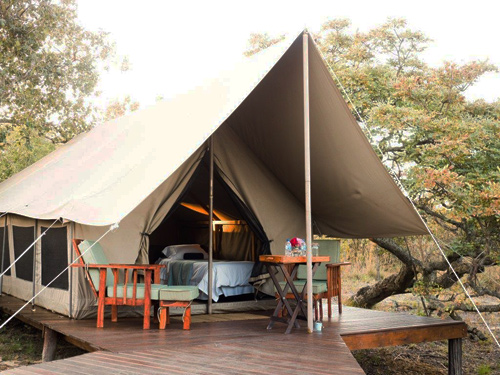
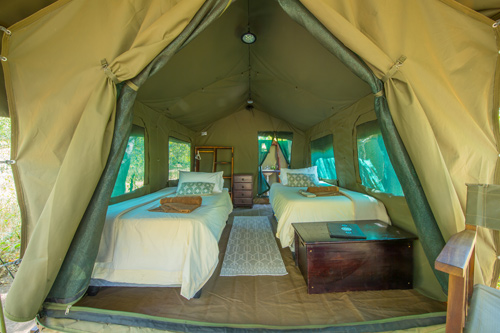
All camps offer 5 spacious and comfortable A-frame tents all built on raised decks equipped with beds, sheets, and duvets, making for very comfortable camping. Each tent has an ensuite bathroom area with hot water showers (water heated on the fire and placed in a 15 lt camp shower when you are ready) and jug and basin hand wash facilities. There are flushing toilets at Camp Davidson in South Africa, whereas in Botswana toilets are long drop eco toilets.
Solar lights and lanterns are used at both locations as there is no electricity.
A laundry service is offered once in the week in South Africa but not in Botswana. Clients will need to have enough clothing to last 3 days.
There is a limited WiFi and cell service in South Africa and Botswana. If you want to buy a local sim on arrival the one to buy would be MTN.
Accommodation Itinerary - subject to changes based on availability
Night 1 - 3: Camp Davidson (South Africa)
Night 4: Savannah Lodge (South Africa)
Night 5: Tree Camp (Botswana)
Night 6 - 7: Two Mashatu Camp (Botswana)
Accommodation Itinerary for Special Program - subject to changes based on availability
Night 1 & 2: Camp Davidson (South Africa)
Night 3: Savannah Lodge (South Africa)
Night 4: Tree Camp (Botswana)
Night 5 & 6: The Kgotla(Botswana)
Night 7: Tree Camp (Botswana)
Camp Davidson
A re-creation of the original Camp Davidson has been built high in the bushveld above the Matlapeng valley. It offers the opportunity to explore on horseback from a secure base camp nestled in the heart of the wooded mountains and commands a wonderful panoramic view of the central highlands of the Waterberg range, while overlooking the picturesque Sunset Lake at the eastern boundary of the ranch property. Stay in decked canvas tents nestled amongst the sandstone ridges overlooking grassy valleys. Each luxury tent has an en-suite bathroom.
The camp is completely run on solar energy and has a small swimming pool.
 Savannah Lodge
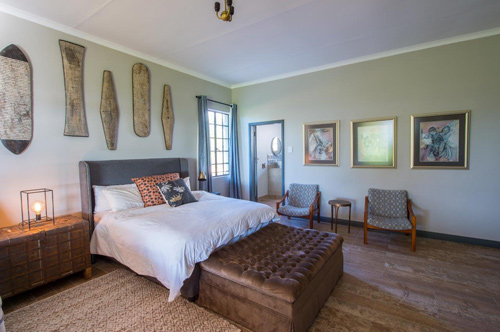
This luxury lodge is within a morning's ride from Camp Davidson and offers excellent riding and plenty of game. It is located on the south western side of the conservancy and is tastefully decorated lodge with 5 en-suite rooms. The lodge had a large comfortable living space and dining areas inside and outside.
There is a small pool and deck which overlooks a plain and watering hole close by, where wildlife can frequently be seen.
There are no Wi-Fi facilities at the lodge.
 Tree Camp
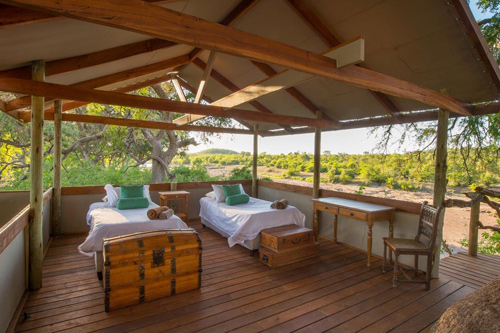
This is a very unique camp. Nestled in the bough of a giant Mashatu tree and two ancient Leadwood trees, this Seligna deck, 4 meters off the ground, will be your retreat for the night. Two guests each share an airy and cool sleeping pod. Along a short walkway, shared showers and toilets are under the Leadwood trees.
The spacious dining and lounge area flow from the sleeping pods and overlook the Majale River.
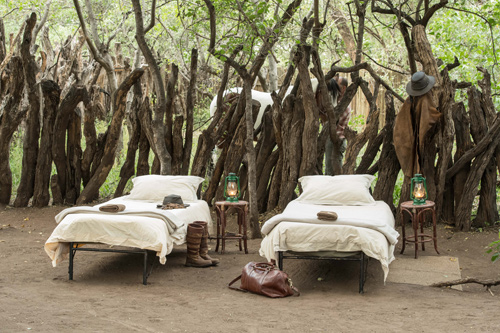 The Kgotla
The Kgotla is an old tribal court from a nearby community, which was relocated to the banks of the Motloutse River on the western periphery of Mashatu. The boma is an open-air traditional African enclosure made up of a circle of Leadwood logs. The camp has hot running water, beautiful open-air showers and flushing toilets (shared): the perfect combination for comfort and an authentic bush experience. Guests sleep on single beds around a large log fire in the center of the enclosure.
Two Mashatus Camp
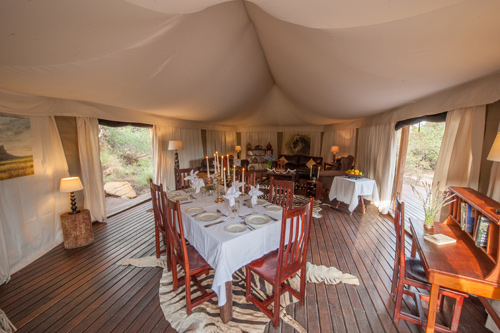
Nestled in the shade of two large Mashatu trees, the heart of the camp has two traditionally built Lala Palm rondavels for dining and lounge areas.
Guest accommodation is in large A-frame walk-in tents set on teak platforms each with en-suite enviro drop toilet and hot water shower. Each tent is private and positioned in the shade of a tree in the bush, not far from the main area. Each tent has a small deck area in front where guests can relax privately during the afternoons.
Two Mashatus Camp also has a small swimming pool under a Mashatu tree for guests to enjoy.
Room Occupancy
Triple occupancy is possible.
If you are willing to share, the single supplement fee does not apply.
 Meals
Meals
All meals are included from lunch on Day 1 to brunch on your last day.
Two highly trained experienced bush chefs will look after your every need.
Breakfast is buffet of cereals, toast, muffins, or porridge.
Lunch is a buffet usually quiches, salads, fruits, and dessert.
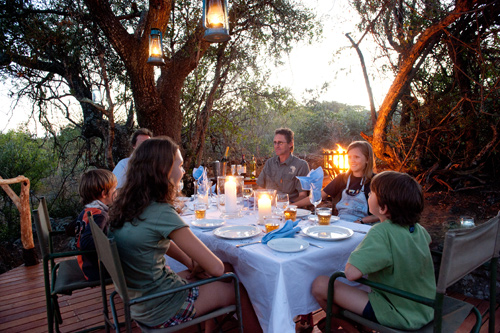
Dinner is a 3 course meal served to you at the table, often under the canopy of stars!
All water in the camp is filtered to the highest standards and is guaranteed perfectly safe for drinking. All drinks are included with your tour.
Please also advise us if any guests will be celebrating a birthday or special occasion, that you may want us to be aware of to help plan something special!
Dietary Restrictions
We can cater to dietary restrictions if given prior notice.
This trip
includes some wine with dinner
and
can accommodate special dietary requests.
|
Tack:
|
|
South African Mcllelans
|
|
Horses:
|
|
Boerperd,Warmblood thoroughbred, Appaloosas and Shire Cross
|
|
Pace:
|
|
A fast challenging ride with gallops, jumping trees. In Botswana, you are riding in areas of dangerous game. This ride is therefore only suitable for experienced riders with a spirit of adventure. 4-6 hrs a day (20-30 km daily)
|
Walk |
Trot |
Canter |
Gallop |
Jumps |
|
|
Level:
|
|
(3.5
to
5
out of 5) Strong Intermediate
|
|
Age:
|
|
Min
16
|
|
|
Weight:
|
|
Max
190 lbs / 85 kg
|
|
Riders:
|
|
Min
2 riders
|
Max
8 riders
(per riding group)
|
Max Capacity
8
|
Riding Experience
Guests must be experienced riders. They must ride regularly (at least once or twice a week) and be comfortable at posting trot, light seat canter and gallop as well as being able to do small jumps should they have to. They must be able to control a horse independently of the group at all paces.
On arrival in Botswana, you will be asked to do a simple independent riding test. The guides in South Africa will be able to assess your riding skills and will advise on your suitability to ride in Botswana. Should they deem you not able to ride in Botswana you will stay at the lodge for the three days and carry on with the safari riding.
Horses
We have a herd of 96 horses in South Africa and 53 horses in Botswana. The herd is comprised of Boerperds, Throroughbreds, Warmbloods and Arab crosses. They range in size from 14.3hh to 17 hh. Their schooling generally concentrates on English style, although the horses neck rein when in the bush. They respond easily and lightly to the aids.
All of the horses have been individually selected for their temperament and "ride-ability" on safari. They are from the various South African breeds, which are well known for being of a hardy nature and able to cope under extreme conditions. Our safari horses have been hand selected for their endurance, courage and responsiveness.
Our philosophy has entailed managing our horses as a free roaming herd within large tracts of natural pasture, rather than in stables or paddocks. Our horses are at ease with each other and within their environment, which generates calm and contented natures. As a result, we can offer our guests responsive, subtle and honest rides.
Tack
Saddles are South African McClellan’s, a cavalry saddle designed for long hours of riding, they offer particular comfort and airflow for the horses back and padded seats and fenders for the rider's comfort.
Guides & Safety
Guides leading the safari have many years’ experience and most have grown up in the area and know the bush like the back of their hand. Our guides have either professional or assistant guiding licenses with the Botswana Qualifications Authority. They are qualified to use firearms and qualified in first aid.
All rides are conducted by two experienced professional guides. The lead guide is armed with a rifle and a bull whip. All management staff and guides do regular first aid training with a specialized doctor for remote areas. The lead guide has a local phone and a radio for use in emergencies.
Hard Hat
Hard hats are compulsory and you will not be able to ride without one. We can provide helmets (limited quantities), but suggest that clients bring their own. We do not provide half chaps but might have the odd pair should clients need.
Non-Riders
Non-riders are welcome on this trip. One very good option is to relax by the pool with a good book taking in Africa. For the more active there are excursions available at additional fees. South African Excursions include, guided hike, ziplining, elephant riding, local town and township visit and big five game drives. Whilst in Botswana, non-riders can do a morning guided bush walk, or cycle (min 2 pax). Afternoons in Botswana will be a drive to camp on the first day, a guided walk with the group on the second day a full Mashatu game drive and on the last afternoon.
Passports
Passport valid for at least 30 days after the intended date of departure required by all nationals referred to in the chart.
Passport Note
Passport must have at least two blank pages for entry stamp. This cannot include the 'endorsement' page at the back. Passengers who also require a visa must have a passport with two blank facing pages, one for the visa and one for their entry stamp. Anyone attempting to enter South Africa without the required pages will be returned to their country of origin.
Visas
Not required by all nationals referred to in the chart above for stays of up to 90 days for business and tourist purposes, except:
1. nationals of Cyprus, Hungary, Poland and Slovak Republic who may stay for up to 30 days, and nationals of Bulgaria, Estonia, Latvia, Lithuania, Romania and Slovenia who do require a visa, unless transit passengers continuing their journey by the same or first connecting aircraft provided holding onward or return documentation and not leaving the airport (advance notice of overnight stay is required).
Visa Note
(a) Proof of financial means may be required. (b) Unaccompanied children under the age of 18 years must hold written consent from their parents when travelling alone. (c) Nationals not referred to in the chart above are advised to contact the embassy to check visa requirements (see Contact Addresses). (d) After entry, extensions of stay may be sought from the Department of Home Affairs.
Types of Visa and Cost
Visa fee: £35. UK nationals are exempt from visa fees.
Validity
Dependent on length of stay requested. Permits may be extended if done so 30 days prior to expiry of original permit.
Applications to:
Consulate (or consular section at embassy or high commission); see Contact Addresses. Applicants in countries where South Africa is not represented may send their applications to the embassy in the nearest country.
Working Days Required
Five to 10 days.
| Passport Required? |
| British |
Yes |
| Australian |
Yes |
| Canadian |
Yes |
| USA |
Yes |
| Other EU |
Yes |
| Visa Required? |
| British |
No |
| Australian |
No |
| Canadian |
No |
| USA |
No |
| Other EU |
Some |
| Return Ticket Required? |
| British |
Yes |
| Australian |
Yes |
| Canadian |
Yes |
| USA |
Yes |
| Other EU |
Yes |
This information is not being updated on a regular basis. Hidden Trails does not
take any responsibility for the accuracy of the above information. Please, consult
the embassy or consulate for updated info.
|

|
|
|
African Explorer Horse Safari
Tour Code:
IT-BORT05E
8 days /
7 nights
Dates :
Available all Year
Trip Rating :
Difficulty :

Riding Level Explained | A | Beginner
 | Beginner A rider who has limited experience, is unable to post the trot and does not canter. | | B | Novice
 | Novice A rider who is capable of mounting and dismounting unassisted, capable of
applying basic aids, comfortable and in control at the walk, moderate length posting
trots, and short canters. | | C | Intermediate
 | Intermediate A rider who has a firm seat, is confident and in control at all paces
(including posting trots, two point canters and gallops), but does not ride regularly. |
| D | Strong Intermediate
 | Strong Intermediate An intermediate rider who is currently riding regularly and is comfortable in the saddle for at least 6 hours per day. | | E | Advanced
 | All of the above, plus an independent seat, soft hands, and capable of handlinga spirited horse in open country. |

Lodging:

Introduction
Day to Day Itinerary
Rates | Dates
Accommodation
Tack:
South African Mcllelans
Horses:
Boerperd,Warmblood thoroughbred, Appal...
Pace:
A fast challenging ride with gallops, ...
Walk,
Trot,
Canter,
Gallop,
Jumps
Airport:
O.R. Tambo International Airport (JNB)
Location on Google Map
Image Gallery
Image Slide Show
Customer Trip Rating
Climate
What To Bring
Download tour PDF
|