|
Overview Asia
Horseback riding tours
India
Mongolia
Sri Lanka
|

|
|

|
|
|
|
Horseback riding vacations in
India
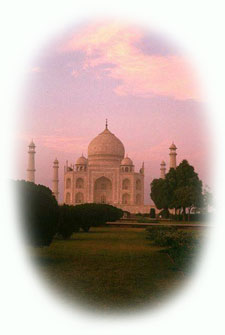
India is one of southern Asia’s most enduring tourist destinations. Bordering the mighty Himalayas to the north, the western region (Rajasthan) where our Hidden Trails horse riding holidays are located, was once part of the spice and opium trade routes into Pakistan and the middle east. This deserted region is a fascinating mixture of Hindi and Jain temples, mosques, deserts, farmland and mighty Rajput forts. The “Land of the Kings” (as it is known) was once ruled by Rajput kings, who built mighty fortified cities and once waged war with neighboring kingdoms. It is here in Rajasthan that you have the opportunity to horse ride across deserts, trek through stunning mountain reserves, and explore thousand year old palaces.
Rajasthan is a popular tourist route – with many people completing a circuit of Rajasthan before spending time in Delhi, or visiting the famed Taj Mahal in Agra. You will find India a land of extremes – from bartering in the hurly burly of a marketplace, to meditating in a quiet oasis or temple garden.
Horse Riding in India
Rajasthan, with its vast tracks of desert and huge former-royal estates, is a place to explore on horseback. Many of India’s most famed locations belong to Rajasthan – including the fort city of Jaisalmer, the pink city of Jaipur, the holy city of Pushkar (famous for its annual camel fair), Udaipur (home of the floating palace) and a place familiar to many equestrians (if only in name!) – Jodhpur!
Pushkar, the city famed for its holy waters and temple, is also a world-renowned tourist attraction thanks to the massive Pushkar Camel Fair which takes place every October/November. During the fair over 100,000 horses, cattle and camel descend on the tiny town, and visitor numbers swell. It is here that we offer our Pushkar Fair Safari – an exotic taste of Pushkar and its camel heritage.
In the Arvalli Mountains of Rajasthan we offer three distinct horse riding holidays. Enjoy the nature of the Kumbhalgarh Wildlife Sanctuary – home to many rare species, including leopards, panthers, sloth bears and wild boar. Explore the region on our Mewar Safari, or holiday in complete luxury on our Castle to Castle Safari.
Udaipur – known for its famed floating palace – is home to our Udaipur Riding Safari. Udaipur was the location for the Bond film “Octopussy”, and today you will find it is a vibrant tourist city with much to explore (and some excellent rooftop dining!).
On our Indian horseback riding holidays you will find the villages you visit lie far away from the mainstream of tourism. On many trips you will stay in luxurious former palaces, and sometimes in luxury tents - high and roomy, with separate sleeping, dressing, and toilet areas. Explore this exotic “Land of the Kings” as it was once intended – on the back of a Mewari horse.
Rajasthan Weather and Climate
Summer in Rajasthan can be unbearably hot – with the mercury tipping the scales at over 40 degrees Celsius! The best time to visit Rajasthan is September to March (the cooler months), when temperatures are in the mid to high 20s.
Explore more Asian Horse Riding Vacations
|
|
Holidays on horseback in India
See Mini Country Guide
|
|
|
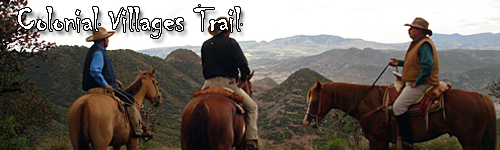
Colonial Villages Trail
(IT-MXIR05)
Central Mexico, Mexico
9 days / 8 nights
Enjoy a unique horseback trip that takes you through the heart of Mexico’s colonial heritage, while being surrounded by the natural beauty of the central highlands.
Our journey begins in Guanajuato, a city of history where the cry of rebellion against the Spanish was raised and the struggle for Mexico’s Independence began. Along with its picturesque setting and unusual beauty, Guanajuato is full of historical buildings and magnificent architecture, and was declared a UNESCO World Heritage Site in 1988. This colonial gem is the perfect starting point for discovering unique haciendas and beautiful colonial villages of the central highlands.
In the following days the ride leads us through ancient routes, as we pass by mountains, forests, areas...
Minimum riding level: Intermediate

|
|
Below is a list of our trips in this area with video clips.
 Click on the 'watch video' icon

to view a video clip,
India
Travel restrictions
Travel to India for tourism and other short-term purposes resumed fully for individuals holding tourist or e-tourist visas. Valid visas, which were previously suspended due to COVID-19 precautions, have been fully reinstated and are valid for travel until their printed expiration dates.
Effective January 1st 2023, all incoming airline passengers to India from China, Hong Kong, Japan, South Korea, Singapore, and Thailand must undergo mandatory RTPCR tests within 72 hours before their departure for India. The RTPCR report must also be uploaded to the Air Suvidha portal. This is in addition to the requirement for all unvaccinated travelers to carry proof of a negative RTPCR test taken within 72 hours of departure. All other travelers to India are advised to carry a copy of their vaccination certificates.
Effective February 13th 2023, India will no longer require all incoming airline passengers from China, Hong Kong, Japan, South Korea, Singapore, and Thailand to undergo mandatory RTPCR tests before their departure for India.
As of November 22nd 2022, travelers to India are no longer required to upload their vaccination information to the Air Suvidha portal.
Two percent (2%) of all travelers, regardless of vaccination status, will be selected for testing on arrival. Travelers selected for testing on arrival will be permitted to depart the airport following collection of the test sample and do not have to wait for results. All travelers are required to self-monitor for 14 days after arrival.
If travelers under self-health monitoring develop signs and symptoms suggestive of COVID19, they need to immediately self-isolate and report to their nearest health facility or call National
helpline number (1075).
Measures taken by the government
Services such as grocery stores, pharmacies, and medical supply stores are generally open throughout India.
Social gathering venues (such as bars and restaurants) are largely reopened but may be operating with limited capacity or reduced hours, and retail shops may have in place limited hours and/or limits on the number of patrons allowed inside.
At present, face masks are recommended to be worn in public in most localities, especially in urban areas, indoors, and on public transportation.
Local areas may have additional restrictions to include lockdowns, night curfews, mandatory random PCR testing, and providing proof of negative test results, COVID-19 vaccination, and/or quarantines if entering from certain Indian states.
Useful website about covid-19 in India: https://www.mohfw.gov.in/
Testing
Tests are widely available throughout India in both private and government facilities.
Results are generally available within the 72-hour timeframe. While in some cities results may only take 24-48 hours when done by a private lab. Travelers need to schedule tests with sufficient advance notice and should be aware that testing is generally not possible on Sundays as most labs are closed.
Emergency number (related to COVID-19) while visiting the country
For any queries related to health, people may contact Ministry of Health & Family Welfare 24*7 helpline number (+91-11-3978046) or email at (ncov2019@gmail.com).
Source:
US Embassy in India https://in.usembassy.gov/covid-19-information/
Published on February 10th 2023 (checked on April 5th 2023)
India Ministry of Health and Family Welfare https://www.mohfw.gov.in/
Checked on April 5th 2023
For more information please visit our COVID-19 Updates page at https://www.hiddentrails.com/article/covid19update.aspx
|
|
India
At A glance
Capital City: New Delhi
Land size: 2,973,193 sq km
Population: 1,389,637,446 (2022 est.)
Official language: Hindi
Currency: Indian rupee (₹ / INR)
UNESCO properties and sites:
- Agra Fort
- Ajanta Caves
- Archaeological Site of Nalanda Mahavihara at Nalanda, Bihar
- Buddhist Monuments at Sanchi
- Champaner-Pavagadh Archaeological Park
- Chhatrapati Shivaji Terminus (formerly Victoria Terminus)
- Churches and Convents of Goa
- Dholavira: a Harappan City
- Elephanta Caves (
- Ellora Caves
- Fatehpur Sikri
- Great Living Chola Temples
- Group of Monuments at Hampi
- Group of Monuments at Mahabalipuram
- Group of Monuments at Pattadakal
- Hill Forts of Rajasthan
- Historic City of Ahmadabad
- Humayun's Tomb in Delhi
- Jaipur City in Rajasthan
- Kakatiya Rudreshwara (Ramappa) Temple in Telangana
- Khajuraho Group of Monuments
- Mahabodhi Temple Complex at Bodh Gaya
- Mountain Railways of India
- Qutb Minar and its Monuments in Delhi
- Rani-ki-Vav (the Queen’s Stepwell) at Patan, Gujarat
- Red Fort Complex
- Rock Shelters of Bhimbetka
- Sun Temple in Konârak
- Taj Mahal
- The Architectural Work of Le Corbusier, an Outstanding Contribution to the Modern Movement
- The Jantar Mantar in Jaipur
- Victorian Gothic and Art Deco Ensembles of Mumbai
- Great Himalayan National Park Conservation Area
- Kaziranga National Park
- Keoladeo National Park
- Manas Wildlife Sanctuary
- Nanda Devi and Valley of Flowers National Parks
- Sundarbans National Park
- Western Ghats
- Khangchendzonga National Park
Source: https://www.cia.gov/the-world-factbook/countries/india/
India's historical treasures, natural wonders, and vibrant culture offer a truly unique travel experience. Begin your adventure in the romantic city of Udaipur, where history comes alive amidst magnificent monuments and shimmering lakes. Journey through the colorful state of Rajasthan, with its opulent palaces, majestic forts, and vibrant desert landscapes.
Immerse yourself in the warm hospitality of the Indian people, experiencing their diverse traditions, savoring flavorful cuisine, and embracing the lively rhythms of traditional music and dance.
Get ready to create lifelong memories as you uncover the soul of India from the back of a Marwari horse, forging unforgettable connections with nature, culture, and the spirit of this captivating country.
Trot past magnificent palaces, colorful bazaars, and discover the timeless beauty of the Aravalli Mountains. Journey into the Thar Desert, where golden sand dunes stretch as far as the eye can see, offering a magical setting for horseback riding adventures.
Brief History
The Indus Valley civilization, one of the world's oldest, flourished during the 3rd and 2nd millennia B.C. and extended into northwestern India. Aryan tribes from the northwest infiltrated the Indian subcontinent about 1500 B.C.; their merger with the earlier Dravidian inhabitants created the classical Indian culture. The Maurya Empire of the 4th and 3rd centuries B.C. - which reached its zenith under ASHOKA - united much of South Asia. The Golden Age ushered in by the Gupta dynasty (4th to 6th centuries A.D.) saw a flowering of Indian science, art, and culture. Islam spread across the subcontinent over a period of 700 years. In the 10th and 11th centuries, Turks and Afghans invaded India and established the Delhi Sultanate. In the early 16th century, the Emperor BABUR established the Mughal Dynasty, which ruled India for more than three centuries. European explorers began establishing footholds in India during the 16th century.
By the 19th century, Great Britain had become the dominant political power on the subcontinent and India was seen as the "Jewel in the Crown" of the British Empire. The British Indian Army played a vital role in both World Wars. Years of nonviolent resistance to British rule, led by Mohandas GANDHI and Jawaharlal NEHRU, eventually resulted in Indian independence in 1947. Large-scale communal violence took place before and after the subcontinent partition into two separate states - India and Pakistan. The neighboring countries have fought three wars since independence, the last of which was in 1971 and resulted in East Pakistan becoming the separate nation of Bangladesh.
India's economic growth following the launch of economic reforms in 1991, a massive youthful population, and a strategic geographic location have contributed to India's emergence as a regional and global power.
Source: https://www.cia.gov/the-world-factbook/countries/india/
Cultural Insights
About half the people eat rice as their staple, while the remainder subsist on wheat, barley, maize, and millet. There are thus major geographic differences in diet. Just as fundamental is the division between those who eat meat and those who are vegetarian. Muslims, Jews, Sikhs, and Christians all eat meat, with the important proviso that the first three groups do not consume pork.
Every caste, tribe, town, village, and religion has a panoply of traditional ceremonies that are observed with enthusiasm and wide participation. Most of these ceremonies have a religious basis, and the majority are linked with the deities of Hinduism.
Indians are usually very hospitable even when poor and go to considerable lengths to make a visitor feel comfortable. Women normally adopt a deferential attitude toward men, especially to their husbands and fathers-in-law. All the people tend to show deference to religious figures and government officials.
Source: https://www.everyculture.com/Ge-It/India.html
Transportation
By Air
India has 34 international airports widespread all over the country to welcome overseas tourists. However, the six following airports are usually the most widely used to get into the country.
Indira Gandhi International Airport, Delhi
This is the country’s busiest airport, being able to accommodate over 46 million passengers. This is where most international flights get into the country. It was awarded the fourth best airport in the world by the Airport Council International.
Chhatrapati Shivaji maharaj International Airport, Mumbai
This airport is quite popular because it serves the commercial capital of India, Mumbai. It is the country’s second busiest airport, being able to handle over 30 million passengers annually.
Chennai International Airport, Chennai
It is the third busiest airport in India and one of the first airports to have been built in the country. It has an average annual passenger traffic of 13 million people per year. This airport is undergoing major modernization and expansion work.
Netaji Subhash Chandra Bose International Airport, Kolkata
Previously named Dum Dum airport, it is the country’s fifth busiest airport.
Kempegowda International Airport, Bengaluru
This airport replaced the old Bengaluru airport in 2008. It is capable of handling 12 million passengers each year. In terms of traffic, it is the fourth busiest airport of India. It offers direct flights to about 50 destinations across the world.
Rajiv Gandhi International Airport, Hyderabad
This relatively new airport replaced the old airport in 2008. It has the capacity to handle over 40 million passenger annually. At the moment, it is the sixth busiest airport in India and it has received many awards.
Travelers from North America may choose either the Pacific or the Atlantic route depending on the time they have at hand, point of origin and budget.
Source: https://www.thomascook.in/india-tourism/how-to-reach-india
https://timesofindia.indiatimes.com/travel/destinations/airports-in-indiathe-top-5/articleshow/38533581.cms
Money
There are restrictions on bringing Indian rupees into India. Visitors, including tourists, are not permitted to bring any amount of Indian currency into the country. If you are resident in India, you can bring up to INR 25,000 into the country.
If you are visiting India, you can bring cash or travellers’ cheques (in pounds sterling or another foreign currency) and/or a bank card with you and exchange or withdraw rupees once in India. You will have to declare any amount exceeding US$5,000 in notes, or US$10,000 in notes and travellers’ cheques combined.
Source: https://www.gov.uk/foreign-travel-advice/india
Health
The quality of medical care in India varies considerably. Medical care in the major population centers approaches and occasionally meets Western standards, but adequate medical care is usually very limited or unavailable in rural areas.
In major cities, private medical care is available, but expensive. You’re strongly advised to have comprehensive travel insurance that covers the duration of stay in India.
If you need emergency medical assistance during your trip, dial 102 and ask for an ambulance. You should contact your insurance/medical assistance company promptly if you are referred to a medical facility for treatment.
If traveling with prescription medication, check with the government of India to ensure the medication is legal in India. Always, carry your prescription medication in original packaging with your doctor’s prescription.
Severe air pollution is a major hazard to public health, especially during the winter months. New Delhi and other North Indian cities are currently experiencing extremely high levels of pollution. Children, the elderly, and those with pre-existing medical conditions may be especially affected. If you are pregnant, or have a respiratory or heart condition, you may wish to consult a medical practitioner before you travel.
Dogs and bats create a high risk of rabies transmission in most of India. Vaccination is recommended for all prolonged stays, especially for young children and travelers in rural areas. Monkeys also can transmit rabies and herpes B, among other diseases, to human victims. Avoid feeding monkeys. If bitten, you should immediately soak and scrub the bite for at least 15 minutes and seek urgent medical attention.
Influenza is transmitted from November to April in areas north of the Tropic of Cancer (north India), and from June through November (the rainy season) in areas south of the Tropic of Cancer (south India), with a smaller peak from February through April; off-season transmission can also occur. All travelers are at risk. Influenza vaccine is recommended for all travelers during the flu season.
Malaria prophylaxis depends on time of year and area the traveler is visiting. Please consult the CDC website for more information. Dengue fever presents significant risk in urban and rural areas. The highest number of cases is reported from July to December, with cases peaking from September to October. Daytime insect precautions such as wearing long-sleeved shirts and mosquito repellent are recommended by the CDC.
Source: https://www.gov.uk/foreign-travel-advice/india
https://travel.state.gov/content/travel/en/international-travel/International-Travel-Country-Information-Pages/India.html
Electricity
India operates on a 230V supply voltage and uses type C, D and M plugs.
The Type C electrical plug (or Europlug) is a two-wire plug that has two round pins. It fits into any socket that accepts 4.0 – 4.8 mm round contacts on 19 mm centres. They are being replaced by E, F, J, K or N sockets which work perfectly with Type C plugs.
The Type D electrical plug has three large round pins in a triangular pattern. Type M plugs are often used alongside Type D plugs for larger appliances and as a result, some sockets work with both Type D and Type M plugs.
The Type M plug has three round pins in a triangular pattern and looks similar to the Indian Type D plug, but its pins are much larger. Type M plugs are sometimes used for bigger appliances in countries that make use of Type D plugs, as well as in Israel (Type H). Therefore, sockets in these countries sometimes work with Type M plugs.
Source: https://www.iec.ch/world-plugs
Communication
Time zone in India: India Standard Time (GMT + 5:30)
International country code – 91
India’s telecommunications sector has struggled for growth over the last five years.
The country’s relatively liberal regulatory environment has encouraged fierce competition and price wars among the operators. State-owned as well as private operators have been forced to seek redress from the government in order to avoid bankruptcy.
The government has deferred the spectrum auctions for 5G until later in 2022; mobile spectrum in India is already in short supply in terms of providing the necessary capacity to reach universal coverage, but the cash-strapped MNOs may not yet be in a sufficiently strong financial position for which to make the 5G spectrum auction viable.
Source: https://www.cia.gov/the-world-factbook/countries/india/
Phrasebook
| English |
Hindi |
| Hello! |
Namaste |
| Goodbye |
Gudbaaye |
| Good morning |
Gud mourning |
| Good evening |
Namaskaar |
| Good night |
Shubh raatri |
| Please |
Krpaya |
| Thank you |
Dhanyawaad |
| Yes |
Haan |
| No |
Nahin |
Source: https://www.phrasepack.com/en/hindi-phrasebook/people.html
Entry Requirements
All foreign nationals entering India are required to possess a valid international travel document in the form of a national passport with a valid visa obtained from an Indian Mission or Post abroad.
Passport should have at least six months validity from the date of arrival in India. The passport should have at least two blank pages for stamping by the Immigration Officer.
International travelers should have return ticket or onward journey ticket with sufficient money to spend during his/her stay in India.
Source: https://www.incredibleindia.org/content/incredible-india-v2/en/travel/about-india/visa.html
Embassies and Consulates
U.S. Embassy in New Delhi
Shantipath, Chanakyapuri
New Delhi, 110021
Tel: +91 11-2419-8000
U.S. Consulate General in Chennai
Gemini Circle
Chennai, 600 006
Phone: +91 44-2857-4000
U.S. Consulate General in Hyderabad
Paigah Palace
1-8-323, Chiran Fort Lane Begumpet
Secunderabad 500 003
Phone: +91 40-4625-8222
U.S. Consulate General in Kolkata
38A, J.L.Nehru Road
Kolkata 700 071
Phone: +91 33-3984-6300
U.S. Consulate General in Mumbai
C-49, G-Block, Bandra Kurla Complex
Bandra East
Mumbai 400051
Phone: +91 22-2672-4000
High Commission of Canada in New Delhi
7/8 Shantipath
Chanakyapuri
New Delhi 110 021
Phone: +91 11 4178 2000
Consulate General of Canada in Bengaluru
World Trade Center, 22nd Floor, 26/1
Dr. Rajkumar Road, Malleshwaram West
Yeshwantpur
Bengaluru, 560055
Phone: +91 80 4924 7000
Consulate General of Canada in Chandigarh
C413-C416, 4th Floor, Elante Office Complex
Plot No. 178-178A, Industrial & Business Park, Phase 1
Chandigarh 160002
Phone: +91 172 505 0300
Consulate General of Canada in Mumbai
One International Center, Tower 2, 21st Floor
Senapati Bapat Marg, Elphinstone Road (West)
Mumbai 400 013
Phone: +91 22 6749 4444
Source: for USA https://www.usembassy.gov/
For Canada: https://travel.gc.ca/assistance/embassies-consulates
UNESCO Sites
Agra Fort
Near the gardens of the Taj Mahal stands the important 16th-century Mughal monument known as the Red Fort of Agra. This powerful fortress of red sandstone encompasses, within its 2.5-km-long enclosure walls, the imperial city of the Mughal rulers. It comprises many fairy-tale palaces, such as the Jahangir Palace and the Khas Mahal, built by Shah Jahan; audience halls, such as the Diwan-i-Khas; and two very beautiful mosques.
Ajanta Caves
The first Buddhist cave monuments at Ajanta date from the 2nd and 1st centuries B.C. During the Gupta period (5th and 6th centuries A.D.), many more richly decorated caves were added to the original group. The paintings and sculptures of Ajanta, considered masterpieces of Buddhist religious art, have had a considerable artistic influence.
Archaeological Site of Nalanda Mahavihara at Nalanda, Bihar
The Nalanda Mahavihara site is in the State of Bihar, in north-eastern India. It comprises the archaeological remains of a monastic and scholastic institution dating from the 3rd century BCE to the 13th century CE. It includes stupas, shrines, viharas (residential and educational buildings) and important art works in stucco, stone and metal. Nalanda stands out as the most ancient university of the Indian Subcontinent. It engaged in the organized transmission of knowledge over an uninterrupted period of 800 years. The historical development of the site testifies to the development of Buddhism into a religion and the flourishing of monastic and educational traditions.
Buddhist Monuments at Sanchi
On a hill overlooking the plain and about 40 km from Bhopal, the site of Sanchi comprises a group of Buddhist monuments (monolithic pillars, palaces, temples and monasteries) all in different states of conservation most of which date back to the 2nd and 1st centuries B.C. It is the oldest Buddhist sanctuary in existence and was a major Buddhist centre in India until the 12th century A.D.
Champaner-Pavagadh Archaeological Park
A concentration of largely unexcavated archaeological, historic and living cultural heritage properties cradled in an impressive landscape which includes prehistoric (chalcolithic) sites, a hill fortress of an early Hindu capital, and remains of the 16th-century capital of the state of Gujarat. The site also includes, among other vestiges, fortifications, palaces, religious buildings, residential precincts, agricultural structures and water installations, from the 8th to 14th centuries. The Kalikamata Temple on top of Pavagadh Hill is considered to be an important shrine, attracting large numbers of pilgrims throughout the year. The site is the only complete and unchanged Islamic pre-Mughal city.
Chhatrapati Shivaji Terminus (formerly Victoria Terminus)
The Chhatrapati Shivaji Terminus, formerly known as Victoria Terminus Station, in Mumbai, is an outstanding example of Victorian Gothic Revival architecture in India, blended with themes deriving from Indian traditional architecture. The building, designed by the British architect F. W. Stevens, became the symbol of Bombay as the ‘Gothic City’ and the major international mercantile port of India. The terminal was built over 10 years, starting in 1878, according to a High Victorian Gothic design based on late medieval Italian models. Its remarkable stone dome, turrets, pointed arches and eccentric ground plan are close to traditional Indian palace architecture. It is an outstanding example of the meeting of two cultures, as British architects worked with Indian craftsmen to include Indian architectural tradition and idioms thus forging a new style unique to Bombay.
Churches and Convents of Goa
The churches and convents of Goa, the former capital of the Portuguese Indies – particularly the Church of Bom Jesus, which contains the tomb of St Francis-Xavier – illustrate the evangelization of Asia. These monuments were influential in spreading forms of Manueline, Mannerist and Baroque art in all the countries of Asia where missions were established.
Dholavira: a Harappan City
The ancient city of Dholavira, the southern centre of the Harappan Civilization, is sited on the arid island of Khadir in the State of Gujarat. Occupied between ca. 3000-1500 BCE, the archaeological site, one of the best preserved urban settlements from the period in Southeast Asia, comprises a fortified city and a cemetery. Two seasonal streams provided water, a scarce resource in the region, to the walled city which comprises a heavily fortified castle and ceremonial ground as well as streets and houses of different proportion quality which testify to a stratified social order. A sophisticated water management system demonstrates the ingenuity of the Dholavira people in their struggle to survive and thrive in a harsh environment. The site includes a large cemetery with cenotaphs of six types testifying to the Harappan’s unique view of death. Bead processing workshops and artifacts of various kinds such as copper, shell, stone, jewellery of semi-precious stones, terracotta, gold, ivory and other materials have been found during archaeological excavations of the site, exhibiting the culture’s artistic and technological achievements. Evidence for inter-regional trade with other Harappan cities, as well as with cities in the Mesopotamia region and the Oman peninsula have also been discovered.
Elephanta Caves
The 'City of Caves', on an island in the Sea of Oman close to Bombay, contains a collection of rock art linked to the cult of Shiva. Here, Indian art has found one of its most perfect expressions, particularly the huge high reliefs in the main cave.
Ellora Caves
These 34 monasteries and temples, extending over more than 2 km, were dug side by side in the wall of a high basalt cliff, not far from Aurangabad, in Maharashtra. Ellora, with its uninterrupted sequence of monuments dating from A.D. 600 to 1000, brings the civilization of ancient India to life. Not only is the Ellora complex a unique artistic creation and a technological exploit but, with its sanctuaries devoted to Buddhism, Hinduism and Jainism, it illustrates the spirit of tolerance that was characteristic of ancient India.
Fatehpur Sikri
Built during the second half of the 16th century by the Emperor Akbar, Fatehpur Sikri (the City of Victory) was the capital of the Mughal Empire for only some 10 years. The complex of monuments and temples, all in a uniform architectural style, includes one of the largest mosques in India, the Jama Masjid.
Great Living Chola Temples
The Great Living Chola Temples were built by kings of the Chola Empire, which stretched over all of south India and the neighbouring islands. The site includes three great 11th- and 12th-century Temples: the Brihadisvara Temple at Thanjavur, the Brihadisvara Temple at Gangaikondacholisvaram and the Airavatesvara Temple at Darasuram. The Temple of Gangaikondacholisvaram, built by Rajendra I, was completed in 1035. Its 53-m vimana (sanctum tower) has recessed corners and a graceful upward curving movement, contrasting with the straight and severe tower at Thanjavur. The Airavatesvara temple complex, built by Rajaraja II, at Darasuram features a 24-m vimana and a stone image of Shiva. The temples testify to the brilliant achievements of the Chola in architecture, sculpture, painting and bronze casting.
Group of Monuments at Hampi
The austere, grandiose site of Hampi was the last capital of the last great Hindu Kingdom of Vijayanagar. Its fabulously rich princes built Dravidian temples and palaces which won the admiration of travellers between the 14th and 16th centuries. Conquered by the Deccan Muslim confederacy in 1565, the city was pillaged over a period of six months before being abandoned.
Group of Monuments at Mahabalipuram
This group of sanctuaries, founded by the Pallava kings, was carved out of rock along the Coromandel coast in the 7th and 8th centuries. It is known especially for its rathas (temples in the form of chariots), mandapas (cave sanctuaries), giant open-air reliefs such as the famous 'Descent of the Ganges', and the temple of Rivage, with thousands of sculptures to the glory of Shiva.
Group of Monuments at Pattadakal
Pattadakal, in Karnataka, represents the high point of an eclectic art which, in the 7th and 8th centuries under the Chalukya dynasty, achieved a harmonious blend of architectural forms from northern and southern India. An impressive series of nine Hindu temples, as well as a Jain sanctuary, can be seen there. One masterpiece from the group stands out – the Temple of Virupaksha, built c. 740 by Queen Lokamahadevi to commemorate her husband's victory over the kings from the South.
Hill Forts of Rajasthan
The serial site, situated in the state of Rajastahan, includes six majestic forts in Chittorgarh; Kumbhalgarh; Sawai Madhopur; Jhalawar; Jaipur, and Jaisalmer. The ecclectic architecture of the forts, some up to 20 kilometres in circumference, bears testimony to the power of the Rajput princely states that flourished in the region from the 8th to the 18th centuries. Enclosed within defensive walls are major urban centres, palaces, trading centres and other buildings including temples that often predate the fortifications within which developed an elaborate courtly culture that supported learning, music and the arts. Some of the urban centres enclosed in the fortifications have survived, as have many of the site's temples and other sacred buildings. The forts use the natural defenses offered by the landscape: hills, deserts, rivers, and dense forests. They also feature extensive water harvesting structures, largely still in use today.
Historic City of Ahmadabad
The walled city of Ahmadabad, founded by Sultan Ahmad Shah in the 15th century, on the eastern bank of the Sabarmati river, presents a rich architectural heritage from the sultanate period, notably the Bhadra citadel, the walls and gates of the Fort city and numerous mosques and tombs as well as important Hindu and Jain temples of later periods. The urban fabric is made up of densely-packed traditional houses (pols) in gated traditional streets (puras) with characteristic features such as bird feeders, public wells and religious institutions. The city continued to flourish as the capital of the State of Gujarat for six centuries, up to the present.
Humayun's Tomb in Delhi
This tomb, built in 1570, is of particular cultural significance as it was the first garden-tomb on the Indian subcontinent. It inspired several major architectural innovations, culminating in the construction of the Taj Mahal.
Jaipur City in Rajasthan
The walled city of Jaipur, in India’s north-western state of Rajasthan was founded in 1727 by Sawai Jai Singh II. Unlike other cities in the region located in hilly terrain, Jaipur was established on the plain and built according to a grid plan interpreted in the light of Vedic architecture. The streets feature continuous colonnaded businesses that intersect in the centre, creating large public squares called chaupars. Markets, shops, residences and temples built along the main streets have uniform facades. The city's urban planning shows an exchange of ideas from ancient Hindu and early modern Mughal as well as Western cultures. The grid plan is a model that prevails in the West, while the organization of the different city sectors (chowkris) refers to traditional Hindu concepts. Designed to be a commercial capital, the city has maintained its local commercial, artisanal and cooperative traditions to this day.
Kakatiya Rudreshwara (Ramappa) Temple in Telangana
Rudreshwara, popularly known as Ramappa Temple, is located in the village of Palampet approximately 200km north-east of Hyderabad, in the State of Telangana. It is the main Shiva temple in a walled complex built during the Kakatiyan period (1123–1323 CE) under rulers Rudradeva and Recharla Rudra. Construction of the sandstone temple began in 1213 CE and is believed to have continued over some 40 years. The building features decorated beams and pillars of carved granite and dolerite with a distinctive and pyramidal Vimana (horizontally stepped tower) made of lightweight porous bricks, so-called ‘floating bricks’, which reduced the weight of the roof structures. The temple’s sculptures of high artistic quality illustrate regional dance customs and Kakatiyan culture. Located at the foothills of a forested area and amidst agricultural fields, close to the shores of the Ramappa Cheruvu, a Kakatiya-built water reservoir, the choice of setting for the edifice followed the ideology and practice sanctioned in dharmic texts that temples are to be constructed to form an integral part of a natural setting, including hills, forests, springs, streams, lakes, catchment areas, and agricultural lands.
Khajuraho Group of Monuments
The temples at Khajuraho were built during the Chandella dynasty, which reached its apogee between 950 and 1050. Only about 20 temples remain; they fall into three distinct groups and belong to two different religions – Hinduism and Jainism. They strike a perfect balance between architecture and sculpture. The Temple of Kandariya is decorated with a profusion of sculptures that are among the greatest masterpieces of Indian art.
Mahabodhi Temple Complex at Bodh Gaya
The Mahabodhi Temple Complex is one of the four holy sites related to the life of the Lord Buddha, and particularly to the attainment of Enlightenment. The first temple was built by Emperor Asoka in the 3rd century B.C., and the present temple dates from the 5th or 6th centuries. It is one of the earliest Buddhist temples built entirely in brick, still standing in India, from the late Gupta period.
Mountain Railways of India
This site includes three railways. The Darjeeling Himalayan Railway was the first, and is still the most outstanding, example of a hill passenger railway. Opened in 1881, its design applies bold and ingenious engineering solutions to the problem of establishing an effective rail link across a mountainous terrain of great beauty. The construction of the Nilgiri Mountain Railway, a 46-km long metre-gauge single-track railway in Tamil Nadu State was first proposed in 1854, but due to the difficulty of the mountainous location the work only started in 1891 and was completed in 1908. This railway, scaling an elevation of 326 m to 2,203 m, represented the latest technology of the time. The Kalka Shimla Railway, a 96-km long, single track working rail link built in the mid-19th century to provide a service to the highland town of Shimla is emblematic of the technical and material efforts to disenclave mountain populations through the railway. All three railways are still fully operational.
Qutb Minar and its Monuments in Delhi
Built in the early 13th century a few kilometres south of Delhi, the red sandstone tower of Qutb Minar is 72.5 m high, tapering from 2.75 m in diameter at its peak to 14.32 m at its base, and alternating angular and rounded flutings. The surrounding archaeological area contains funerary buildings, notably the magnificent Alai-Darwaza Gate, the masterpiece of Indo-Muslim art (built in 1311), and two mosques, including the Quwwatu'l-Islam, the oldest in northern India, built of materials reused from some 20 Brahman temples.
Rani-ki-Vav (the Queen’s Stepwell) at Patan, Gujarat
Rani-ki-Vav, on the banks of the Saraswati River, was initially built as a memorial to a king in the 11th century AD. Stepwells are a distinctive form of subterranean water resource and storage systems on the Indian subcontinent, and have been constructed since the 3rd millennium BC. They evolved over time from what was basically a pit in sandy soil towards elaborate multi-storey works of art and architecture. Rani-ki-Vav was built at the height of craftsmens’ ability in stepwell construction and the Maru-Gurjara architectural style, reflecting mastery of this complex technique and great beauty of detail and proportions. Designed as an inverted temple highlighting the sanctity of water, it is divided into seven levels of stairs with sculptural panels of high artistic quality; more than 500 principle sculptures and over a thousand minor ones combine religious, mythological and secular imagery, often referencing literary works. The fourth level is the deepest and leads into a rectangular tank 9.5 m by 9.4 m, at a depth of 23 m. The well is located at the westernmost end of the property and consists of a shaft 10 m in diameter and 30 m deep.
Red Fort Complex
The Red Fort Complex was built as the palace fort of Shahjahanabad – the new capital of the fifth Mughal Emperor of India, Shah Jahan. Named for its massive enclosing walls of red sandstone, it is adjacent to an older fort, the Salimgarh, built by Islam Shah Suri in 1546, with which it forms the Red Fort Complex. The private apartments consist of a row of pavilions connected by a continuous water channel, known as the Nahr-i-Behisht (Stream of Paradise). The Red Fort is considered to represent the zenith of Mughal creativity which, under the Shah Jahan, was brought to a new level of refinement. The planning of the palace is based on Islamic prototypes, but each pavilion reveals architectural elements typical of Mughal building, reflecting a fusion of Persian, Timurid and Hindu traditions The Red Fort’s innovative planning and architectural style, including the garden design, strongly influenced later buildings and gardens in Rajasthan, Delhi, Agra and further afield.
Rock Shelters of Bhimbetka
The Rock Shelters of Bhimbetka are in the foothills of the Vindhyan Mountains on the southern edge of the central Indian plateau. Within massive sandstone outcrops, above comparatively dense forest, are five clusters of natural rock shelters, displaying paintings that appear to date from the Mesolithic Period right through to the historical period. The cultural traditions of the inhabitants of the twenty-one villages adjacent to the site bear a strong resemblance to those represented in the rock paintings.
Sun Temple in Konârak
On the shores of the Bay of Bengal, bathed in the rays of the rising sun, the temple at Konarak is a monumental representation of the sun god Surya's chariot; its 24 wheels are decorated with symbolic designs and it is led by a team of six horses. Built in the 13th century, it is one of India's most famous Brahman sanctuaries.
Taj Mahal
An immense mausoleum of white marble, built in Agra between 1631 and 1648 by order of the Mughal emperor Shah Jahan in memory of his favourite wife, the Taj Mahal is the jewel of Muslim art in India and one of the universally admired masterpieces of the world's heritage.
The Architectural Work of Le Corbusier, an Outstanding Contribution to the Modern Movement
Chosen from the work of Le Corbusier, the 17 sites comprising this transnational serial property are spread over seven countries and are a testimonial to the invention of a new architectural language that made a break with the past. They were built over a period of a half-century, in the course of what Le Corbusier described as “patient research”. The Complexe du Capitole in Chandigarh (India), the National Museum of Western Art, Tokyo (Japan), the House of Dr Curutchet in La Plata (Argentina) and the Unité d’habitation in Marseille (France) reflect the solutions that the Modern Movement sought to apply during the 20th century to the challenges of inventing new architectural techniques to respond to the needs of society. These masterpieces of creative genius also attest to the internationalization of architectural practice across the planet.
The Jantar Mantar in Jaipur
The Jantar Mantar, in Jaipur, is an astronomical observation site built in the early 18th century. It includes a set of some 20 main fixed instruments. They are monumental examples in masonry of known instruments but which in many cases have specific characteristics of their own. Designed for the observation of astronomical positions with the naked eye, they embody several architectural and instrumental innovations. This is the most significant, most comprehensive, and the best preserved of India's historic observatories. It is an expression of the astronomical skills and cosmological concepts of the court of a scholarly prince at the end of the Mughal period.
Victorian Gothic and Art Deco Ensembles of Mumbai
Having become a global trading centre, the city of Mumbai implemented an ambitious urban planning project in the second half of the 19th century. It led to the construction of ensembles of public buildings bordering the Oval Maidan open space, first in the Victorian Neo-Gothic style and then, in the early 20th century, in the Art Deco idiom. The Victorian ensemble includes Indian elements suited to the climate, including balconies and verandas. The Art Deco edifices, with their cinemas and residential buildings, blend Indian design with Art Deco imagery, creating a unique style that has been described as Indo-Deco. These two ensembles bear testimony to the phases of modernization that Mumbai has undergone in the course of the 19th and 20th centuries.
Great Himalayan National Park Conservation Area
This National Park in the western part of the Himalayan Mountains in the northern Indian state of Himachal Pradesh is characterized by high alpine peaks, alpine meadows and riverine forests. The 90,540 ha property includes the upper mountain glacial and snow meltwater sources of several rivers, and the catchments of water supplies that are vital to millions of downstream users. The GHNPCA protects the monsoon-affected forests and alpine meadows of the Himalayan front ranges. It is part of the Himalaya biodiversity hotspot and includes twenty-five forest types along with a rich assemblage of fauna species, several of which are threatened. This gives the site outstanding significance for biodiversity conservation.
Kaziranga National Park
In the heart of Assam, this park is one of the last areas in eastern India undisturbed by a human presence. It is inhabited by the world's largest population of one-horned rhinoceroses, as well as many mammals, including tigers, elephants, panthers and bears, and thousands of birds.
Keoladeo National Park
This former duck-hunting reserve of the Maharajas is one of the major wintering areas for large numbers of aquatic birds from Afghanistan, Turkmenistan, China and Siberia. Some 364 species of birds, including the rare Siberian crane, have been recorded in the park.
Manas Wildlife Sanctuary
On a gentle slope in the foothills of the Himalayas, where wooded hills give way to alluvial grasslands and tropical forests, the Manas sanctuary is home to a great variety of wildlife, including many endangered species, such as the tiger, pygmy hog, Indian rhinoceros and Indian elephant.
Nanda Devi and Valley of Flowers National Parks
Nestled high in West Himalaya, India’s Valley of Flowers National Park is renowned for its meadows of endemic alpine flowers and outstanding natural beauty. This richly diverse area is also home to rare and endangered animals, including the Asiatic black bear, snow leopard, brown bear and blue sheep. The gentle landscape of the Valley of Flowers National Park complements the rugged mountain wilderness of Nanda Devi National Park. Together they encompass a unique transition zone between the mountain ranges of the Zanskar and Great Himalaya, praised by mountaineers and botanists for over a century and in Hindu mythology for much longer.
Sundarbans National Park
The Sundarbans covers 10,000 km2 of land and water (more than half of it in India, the rest in Bangladesh) in the Ganges delta. It contains the world's largest area of mangrove forests. A number of rare or endangered species live in the park, including tigers, aquatic mammals, birds and reptiles.
Western Ghats
Older than the Himalaya mountains, the mountain chain of the Western Ghats represents geomorphic features of immense importance with unique biophysical and ecological processes. The site’s high montane forest ecosystems influence the Indian monsoon weather pattern. Moderating the tropical climate of the region, the site presents one of the best examples of the monsoon system on the planet. It also has an exceptionally high level of biological diversity and endemism and is recognized as one of the world’s eight ‘hottest hotspots’ of biological diversity. The forests of the site include some of the best representatives of non-equatorial tropical evergreen forests anywhere and are home to at least 325 globally threatened flora, fauna, bird, amphibian, reptile and fish species.
Khangchendzonga National Park
Located at the heart of the Himalayan range in northern India (State of Sikkim), the Khangchendzonga National Park includes a unique diversity of plains, valleys, lakes, glaciers and spectacular, snow-capped mountains covered with ancient forests, including the world’s third highest peak, Mount Khangchendzonga. Mythological stories are associated with this mountain and with a great number of natural elements (caves, rivers, lakes, etc.) that are the object of worship by the indigenous people of Sikkim. The sacred meanings of these stories and practices have been integrated with Buddhist beliefs and constitute the basis for Sikkimese identity.
Source: https://whc.unesco.org/en/statesparties/in
|
|

|
|
|
|