|
|

|
|
|
|
Horseback riding vacations in
Mexico
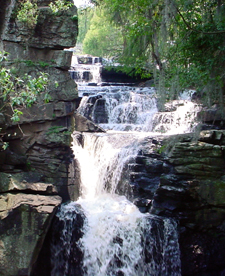 Mexico
makes you feel alive - the colors, the vibrancy, the friendly,
welcoming people, the great hospitality, the superb cuisine, the great
shopping, thousands of years of history and culture and frankly, the good,
old-fashioned values that make a place irresistible and unforgettable. Mexico
makes you feel alive - the colors, the vibrancy, the friendly,
welcoming people, the great hospitality, the superb cuisine, the great
shopping, thousands of years of history and culture and frankly, the good,
old-fashioned values that make a place irresistible and unforgettable.
Mexico is just a short flight away from the USA, and due to its reliable weather, it offers year-round horse riding opportunities! Mexican horse riding holidays combine the best Mexican culture, landscapes and cuisine with some excellent ranch style rides. Most of our rides take place on large working ranches, or between haciendas, giving you the opportunity to experience long gallops on un-fenced farmlands. Mexico is a fantastic choice for any horse riding holiday – especially if you want to experience North- or Central- America without traveling too far from the United States. Forget about the media stories you may hear ... all of these rides are located in perfectly safe parts of Mexico.
Horse Riding in Mexico
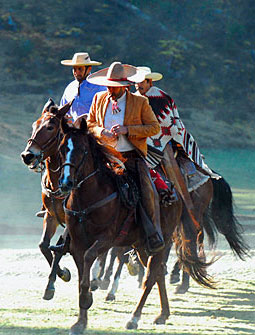 Perhaps nowhere in the American continent, horses have had a life-changing historical role like in Mexico. Reintroduced into North America by Conquistador Hernan Cortes in 1519, Spanish horses played a role in the conquest of the Aztec Empire, and later, in the whole of the Americas. Ever since, equines are part of the culture, history, and peoples’ lives in Mexico. Over the centuries, horse riding developed into the Charros or Mexican cowboys, until reaching the spectacular and colorful horse culture of today, known as the Charreria. Charreria is best displayed in the Charreadas or rodeos, where both men and women or amazon riders, compete to showcase their best horsemanship skills. In 1933, Charreria was recognized as the official national sport in Mexico. In 2016, Charreria was added to the UNESCO’s list of Intangible Cultural Heritage of Humanity. The Day of the Charro is celebrated each year on September 14th. Charros owed their status to their horses, and Charros are proud of it. In Mexico, certainly, you will find them as some of the best horsemen in the world. Perhaps nowhere in the American continent, horses have had a life-changing historical role like in Mexico. Reintroduced into North America by Conquistador Hernan Cortes in 1519, Spanish horses played a role in the conquest of the Aztec Empire, and later, in the whole of the Americas. Ever since, equines are part of the culture, history, and peoples’ lives in Mexico. Over the centuries, horse riding developed into the Charros or Mexican cowboys, until reaching the spectacular and colorful horse culture of today, known as the Charreria. Charreria is best displayed in the Charreadas or rodeos, where both men and women or amazon riders, compete to showcase their best horsemanship skills. In 1933, Charreria was recognized as the official national sport in Mexico. In 2016, Charreria was added to the UNESCO’s list of Intangible Cultural Heritage of Humanity. The Day of the Charro is celebrated each year on September 14th. Charros owed their status to their horses, and Charros are proud of it. In Mexico, certainly, you will find them as some of the best horsemen in the world.
Hidden Trails has traveled several times across Mexico and found some of the best horse breeding farms anywhere. We have been able to select the top equestrian trips in North America for you - in Mexico!
Gallop across open grassland, canter through beautiful woods, ride through small villages and at the end of each day relax in one the many superb fincas and haciendas like on the "Colonial Villages & Haciendas Ride. Explore the Land of Tequila in Central Mexico - and ride from hacienda to hacienda, learning more about the Charros.
Of course, center based trip can be just as exciting or as relaxing as you like. Stay at a beautiful ranch, north of Mexico City and design your own riding program to your liking.
Whatever you choose, you’ll find riding in Mexico spectacular.
Mexico Weather and Climate
Summer is the rainy season throughout much of Mexico, with Southern Mexico generally rainier than the north. Mexico's East Coast is wetter than the West Coast. Winters in Mexico are comparatively dry. The hottest months are generally March – August, and can reach 26º C (79 º F). The cooler months average around 15 º C (59 º F).
Explore more North American Horse Riding Vacations
|
|
Holidays on horseback in Mexico
See Mini Country Guide
|
|
|
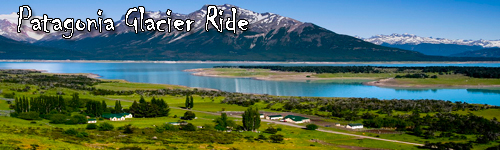
Patagonia Glacier Ride
(IT-ARRT03P)
Southern Patagonia, Argentina
6 days / 5 nights, rate from
$1,795
The Patagonia Glacier Ride offers exploring on horseback the most remote corners of Los Glaciares National Park where nature is discovered in its maximum expression: a combination of Andean woodland, crystal clear lakes, high mountains, impressive skies, and glaciers. The trip allows you to access where vehicles cannot reach, leaving the main buildings of the estancia behind to climb high up and enter another world.
Get away from civilization and allow yourself to become a part of the landscape and Patagonic life. A riding experience surrounded by immensity. Participate in a ranger’s life, in communion with the countryside, or of those pioneers and adventurers who were part of this area’s history. Meet the “puesteros”, who are in charge of eac...
Minimum riding level: Intermediate

|
|
Below is a list of our trips in this area with video clips.
 Click on the 'watch video' icon

to view a video clip,
Mexico
Travel restrictions
To this day, there are no entry restrictions in Mexico and no obligation to carry a COVID test or to do quarantine.
As of March 2022, it is no longer mandatory to register on the Mexico Vuela Seguro Platform (https://www.vuelaseguro.com/login ) before boarding.
Measures taken by the government
Passengers with abnormal temperatures and travel to high-risk areas might be subject to additional health screening.
On June 1st 2020, the Mexican government began phasing in non-essential economic activities in some states and municipalities using a national “stoplight” system.
The four metrics to determine the colors in the Mexican government’s stoplight system are the trend in numbers of new cases; hospital occupancy trends; current hospital occupancy rates; and percentage of positive cases. If one indicator is red, the whole state will be designated red.
As of April 13th 2022, all states are designated green. Under green, all economic and social activities, including school, are permitted while taking appropriate precautions.
Some states and municipalities have implemented additional restrictions on public gatherings, transportation, business operations, and government operations if health conditions warrant and/or developed separate stoplight systems from those at the federal level. Several states and municipalities have imposed curfews and movement restrictions on non-essential activities and have required citizens to wear masks when outside the home. In some areas, officials may issue fines and/or arrest and detain individuals found to be in violation of stay-at-home orders.
Testing
PCR and/or antigen tests are available for travellers in Mexico and test results are reliably available within 72 hours.
The Secretariat of Health (Salud) maintains a list of approved laboratories (Spanish only) for viral COVID-19 testing: https://www.gob.mx/cms/uploads/attachment/file/602186/
LISTADO_DE_LABORATORIOS_QUE_REALIZAN_EL_DIAGN_STICO_DE_COVID-19_17122020.pdf
Many local hospitals, clinics, and laboratories offer private testing for travel purposes.
The cost of PCR tests typically range from approximately 950 MXN to 4500 MXN, and the cost of viral antigen tests typically range from 200 MXN to 1000 MXN, depending on location and speed of results.
Travelers are responsible for the costs of their own tests and any associated medical care.
Some airlines and international airports in Mexico offer testing on-site as a last resort for travelers – please confirm directly with your carrier for more information on availability of this service. Even if such an option is available, it is recommended to obtain your test results before arriving at the airport. If you must test on-site at an airport where it is offered, you should arrive at least three hours earlier (or follow carrier recommendations) to allow time for results. Please note testing at the airport may result in missing your flight or onward connections due to delays or if you receive a positive test result.
As of February 4th 2021, international airports in the following locations confirmed the availability of on-site testing for some passengers: Acapulco, Aguascalientes, Cancun, Culiacan, Durango, Guadalajara, Guanajuato, Hermosillo, La Paz, Los Cabos, Los Mochis, Manzanillo, Mazatlan, Merida, Mexicali, Mexico City, Morelia, Nuevo Leon, Oaxaca, Puerto Vallarta, San Luis Potosi, Tampico, Tijuana, Torreon, Zacatecas, Zihuatanejo. You should confirm testing availability directly with the airport or air carrier.
Emergency number (related to COVID-19) while visiting the country
Call the Mexican Ministry of Health’s COVID-19 hotline at 800 0044 800 or 55 5658 1111
for information or medical attention. English language operators are sometimes, but not always, available.
Source:
US Embassy in Mexico https://mx.usembassy.gov/covid-19-information-for-u-s-citizens-in-mexico/
Published on June 15th 2022 (checked on April 5th 2023)
For more information please visit our COVID-19 Updates page at https://www.hiddentrails.com/article/covid19update.aspx
|
|
Mexico
At A glance
Capital City: Mexico City
Land size: 1,943,945 sq km
Population: 129,150,971 (2022 est.)
Official language: Spanish
Currency: Mexican Nuevo Peso ($ / MXN)
UNESCO properties and sites:
- Agave Landscape and Ancient Industrial Facilities of Tequila
- Aqueduct of Padre Tembleque Hydraulic System
- Archaeological Monuments Zone of Xochicalco
- Archaeological Zone of Paquimé, Casas Grandes
- Camino Real de Tierra Adentro
- Central University City Campus of the Universidad Nacional Autónoma de México (UNAM)
- Earliest 16th-Century Monasteries on the Slopes of Popocatepetl
- El Tajin, Pre-Hispanic City
- Franciscan Missions in the Sierra Gorda of Querétaro
- Historic Centre of Mexico City and Xochimilco
- Historic Centre of Morelia
- Historic Centre of Oaxaca and Archaeological Site of Monte Albán
- Historic Centre of Puebla
- Historic Centre of Zacatecas
- Historic Fortified Town of Campeche
- Historic Monuments Zone of Querétaro
- Historic Monuments Zone of Tlacotalpan
- Historic Town of Guanajuato and Adjacent Mines
- Hospicio Cabañas, Guadalajara
- Luis Barragán House and Studio
- Pre-Hispanic City and National Park of Palenque
- Pre-Hispanic City of Chichen-Itza
- Pre-Hispanic City of Teotihuacan
- Pre-Hispanic Town of Uxmal
- Prehistoric Caves of Yagul and Mitla in the Central Valley of Oaxaca
- Protective town of San Miguel and the Sanctuary of Jesús Nazareno de Atotonilco
- Rock Paintings of the Sierra de San Francisco
- Archipiélago de Revillagigedo
- El Pinacate and Gran Desierto de Altar Biosphere Reserve
- Islands and Protected Areas of the Gulf of California
- Monarch Butterfly Biosphere Reserve
- Sian Ka'an
- Whale Sanctuary of El Vizcaino
- Ancient Maya City and Protected Tropical Forests of Calakmul, Campeche
- Tehuacán-Cuicatlán Valley: originary habitat of Mesoamerica
Source: https://www.cia.gov/the-world-factbook/countries/mexico/
Mexico is a fantastic holiday destination, featuring ancient ruins, colorful traditions, and ideal riding weather year round. Here, you can explore the awe-inspiring ruins of Teotihuacan, where the remnants of the ancient Maya civilization transport you to another time. We also recommend indulging in the flavors of authentic Mexican cuisine, from savory tacos and tamales to rich mole sauces and refreshing margaritas.
Whether you seek adventure, cultural immersion, or simply a tranquil escape, Mexico offers it all.
Mexican equestrian experiences will take you off the beaten path and allow you to explore hidden treasures. Ride along the Camino Real, learning more about local haciendas and Mexican culture. Journey through the volcanoes of Ajusco, discovering lush landscapes and waterfalls along the way. Canter through the rugged terrains of the Central Highlands, where colonial villages and panoramic vistas unfold before your eyes.
Mexico's diverse landscapes provide a captivating backdrop for your equestrian adventure. Whether you're an experienced rider or a beginner seeking to connect with the spirit of Mexico, a riding holiday will introduce you to the country's rich traditions, vibrant cuisine, and warm-hearted people.
Brief History
The site of several advanced Amerindian civilizations - including the Olmec, Toltec, Teotihuacan, Zapotec, Maya, and Aztec - Mexico was conquered and colonized by Spain in the early 16th century. Administered as the Viceroyalty of New Spain for three centuries, it achieved independence early in the 19th century.
Andres Manuel LOPEZ OBRADOR, from the National Regeneration Movement (MORENA), became president in December 2018.
The US-Mexico-Canada Agreement (USMCA, or T-MEC by its Spanish acronym) entered into force on 1 July 2020 and replaced its predecessor, the North American Free Trade Agreement (NAFTA). Mexico amended its constitution on 1 May 2019 to facilitate the implementation of the labor components of USMCA.
Source: https://www.cia.gov/the-world-factbook/countries/mexico/
Cultural Insights
Mexico possesses an extensive and sophisticated culinary culture, with a great variety of regional dishes. Three products constitute the heart of most Mexican dishes: corn, hot peppers (chiles), and beans, products that stem from pre-Columbian times. Corn is consumed in all possible forms: as a cooked or roasted corncob ( elote ), cooked grain of corn, porridge ( atole ), as wrapped and steamed dough with filling ( tamal ), but most importantly as a tortilla, a thin, round "pancake. Much of the sophistication of Mexican cuisine comes from the use of more than one hundred different types of chiles, which range from the large and "sweet" chile ancho to the small and extremely hot chile habanero .
Generally speaking, Mexicans shake hands when they meet or in the case of two women meeting or a man and a woman meeting, kiss each other on the cheek once. In the case of close friends and on special occasions, such as New Year's Eve, Mexican men and women embrace each other, pat each other gently on the back, and then shake hands. This abrazo expresses confidentiality and the crucial value of trust.
Mexicans value the art of eloquence. Conversations will mostly begin with polite and informal exchanges and slowly move toward the subject matter. Even then Mexicans remain indirect speakers, avoiding clear-cut statements.
Source: https://www.everyculture.com/Ma-Ni/Mexico.html
Transportation
By Air
Mexico City Airport is the busiest of all airports in Mexico. It is also known as Benito Juarez Airport and it serves Mexico City and its metropolitan area. With its two terminals, it handles around 50 million passengers every year. The airport is a major hub for several carriers including Aeromexico, Interjet and low-cost Volaris airline. Moreover, it is one of the airports offering direct flights to Europe such as Frankfurt, London and Madrid.
Cancun Airport is the country’s second busiest airports. The airport consists of four terminals and it handles more than 25 million passengers per year. Besides the domestic flights, the airport offers direct connections to North America but also Europe. Among the biggest airlines operating at the airport are Interjet, Southwest Airlines, DeltaAir and budget airlines Volaris and VivaAerobus.
Miguel Hidalgo y Costilla Guadalajara International Airport, as it is fully named, serves as the main airport of the second-largest city in Mexico, Guadalajara. The airport has one passenger terminal which handles around 15 million passengers annually. Volaris, Interjet and Aeromexico are among the biggest airlines operating the airport, connecting South and North America.
Monterrey Airport is also known as General Mariano Escobedo International Airport. It is located in Apodaca, a part of the Monterrey metropolitan area, in the state of Nuevo Leon. The airport is the primary entry point for Monterrey city and was voted 29th best world airport, according to passengers. As the fourth-busiest Mexican airport, it consists of three terminals that handle around 11 million passengers each year. Airports’ main carriers are Interjet, Volaris and Aeromexico.
Tijuana International Airport, also called General Abelardo L. Rodríguez International Airport is located right next to the USA’s California border. Therefore, it serves both Tijuana in Baja California and San Diego in California. The distance from Tijuana to the airport is about 10km, and from San Diego to the airport is around 40 km. American and Mexican terminals are separated by the bridge, handling around 9 million passengers each year. The airport serves as a hub for Volaris and offers several transportation options to nearby cities, including buses and taxis.
Los Cabos International Airport is located in San Jose del Cabo, in the state of Baja California Sur. It serves the municipality of Los Cabos and consists of two terminals that together handle over 5 million passengers per year. Among the airlines operating the airport are Volaris, Interjet and Aeromexico.
Licenciado Gustavo Díaz Ordaz International Airport, as it is fully named, is an international airport in Puerto Vallarta. Located in Jalisco state, it serves the coastal area of Nayarit state. Each year, the airport handles around 5 million passengers. The airport’s busiest routes are domestic ones, but there are also international connections to the USA and Canada.
Manuel Crescencio Rejón International Airport, as it is fully named, is an airport serving Merida, in the state of Yucatan. With its one terminal, the airport handles nearly 3 million passengers each year. Airlines operating the airport offer domestic and international flights to South and North America. Among the carriers are Volaris, Interjet and Aeromexico.
Del Bajio Airport, known also as Silao Airport and officially Guanajuato International Airport is located in Silao city. It serves the entire Guanajuato state and Leon’s metropolitan area. The airport has one terminal which handles almost 3 million passengers per year. Besides the domestic flights, the airport offers connections to the USA.
Bachigualato Federal International Airport, or Culiacan airport as it is also known, is an international airport in Mexico, serving the cities of Culiacan and Navolato. The airport has one terminal which handles around 2.5 million passengers annually. Several airlines offer domestic and international flights including Aeromexico, Volaris, Interjet and VivaAerobus.
Source: https://getbybus.com/en/blog/airports-mexico/
Money
Foreign debit and credit cards are widely accepted for payment and in ATMs.
It’s not usually possible to exchange cash at hotel receptions - this can only be done at banks and bureaux de change.
Source: https://www.gov.uk/foreign-travel-advice/mexico
Health
Excellent health facilities are available in Mexico City and other major cities.
U.S. citizens have lodged complaints against some private hospitals in Cancun, the Riviera Maya, and Los Cabos to include exorbitant prices and inflexible collection measures. Travelers should obtain complete information on billing, pricing, and proposed medical procedures before agreeing to any medical care in these locations. Be aware that some resorts have exclusive agreements with medical providers and ambulance services, which may limit your choices in seeking emergency medical attention. Some hospitals in tourist centers utilize sliding scales, deciding on rates for services based on negotiation and on the patient’s perceived ability to pay. In some instances, providers have been known to determine the limits of a patient’s credit card or insurance, quickly reach that amount in services rendered, and subsequently discharge the patient or transfer them to a public hospital.
Not all hospitals will agree to deal directly with medical insurance companies. You should be prepared to pay for treatment yourself up front and then seek a refund. Make sure you have adequate travel health insurance and accessible funds to cover the cost of any medical treatment abroad and repatriation.
If you need emergency medical assistance during your trip, dial 911 and ask for an ambulance. In Mexico City, you can also use the emergency buttons on CCTV cameras visible across the city which will immediately connect you to the emergency services. You should contact your insurance/medical assistance company promptly if you are referred to a medical facility for treatment.
Ambulance services are widely available, but training and availability of emergency responders may be below U.S. standards.
Many pharmacies in large cities provide 24/7 service, as well as home deliveries of medication. Any prescription issued outside of Mexico will require a translation into Spanish. It is ultimately up to the individual local pharmacy whether they will accept a foreign prescription or not. However, many pharmacies in Mexico also have an onsite GP who can assess a patient and prescribe medication if required.
Exercise caution when purchasing medication overseas. Pharmaceuticals, both over the counter and requiring prescription in the United States, are often readily available for purchase with little controls. Counterfeit medication is common and may prove to be ineffective, the wrong strength, or contain dangerous ingredients. Medication should be purchased in consultation with a medical professional and from reputable establishments.
On arrival in Mexico City and other high altitude areas, you may feel a lack of energy, shortness of breath or headaches.
High levels of air pollution can occur in Mexico City and may aggravate heart, lung or respiratory conditions. Children, the elderly and those with pre-existing medical conditions may be especially affected. You can check the pollution index levels for many cities in real time.
Drink only boiled or bottled water and avoid ice in drinks.
In the last 3 years there has been an increase in reported cases of a food and water bug, cyclospora, affecting travellers returning from Mexico, particularly from the Riviera Maya region between the months of May and June.
Source: https://www.gov.uk/foreign-travel-advice/mexico
https://travel.state.gov/content/travel/en/international-travel/International-Travel-Country-Information-Pages/Mexico.html
Electricity
Mexico operates on a 127V supply voltage and uses type A and B plugs.
The Type A electrical plug (or flat blade attachment plug) is an ungrounded plug with two flat parallel pins. Although the American and Japanese plugs appear identical, the neutral pin on the American plug is wider than the live pin, whereas on the Japanese plug both pins are the same size. As a result, Japanese plugs can be used in the US but often not the other way around.
The pins on Type A and Type B plugs have a hole near the tip that fits into ‘bumps’ found on the contact wipers of some sockets, so that the pins are gripped more tightly allowing for better contact and also to prevent the plug from slipping out of the socket. Some sockets have spring-action blades that grip the sides of the pins, making the holes obsolete.
The Type B electrical plug has two flat parallel pins and a round grounding (or earth) pin. The earth pin is longer than the other two so that the device is grounded before the power is connected. As with the type A plugs, the American and Japanese versions vary slightly.
Source: https://www.iec.ch/world-plugs
Communication
Time zones in Mexico: Pacific Standard Time (GMT-8), Mountain Standard Time (GMT-7), Central Standard Time (GMT-6) & Eastern Standard Time (GMT-5)
International country code – 52
With a large population and relatively low broadband and mobile penetration, Mexico’s telecom sector has potential for growth. 5G development is slow in part due to high costs. (2021)
Source: https://www.cia.gov/the-world-factbook/countries/mexico/
Phrasebook
| English |
Spanish |
| Hello! |
Hola |
| Goodbye |
Adiós |
| Good morning |
Buenos días |
| Good evening |
Buenos tardes |
| Good night |
Buenas noches |
| Please |
Por favor |
| Thank you |
Gracias |
| Yes |
Sí |
| No |
No |
Source: https://www.linguahouse.com/phrasebook/english-spanish/basic-words-and-phrases/basic-words-and-phrases
Entry Requirements
To enter Mexico, you must have the following documents:
1. A valid passport or travel document. There is no need for a minimum period of validity of the passport (for example 6 months); but this document must be valid during the length of your stay in Mexico.
2. A properly completed Multiple Migratory Form (FMM). This form will be provided to you by the airline or at the port of entry. You can also complete this form online. Please keep it in a safe place and do not lose it. You will be asked for this document at your departure from Mexico. Please click here: https://www.inm.gob.mx/fmme/publico/en/solicitud.html
3. Mexican immigration officers at the port of entry may request additional documents depending on the purpose/activity of your trip.
Source: https://consulmex.sre.gob.mx/montreal/index.php/en/foreigners/visa/355-what-documents-do-i-need-to-enter-mexico
Embassies and Consulates
U.S. Embassy in Mexico City
Paseo de la Reforma 305
Colonia Cuauhtemoc
06500 Mexico
Phone: (+52) 55-5080-2000
U.S. Consulate General in Ciudad Juarez
Paseo de la Victoria #3650
Fracc. Partido Senecú
32543 Ciudad Juárez
Phone: (+52) 656-227-3000
U.S. Consulate General in Guadalajara
Progreso 175
Col. Americana
44160 Guadalajara
Phone: (+52) 33-3268-2100
U.S. Consulate General in Hermosillo
141 Monterey Street
Col. Esqueda
83000 Hermosillo
Phone: (+52) 662-690-3262
U.S. Consulate General in Matamoros
Calle Constitución No. 1
Colonia Jardín
87330 Matamoros
Phone: (+52) 868-208-2000
U.S. Consulate General in Merida
Calle 60 No. 338-K x 29 y 31
Col. Alcala Martin
97050 Merida
Phone: (+52) 999-942-5700
U.S. Consulate General in Monterrey
Prolongación Ave. Alfonso Reyes #150
Col. Valle del Poniente
66196 Santa Catarina
Phone: (+52) 81-8047-3100
U.S. Consulate General in Nogales
Calle San José s/n
Fraccionamiento los Alamos
84065 Nogales
Phone: (+52) 631-311-8150
U.S. Consulate General in Nuevo Laredo
Paseo Colon 1901
Colonia Madero
88260 Nuevo Laredo
Tel: 867 714 0512 (from México) / 867-714-0512 (from the US)
U.S. Consulate General in Tijuana
Paseo de las Culturas s/n
Mesa de Otay
Delegación Centenario
22425 Tijuana
Phone: (+52) 664 977-2000
Embassy of Canada in Mexico City
Calle Schiller No. 529, Colonia Polanco
11580 México
Phone: +52 55-5724-7900
Consular Agency of Canada in Acapulco
Pasaje Diana, Avenida Costera Miguel Alemán 121, L-16, Fracc. Magallanes
39670 Acapulco
Phone: +52 55-5724-9794
Consular Agency of Canada in Cabo San Lucas
Carretera Transpeninsular Km. 0.5, Local 82, Col. El Tezal
23454 Cabo San Lucas
Phone: +52 55-5724-9797
Consular Agency of Canada in Cancún
Centro Empresarial, Oficina E7, Blvd. Kukulcan Km. 12, Zona Hotelera
77500 Cancún
Phone: +52 55-5724-9795
Consulate of Canada in Guadalajara
World Trade Center, Av. Mariano Otero 1249, Torre Pacifico Piso 8
Col. Rinconada del Bosque
44530 Guadalajara
Phone: +52 33-1818-4200
Consular Agency of Canada in Mazatlán
Centro Comercial La Marina Business and Life, Blvd. Marina Mazatlán 2302
Office 41, Col. Marina Mazatlán
82103 Mazatlán
Phone: +52 55-5724-9798
Consulate General of Canada in Monterrey
Torre Gomez Morin 955, Ave. Gomez Morin No. 955
Suite 404, Col. Montebello
66279 San Pedro Garza Garcia
Phone: +52 81-2088-3200/3201
Consular Agency of Canada in Playa del Carmen
Plaza Paraíso Caribe, Modulo C, Planta 2
Oficina C21 - 24, Av. 10 Sur entre Calle 3 y 5 Sur, M-35, Lote 1, Colonia Centro
77710 Playa del Carmen
Phone: +52 55-5724-9796
Consular Agency of Canada in Puerto Vallarta
Plaza Peninsula, Local Sub F
Boulevard Francisco Medina Ascencio 2485, Zona Hotelera Norte
48300 Puerto Vallarta
Phone: +52 55-5724-9799
Consulate of Canada in Tijuana
Germán Gedovius No.10411-101
Condominio del Parque, Zona Río
22320 Tijuana
Phone: 664-684-0301
Source: for USA https://www.usembassy.gov/
For Canada: https://travel.gc.ca/assistance/embassies-consulates
UNESCO Sites
Agave Landscape and Ancient Industrial Facilities of Tequila
The 34,658 ha site, between the foothills of the Tequila Volcano and the deep valley of the Rio Grande River, is part of an expansive landscape of blue agave, shaped by the culture of the plant used since the 16th century to produce tequila spirit and for at least 2,000 years to make fermented drinks and cloth. Within the landscape are working distilleries reflecting the growth in the international consumption of tequila in the 19th and 20th centuries. Today, the agave culture is seen as part of national identity. The area encloses a living, working landscape of blue agave fields and the urban settlements of Tequila, Arenal, and Amatitan with large distilleries where the agave ‘pineapple' is fermented and distilled. The property is also a testimony to the Teuchitlan cultures which shaped the Tequila area from AD 200-900, notably through the creation of terraces for agriculture, housing, temples, ceremonial mounds and ball courts.
Aqueduct of Padre Tembleque Hydraulic System
This 16th century aqueduct is located between the states of Mexico and Hidalgo, on the Central Mexican Plateau. This heritage canal system encompasses a water catchment area, springs, canals, distribution tanks and arcaded aqueduct bridges. The site incorporates the highest single-level arcade ever built in an aqueduct. Initiated by the Franciscan friar, Padre Tembleque, and built with support from the local indigenous communities, this hydraulic system is an example of the exchange of influences between the European tradition of Roman hydraulics and traditional Mesoamerican construction techniques, including the use of adobe.
Archaeological Monuments Zone of Xochicalco
Xochicalco is an exceptionally well-preserved example of a fortified political, religious and commercial centre from the troubled period of 650–900 that followed the break-up of the great Mesoamerican states such as Teotihuacan, Monte Albán, Palenque and Tikal.
Archaeological Zone of Paquimé, Casas Grandes
Paquimé, Casas Grandes, which reached its apogee in the 14th and 15th centuries, played a key role in trade and cultural contacts between the Pueblo culture of the south-western United States and northern Mexico and the more advanced civilizations of Mesoamerica. The extensive remains, only part of which have been excavated, are clear evidence of the vitality of a culture which was perfectly adapted to its physical and economic environment, but which suddenly vanished at the time of the Spanish Conquest.
Camino Real de Tierra Adentro
Camino Real de Tierra Adentro was the Royal Inland Road, also known as the Silver Route. The inscribed property consists of 55 sites and five existing World Heritage sites lying along a 1400 km section of this 2600 km route, that extends north from Mexico City to Texas and New Mexico, United States of America. The route was actively used as a trade route for 300 years, from the mid-16th to the 19th centuries, mainly for transporting silver extracted from the mines of Zacatecas, Guanajuato and San Luis Potosí, and mercury imported from Europe. Although it is a route that was motivated and consolidated by the mining industry, it also fostered the creation of social, cultural and religious links in particular between Spanish and Amerindian cultures.
Central University City Campus of the Universidad Nacional Autónoma de México (UNAM)
The ensemble of buildings, sports facilities and open spaces of the Central University City Campus of the Universidad Nacional Autónoma de México (UNAM), was built from 1949 to 1952 by more than 60 architects, engineers and artists who were involved in the project. As a result, the campus constitutes a unique example of 20th-century modernism integrating urbanism, architecture, engineering, landscape design and fine arts with references to local traditions, especially to Mexico’s pre-Hispanic past. The ensemble embodies social and cultural values of universal significance and is one of the most significant icons of modernity in Latin America.
Earliest 16th-Century Monasteries on the Slopes of Popocatepetl
The Earliest 16th-Century Monasteries on the Slopes of Popocatepetl is a serial property with 15 component parts located in the states of Morelos, Puebla and Tlaxcala in Mexico, built as part of the evangelisation and colonisation of the northern territories of Mexico. They are in an excellent state of conservation and are good examples of the architectural style adopted by the first missionaries – Franciscans, Dominicans and Augustinians – who converted the indigenous populations to Christianity in the early 16th century. They also represent an example of a new architectural concept in which open spaces, including wide atria and posa chapels, are of renewed importance. The influence of this style is felt throughout the Mexican territory and even beyond its borders.
El Tajin, Pre-Hispanic City
Located in the state of Veracruz, El Tajin was at its height from the early 9th to the early 13th century. It became the most important centre in north-east Mesoamerica after the fall of the Teotihuacan Empire. Its cultural influence extended all along the Gulf and penetrated into the Maya region and the high plateaux of central Mexico. Its architecture, which is unique in Mesoamerica, is characterized by elaborate carved reliefs on the columns and frieze. The 'Pyramid of the Niches', a masterpiece of ancient Mexican and American architecture, reveals the astronomical and symbolic significance of the buildings. El Tajin has survived as an outstanding example of the grandeur and importance of the pre-Hispanic cultures of Mexico.
Franciscan Missions in the Sierra Gorda of Querétaro
The five Franciscan missions of Sierra Gorda were built during the last phase of the conversion to Christianity of the interior of Mexico in the mid-18th century and became an important reference for the continuation of the evangelization of California, Arizona and Texas. The richly decorated church façades are of special interest as they represent an example of the joint creative efforts of the missionaries and the Indios. The rural settlements that grew around the missions have retained their vernacular character.
Historic Centre of Mexico City and Xochimilco
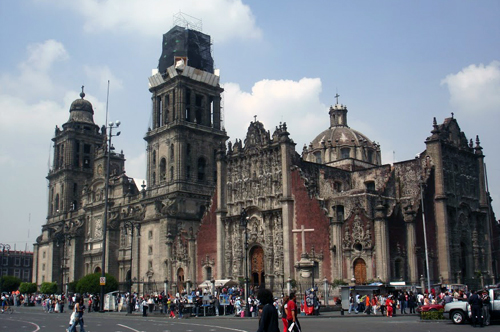
Built in the 16th century by the Spanish on the ruins of Tenochtitlan, the old Aztec capital, Mexico City is now one of the world's largest and most densely populated cities. It has five Aztec temples, the ruins of which have been identified, a cathedral (the largest on the continent) and some fine 19th- and 20th-century public buildings such as the Palacio de las Bellas Artes. Xochimilco lies 28 km south of Mexico City. With its network of canals and artificial islands, it testifies to the efforts of the Aztec people to build a habitat in the midst of an unfavourable environment. Its characteristic urban and rural structures, built since the 16th century and during the colonial period; have been preserved in an exceptional manner.
Historic Centre of Morelia
Built in the 16th century, Morelia is an outstanding example of urban planning which combines the ideas of the Spanish Renaissance with the Mesoamerican experience. Well-adapted to the slopes of the hill site, its streets still follow the original layout. More than 200 historic buildings, all in the region's characteristic pink stone, reflect the town's architectural history, revealing a masterly and eclectic blend of the medieval spirit with Renaissance, Baroque and neoclassical elements. Morelia was the birthplace of several important personalities of independent Mexico and has played a major role in the country's history.
Historic Centre of Oaxaca and Archaeological Site of Monte Albán
Inhabited over a period of 1,500 years by a succession of peoples – Olmecs, Zapotecs and Mixtecs – the terraces, dams, canals, pyramids and artificial mounds of Monte Albán were literally carved out of the mountain and are the symbols of a sacred topography. The nearby city of Oaxaca, which is built on a grid pattern, is a good example of Spanish colonial town planning. The solidity and volume of the city's buildings show that they were adapted to the earthquake-prone region in which these architectural gems were constructed.
Historic Centre of Puebla
Puebla, which was founded ex nihilo in 1531, is situated about 100 km east of Mexico City, at the foot of the Popocatepetl volcano. It has preserved its great religious structures such as the 16th–17th-century cathedral and fine buildings like the old archbishop's palace, as well as a host of houses with walls covered in tiles (azulejos). The new aesthetic concepts resulting from the fusion of European and American styles were adopted locally and are peculiar to the Baroque district of Puebla.
Historic Centre of Zacatecas
Founded in 1546 after the discovery of a rich silver lode, Zacatecas reached the height of its prosperity in the 16th and 17th centuries. Built on the steep slopes of a narrow valley, the town has breathtaking views and there are many old buildings, both religious and civil. The cathedral, built between 1730 and 1760, dominates the centre of the town. It is notable for its harmonious design and the Baroque profusion of its façades, where European and indigenous decorative elements are found side by side.
Historic Fortified Town of Campeche
Campeche is a typical example of a harbour town from the Spanish colonial period in the New World. The historic centre has kept its outer walls and system of fortifications, designed to defend this Caribbean port against attacks from the sea.
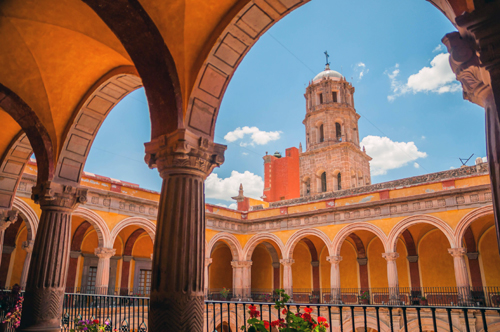
Photo by Camille Loiseau
Historic Monuments Zone of Querétaro
The old colonial town of Querétaro is unusual in having retained the geometric street plan of the Spanish conquerors side by side with the twisting alleys of the Indian quarters. The Otomi, the Tarasco, the Chichimeca and the Spanish lived together peacefully in the town, which is notable for the many ornate civil and religious Baroque monuments from its golden age in the 17th and 18th centuries.
Historic Monuments Zone of Tlacotalpan
Tlacotalpan, a Spanish colonial river port on the Gulf coast of Mexico, was founded in the mid-16th century. It has preserved its original urban fabric to a remarkable degree, with wide streets, colonnaded houses in a profusion of styles and colours, and many mature trees in the public open spaces and private gardens.
Historic Town of Guanajuato and Adjacent Mines
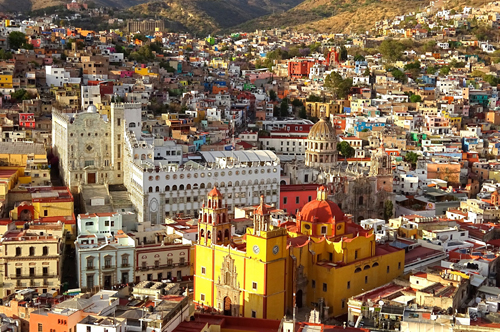
Founded by the Spanish in the early 16th century, Guanajuato became the world's leading silver-extraction centre in the 18th century. This past can be seen in its 'subterranean streets' and the 'Boca del Inferno', a mineshaft that plunges a breathtaking 600 m. The town's fine Baroque and neoclassical buildings, resulting from the prosperity of the mines, have influenced buildings throughout central Mexico. The churches of La Compañía and La Valenciana are considered to be among the most beautiful examples of Baroque architecture in Central and South America. Guanajuato was also witness to events which changed the history of the country.
Hospicio Cabañas, Guadalajara
The Hospicio Cabañas was built at the beginning of the 19th century to provide care and shelter for the disadvantaged – orphans, old people, the handicapped and chronic invalids. This remarkable complex, which incorporates several unusual features designed specifically to meet the needs of its occupants, was unique for its time. It is also notable for the harmonious relationship between the open and built spaces, the simplicity of its design, and its size. In the early 20th century, the chapel was decorated with a superb series of murals, now considered some of the masterpieces of Mexican art. They are the work of José Clemente Orozco, one of the greatest Mexican muralists of the period.
Luis Barragán House and Studio
Built in 1948, the House and Studio of architect Luis Barragán in the suburbs of Mexico City represents an outstanding example of the architect’s creative work in the post-Second World War period. The concrete building, totalling 1,161 m2, consists of a ground floor and two upper storeys, as well as a small private garden. Barragán’s work integrated modern and traditional artistic and vernacular currents and elements into a new synthesis, which has been greatly influential, especially in the contemporary design of gardens, plazas and landscapes.
Pre-Hispanic City and National Park of Palenque
A prime example of a Mayan sanctuary of the classical period, Palenque was at its height between AD 500 and 700, when its influence extended throughout the basin of the Usumacinta River. The elegance and craftsmanship of the buildings, as well as the lightness of the sculpted reliefs with their Mayan mythological themes, attest to the creative genius of this civilization.
Pre-Hispanic City of Chichen-Itza
This sacred site was one of the greatest Mayan centres of the Yucatán peninsula. Throughout its nearly 1,000-year history, different peoples have left their mark on the city. The Maya and Toltec vision of the world and the universe is revealed in their stone monuments and artistic works. The fusion of Mayan construction techniques with new elements from central Mexico make Chichen-Itza one of the most important examples of the Mayan-Toltec civilization in Yucatán. Several buildings have survived, such as the Warriors’ Temple, El Castillo and the circular observatory known as El Caracol.
Pre-Hispanic City of Teotihuacan
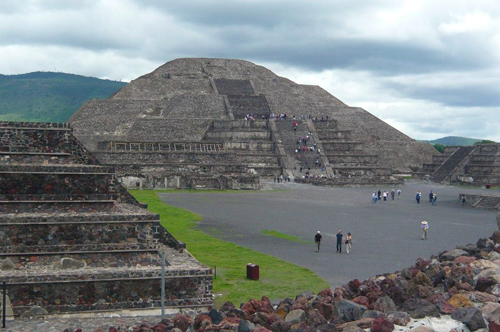
The holy city of Teotihuacan ('the place where the gods were created') is situated some 50 km north-east of Mexico City. Built between the 1st and 7th centuries A.D., it is characterized by the vast size of its monuments – in particular, the Temple of Quetzalcoatl and the Pyramids of the Sun and the Moon, laid out on geometric and symbolic principles. As one of the most powerful cultural centres in Mesoamerica, Teotihuacan extended its cultural and artistic influence throughout the region, and even beyond.
Pre-Hispanic Town of Uxmal
The Mayan town of Uxmal, in Yucatán, was founded c. A.D. 700 and had some 25,000 inhabitants. The layout of the buildings, which date from between 700 and 1000, reveals a knowledge of astronomy. The Pyramid of the Soothsayer, as the Spaniards called it, dominates the ceremonial centre, which has well-designed buildings decorated with a profusion of symbolic motifs and sculptures depicting Chaac, the god of rain. The ceremonial sites of Uxmal, Kabah, Labna and Sayil are considered the high points of Mayan art and architecture.
Prehistoric Caves of Yagul and Mitla in the Central Valley of Oaxaca
This property lies on the northern slopes of the Tlacolula valley in subtropical central Oaxaca and consists of two pre-Hispanic archaeological complexes and a series of pre-historic caves and rock shelters. Some of these shelters provide archaeological and rock-art evidence for the progress of nomadic hunter-gathers to incipient farmers. Ten thousand-year-old Cucurbitaceae seeds in one cave, Guilá Naquitz, are considered to be the earliest known evidence of domesticated plants in the continent, while corn cob fragments from the same cave are said to be the earliest documented evidence for the domestication of maize. The cultural landscape of the Prehistoric Caves of Yagul and Mitla demonstrates the link between man and nature that gave origin to the domestication of plants in North America, thus allowing the rise of Mesoamerican civilizations.
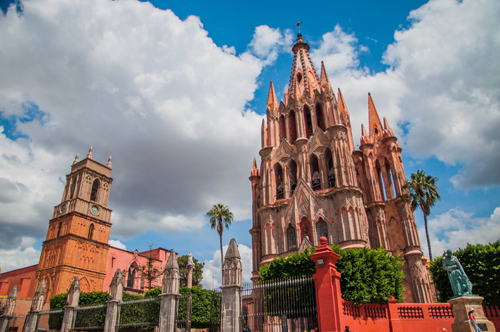
Photo by Camille Loiseau
Protective town of San Miguel and the Sanctuary of Jesús Nazareno de Atotonilco
The fortified town, first established in the 16th century to protect the Royal Route inland, reached its apogee in the 18th century when many of its outstanding religious and civic buildings were built in the style of the Mexican Baroque. Some of these buildings are masterpieces of the style that evolved in the transition from Baroque to neoclassical. Situated 14 km from the town, the Jesuit sanctuary, also dating from the 18th century, is one of the finest examples of Baroque art and architecture in the New Spain. It consists of a large church, and several smaller chapels, all decorated with oil paintings by Rodriguez Juárez and mural paintings by Miguel Antonio Martínez de Pocasangre. Because of its location, San Miguel de Allende acted as a melting pot where Spaniards, Creoles and Amerindians exchanged cultural influences while the Sanctuary of Jesús Nazareno de Atotonilco constitutes an exceptional example of the exchange between European and Latin American cultures. Its architecture and interior decoration testify to the influence of Saint Ignacio de Loyola’s doctrine.
Rock Paintings of the Sierra de San Francisco
From c. 100 B.C. to A.D. 1300, the Sierra de San Francisco (in the El Vizcaino reserve, in Baja California) was home to a people who have now disappeared but who left one of the most outstanding collections of rock paintings in the world. They are remarkably well-preserved because of the dry climate and the inaccessibility of the site. Showing human figures and many animal species and illustrating the relationship between humans and their environment, the paintings reveal a highly sophisticated culture. Their composition and size, as well as the precision of the outlines and the variety of colours, but especially the number of sites, make this an impressive testimony to a unique artistic tradition.
Archipiélago de Revillagigedo
Located in the eastern Pacific Ocean, this archipelago is made up of four remote islands and their surrounding waters: San Benedicto, Socorro, Roca Partida and Clarión. This archipelago is part of a submerged mountain range, with the four islands representing the peaks of volcanoes emerging above sea level. The islands provide critical habitat for a range of wildlife and are of particular importance for seabirds. The surrounding waters have a remarkable abundance of large pelagic species, such as manta rays, whales, dolphins and sharks.
El Pinacate and Gran Desierto de Altar Biosphere Reserve
The 714,566 hectare site comprises two distinct parts: the dormant volcanic Pinacate Shield of black and red lava flows and desert pavements to the east, and, in the west, the Gran Altar Desert with its ever changing and varied sand dunes that can reach a height of 200 metres. This landscape of dramatic contrast notably features linear, star and dome dunes as well as several arid granite massifs, some as high as 650 metres. The dunes emerge like islands from the sea of sand and harbour distinct and highly diverse plant and wildlife communities, including endemic freshwater fish species and the endemic Sonoran Pronghorn, which is only to be found in northwestern Sonora and in southwestern Arizona (USA). Ten enormous, deep and almost perfectly circular craters, believed to have been formed by a combination of eruptions and collapses, also contribute to the dramatic beauty of the site whose exceptional combination of features are of great scientific interest. The site is also a UNESCO Biosphere Reserve.
Islands and Protected Areas of the Gulf of California
The site comprises 244 islands, islets and coastal areas that are located in the Gulf of California in north-eastern Mexico. The Sea of Cortez and its islands have been called a natural laboratory for the investigation of speciation. Moreover, almost all major oceanographic processes occurring in the planet’s oceans are present in the property, giving it extraordinary importance for study. The site is one of striking natural beauty in a dramatic setting formed by rugged islands with high cliffs and sandy beaches, which contrast with the brilliant reflection from the desert and the surrounding turquoise waters. It is home to 695 vascular plant species, more than in any marine and insular property on the World Heritage List. Equally exceptional is the number of fish species: 891, 90 of them endemic. The site, moreover, contains 39% of the world’s total number of species of marine mammals and a third of the world’s marine cetacean species.
Monarch Butterfly Biosphere Reserve
The 56,259 ha biosphere lies within rugged forested mountains about 100 km northwest of Mexico City. Every autumn, millions, perhaps a billion, butterflies from wide areas of North America return to the site and cluster on small areas of the forest reserve, colouring its trees orange and literally bending their branches under their collective weight. In the spring, these butterflies begin an 8 month migration that takes them all the way to Eastern Canada and back, during which time four successive generations are born and die. How they find their way back to their overwintering site remains a mystery.
Sian Ka'an
In the language of the Mayan peoples who once inhabited this region, Sian Ka'an means 'Origin of the Sky'. Located on the east coast of the Yucatán peninsula, this biosphere reserve contains tropical forests, mangroves and marshes, as well as a large marine section intersected by a barrier reef. It provides a habitat for a remarkably rich flora and a fauna comprising more than 300 species of birds, as well as a large number of the region's characteristic terrestrial vertebrates, which cohabit in the diverse environment formed by its complex hydrological system.
Whale Sanctuary of El Vizcaino
Located in the central part of the peninsula of Baja California, the sanctuary contains some exceptionally interesting ecosystems. The coastal lagoons of Ojo de Liebre and San Ignacio are important reproduction and wintering sites for the grey whale, harbour seal, California sea lion, northern elephant-seal and blue whale. The lagoons are also home to four species of the endangered marine turtle.
Ancient Maya City and Protected Tropical Forests of Calakmul, Campeche
The site is located in the central/southern portion of the Yucatán Peninsula, in southern Mexico and includes the remains of the important Maya city Calakmul, set deep in the tropical forest of the Tierras Bajas. The city played a key role in the history of this region for more than twelve centuries and is characterized by well-preserved structures providing a vivid picture of life in an ancient Maya capital. The property also falls within the Mesoamerica biodiversity hotspot, the third largest in the world, encompassing all subtropical and tropical ecosystems from central Mexico to the Panama Canal.
Tehuacán-Cuicatlán Valley: originary habitat of Mesoamerica
Tehuacán-Cuicatlán Valley, part of the Mesoamerican region, is the arid or semi-arid zone with the richest biodiversity in all of North America. Consisting of three components, Zapotitlán-Cuicatlán, San Juan Raya and Purrón, it is one of the main centres of diversification for the cacti family, which is critically endangered worldwide. The valley harbours the densest forests of columnar cacti in the world, shaping a unique landscape that also includes agaves, yuccas and oaks. Archaeological remains demonstrate technological developments and the early domestication of crops. The valley presents an exceptional water management system of canals, wells, aqueducts and dams, the oldest in the continent, which has allowed for the emergence of agricultural settlements.
Source: https://whc.unesco.org/en/statesparties/mx
|
|

|
|
|
|