|
|
 |
|
|
Land of the Giants - Mashatu Deluxe Safari
Mashatu
Botswana
Arouse the explorer within you and allow the spirit of a horse to carry you in rhythm with the African beat!
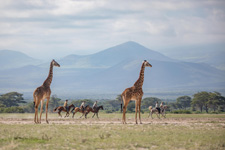
This deluxe horse safari is in the remote North Eastern corner of Botswana. Home to Mashatu Game Reserve, the “Land of the Giants” is an area of great diversity, magnificent vistas, land formations, history and legend as ancient as time itself. This pristine game viewing landscape lends itself to horse safaris. It is the home of no less than seven of Africa's giants: the African elephant, the lion, giraffe, the baobab tree, the eland, the ostrich, and the kori bustard. Along the river courses, huge Mashatu trees provide shade for impala, wildebeest and zebra. Ride on horseback surrounded by a multitude of Africa’s flora and fauna and explore this breathtaking terrain.
This luxurious trail ride takes you between three different lodges and camps giving you the opportunity to explore the different aspects of the Mashatu and neighbouring reserves. You ride out early in the mornings and in the afternoons game drives and bush walks are organized. The accommodation is in a safari lodge (with a swimming pool), a comfortable farmhouse and the semi-permanent camp at Two Mashatus.
This horse safari is certainly the experience of a lifetime! Surrounded by a multitude of Africa’s flora and fauna, this breathtaking terrain is explored from horse back guided by expert rangers and run by experienced horse men and horse women. The skilled equestrian has the chance to become one with the African bush, where the mighty baobab stands tall and where lions and hyena serenade you under the starry African night sky!
|
Meeting:
|
Camp; Pont Drift Border Post or Limpopo Valley airfield at noon
|
|
Airport:
|
Johannesburg International or Polokwane
|
|
Transfer:
|
Tuli Airstrip/Border Post
|
|
Riders:
|
Min
2 riders
Max
8 riders
|
|
Trip Rating
Video
|
|
|
|
Rates and Dates for 2010
Rates include:
Accommodations in safari lodges - 1 night Naledi Lodge, 2 nights Kanda Farm, 4 nights Two Mashatu Camp, all meals, drinks, 6 riding days, two game drives
| A | 2010 | 8 day trip, Progressive Lodge to Lodge Safari, AP | 8d / 7n | £2030 | $3475 |
| Single supplement if required - 50% | £0 | $0 |
Rates Note:
No single supplement if prepared to share, otherwise 50% of the ride price to guarantee a single tent.
Transfer Option:
|
2010
|
Transfer from Johannesburg p.p.(min of 2 pax), early morning
|
£
215
|
$370
|
|
2010
|
Transfer from Point Drift included
|
£
0
|
$0
|
Transfers from Johannesburg are early in the morning of Day 1 at the information desk in Johannesburg Airport.
Tour Dates
Check here for details and availability
|
| A |
2010
|
02/14
- 02/21
|
8d / 7n
|
8 day trip, Progressive Lod...
|
2
/8
|
Reserve
|
| A |
2010
|
03/07
- 03/14
|
8d / 7n
|
8 day trip, Progressive Lod...
|
2
/8
|
Reserve
|
| A |
2010
|
05/02
- 05/09
|
8d / 7n
|
8 day trip, Progressive Lod...
|
2
/8
|
Reserve
|
| A |
2010
|
05/23
- 05/30
|
8d / 7n
|
8 day trip, Progressive Lod...
|
2
/8
|
Reserve
|
| A |
2010
|
08/08
- 08/15
|
8d / 7n
|
8 day trip, Progressive Lod...
|
2
/8
|
Reserve
|
| A |
2010
|
11/14
- 11/21
|
8d / 7n
|
8 day trip, Progressive Lod...
|
2
/8
|
Reserve
|
|
|
Sample Itinerary Safari Lodge weeks
The ride has the benefit of being mobile but without the camping element! The lodges used for three of the nights are all privately owned by families and non-commercial and we are very lucky to be able to use them. The other four nights are at the "Two Mashatus" camp, which has excellent bush facilities; like ensuite shower and washroom, whilst keeping the “Out Of Africa” feeling alive! A great safari for those who like to be comfortable but still see as much of the variety of game and landscape as possible on Mashatu Game Reserve.
Day 1 Sunday: Collection on arrival at the Information counter in the arrival hall of Johannesburg OR Tambo International airport, terminal A1. A drive of 5.5 hours takes you to Pontdrift border post where your horse safari guide will meet you. After the formalities of crossing the border you will be escorted in an open game drive vehicle to Two Mashatus Camp a short drive away. After settling in and enjoying a refreshing lunch in the Lala Palm Rondavel, you’re off to meet the most important members of the team: the horses! You will then embark on a short introductory ride in the afternoon to make sure that you and your mount are perfectly suited. The ride is followed by sundowners at the stable bar before heading back to our Two Mashatus Camp. A delicious evening meal follows before retiring to the comfort of your tent. Then allow the sounds of the bush serenade you to sleep!
Day 2: After breakfast, we mount up and head off on the long ride of 6 hours to the luxurious Naledi camp. This ride traverses hills and ridges and takes you to the most northern parts of the game reserve. On the open plains there are good opportunities for fast canters, perhaps accompanied by zebra, wildebeest or eland. The lush vegetation close to the Majale River is browsed by a diversity of wildlife, so there is a good chance of excellent game-viewing in this area.
Upon arrival at this beautiful private camp, you are welcomed by cold beverages and a good lunch. In the afternoon, enjoy the very comfortable rooms or lounge around the swimming pool with a view over the African bush. If feeling energetic, take a game walk with your guide in the late afternoon. This gives you the opportunity to learn more about the small and fascinating creatures that are an important part of the local ecology. Head back to camp before sunset for traditional sundowners, an excellent dinner and a good night’s sleep.
Day 3: Today we make a leisurely start on the 4.5 hour ride to Kanda Farm, traversing the central game area of the reserve where you may see giraffe, eland or zebra. The ride passes through an area of rocky cliffs, home to a resident leopard. Kanda Farm is a family-owned property in a spectacular location overlooking the Majale River. After lunch and a siesta, you have the option of a game drive which offers the opportunity of viewing predators such as leopard, cheetah, wild dog and lion that Mashatu is famous for. You may also be lucky to spot some of the other interesting nocturnal residents such as hyaena, genet or porcupine. You stop for sundowners at a vantage point before returning to camp for dinner.
Day 4: Today we explore the surrounding area, tracking wildlife through the bush and enjoying spectacular views across Mashatu. There is a great diversity of game in this area and you may see bat-eared fox, black- backed jackal, eland, kudu and other plains game. The morning ride is about 4 hours followed by lunch back at Kanda camp. In the afternoon, we follow the course of the Majale River on a bush walk and climb some of the kopjes in the area. Back to camp and a dinner under the stars!
Day 5: After breakfast you head back to Two Mashatus camp, following the Majale River which always offers up some interesting and close encounters with elephant or other wildlife After an enjoyable 4 hour ride, we arrive at camp in time for lunch and a traditional African siesta in comfortable surroundings. A pleasant walk to stretch the legs in the evening before you retire for a good dinner and bed.
Day 6: Today you head out to the Pitsani plains. Descending to the plains, there is the possibility for an exhilarating gallop where you might be joined by curious herds of zebra, wildebeest or giraffe. You will wind your way through the hills before arriving at the beautiful Senthata Lodge on neighboring Charter reserve. Usually there is a game drive in the afternoon, and a lazy relaxed evening on the cool lawn overlooking the mighty Limpopo while the cooks rustle up another delicious meal.
Day 7: Another exciting morning’s ride as we head out along the Limpopo river in search of the abundant wildlife the area has to offer. Hopefully we will come across some logs knocked over by elephants along the way which the horses love to hop over. Today’s Lodge is the elegant Limpopo House. Enjoy the stunning pool or sit on the cool veranda with a book while you watch the horses graze nearby. And the afternoon will bring a final game drive and hopefully some cats along the way too..
Day 8 Sunday: After a final early morning ride of about 2 hours, its time to pat your trusty steed goodbye. A quick brunch and a refreshing shower and you head back to the Pontdrift border post and a sad farewell to your guides after an exhilarating week of fun, adventure and multiple wildlife sightings. A 5.5 hour drive gets you to Johannesburg OR Tambo International airport in time for the evening flight home.
Please note that this is only an example as is subject to change.
Meeting:
Camp; Pont Drift Border Post or Limpopo Valley airfield at noon
Airport:
Johannesburg International or Polokwane
Transfer:
Tuli Airstrip/Border Post
Transfers from Johannesburg are early in the morning of Day 1 at the information desk in Johannesburg Airport.
|
Tack:
|
|
English trekking
|
|
Horses:
|
|
Boerperd, Basuto, Anglos and South African Warmbloods
|
|
Pace:
|
|
6 + hours in saddle / day; fast, exhilarating, challenging!
|
Walk |
Trot |
Canter |
|
|
Level:
|
|
(3.5
to
5
out of 5) Good Intermediate
|
|
Age:
|
|
Min
16
|
|
|
Weight:
|
|
Max
220 lbs
|
|
Riders:
|
|
Min
2 riders
|
Max
8 riders
|
|
|
|
|
Riding helmets are mandatory for this ride.
|
|
|
|
If you prefer not to wear a riding helmet, you can sign a waiver form
|
Please note riding helmets are mandatory. You will need to sign a waiver on arrival if you choose not to wear a helmet. Important- you are not covered by our partner's insurance if you do not wear a helmet.
The horses have been individually selected for their temperament and ride-ability. They have been carefully chosen from the various South African breeds, which are well known for being of a tougher nature - able to cope under extreme conditions. These breeds include the Boerperd, Shire Cross Thoroughbreds, Appaloosas, and the S.A. Warmblood. They range in size from 14.3h.h to 17 h.h.

The safari prides itself on horses that have been selected with the same stringent criteria as those selected for eventing and other equine competitive sports. Our schooling concentrates on classical English style, although they neck rein when in the bush. They are schooled to very high level and respond easily and lightly to the aids. We use Australian stock saddles, South African Mcllelans and a selection of English saddles for those who prefer.
-
Participants must be EXPERIENCED RIDERS, this means they must ride regularly and be comfortable at the faster gaits, canter and galloping as well as able to do small jumps.
-
Children under 16 years are not permitted.
Passport and Visa Requirements:
Passports valid for at least six months required by all nationals referred to in the chart.Not required by all nationals referred to in the chart above for stays of up to 90 days except the following:. more
The climate over most of Southern Africa is temperate. Hot, dry conditions are usually encountered in the Tuli region. Heavy summer thunderstorms of short duration in the late afternoon and evening may be experienced. Rainfall occurs mostly during the summer months (October - March).
JANUARY: The New Year begins with the area looking lush with verdant plains and dense greenery. There is copious standing water in the veldt, due to heavy summer rains that normally begin in early December. Zebra and Waterbuck begin to give birth to their young. Kudu start calving towards the end of the month. Elephants are to be found in large numbers, with migrant herds moving into the area. Enormous herds of up to 200 congregate, with all taking advantage of the new green vegetation. Temperatures may be high, reaching between 35°c and 40°c. Fortunately the heat may be moderated in the afternoons and early evenings, by the build-up of clouds and the possibility of a welcome thundershower. Cheetah normally also make an appearance, drawn to the area by concentrations of Impala moving from the woodlands into the open plains. The Impala are lured out by the tender new grass shoots, which cover the plains in delicate shades of green, particularly to the north and east of the Majale River. If the rains have been plentiful, the Limpopo River may be flowing strongly and there is a good chance of flash floods occurring in the Majale, Pitsani, Nyaswe and Matabole Rivers.
FEBRUARY: This is one of the hottest months of the year, with temperatures soaring. The conditions are similar to those of January. Kudus continue to calve and there is a good chance of seeing late Impala lambs, tottering along on spindly, wobbling legs behind their mothers. Due to the excessive heat, the animals wisely begin to seek shade before 8 o’clock in the morning, only becoming active again in the late afternoon, just prior to sunset. Tropical thunderstorms are still a regular afternoon feature and there is still a high probability of flooded rivers to add some excitement to game drives.
MARCH: Finally the harsh, searing heat of summer begins to abate and there is less likelihood of rain. A few late Kudu calves may make a bemused appearance in the beginning of the month. Large nursery herds of gawky Impala young are found, kept under some control by the watchful eyes of their mothers. The bush is still dense, but the bright shades of green are starting to become duller as the year progresses. Due to the decrease in rainfall, the characteristic carpets of yellow flowers, so prevalent in the early summer months, begin to disappear.
APRIL: This is a truly splendid time of the year. It is now autumn and the daily temperatures are most pleasant with balmy days and nights. The trees are still green and the bush is thick. Groundcovers growing away from the larger watercourses are starting to change colour to the browner shades of winter, as water becomes scarcer. A hush begins to fall over the bush, as the myriad of insects, frogs and reptiles quieten down in preparation for winter. Flocks of migratory birds also begin to congregate in the treetops, gathering themselves together for the long flight northwards to sunnier climes and greener pastures. The rains have abated, although late unseasonable showers may occur, but this the exception rather than the rule.
MAY: The transition from summer to winter occurs rapidly in the Limpopo Valley. Temperatures begin to drop rapidly after sunset and both evening and morning game drives require warmer clothing. Although chilly in the morning, the days are clear and pleasant with crisp blue skies. Now that the rains are over, the veldt begins to dry out and game begins to congregate around the major watercourses, such as the Limpopo and associated wetlands, as well as the artificial waterholes scattered throughout the reserve. Deciduous trees begin to loose their leaves, with crisp, crackling drifts of golden brown leaves forming on the ground and tree bases. The grasses, forbs and herbs gradually begin to fade away. As the vegetation begins to thin, the elusive leopard is more frequently seen. Lions, which dispersed with the game during the wet season, now begin to concentrate their activities in the central area of Mashatu.
JUNE: Winter is now upon us and has spread its chilly grip on Mashatu. Most of the natural pans and pools have now completely dried up. Elephant and a host of other species begin to frequent the artificial waterholes at both Main and Tent Camps, which makes for exciting mealtime viewing. Predator sightings are good at this time of the year, due to the thinned out vegetation and concentrations of game, cheetah however are scarce. In general the game is more active later into the day.
JULY: The conditions are much like those in June. The days are still good, with crisp mornings. The nights can be very cold. Elephant may begin to dig for water in the sandy riverbeds, providing water not only for themselves, but a variety of other animals. This is also a favorable time to visit the archaeological site at the Motloutse River. The summer vegetation has disappeared and a host of interesting features are now visible.
AUGUST: Conditions are extremely dry now. The floodplains and grasslands adjacent to the Limpopo are very dry and barren. The bush has become harsh and almost inhospitable, with absolutely no groundcover, only dust and rocks visible for kilometers. The veldt has all the typical winter hues of brown and red, as the Mopane leaves start turning. The weather is fine with temperatures increasing slightly. The early mornings and evenings being not as cold as in June or July. August is a showy month, with respect to sunsets. Due to the very dry conditions, large quantities of dust is taken up into the air, giving rise to spectacular pyrotechnic displays as the sun sinks below the horizon.
SEPTEMBER: This is a month of great contrast. The bush is still very dry, a condition exacerbated by winds, which blow from August through to October. However, many trees begin to blossom, in anticipation of the rapidly approaching summer. The vibrant hues of the blossoms enliven the bush, providing a bountiful treat for baboons and other hungry inhabitants of the bush, all of whom have struggled through the lean winter months. Temperatures begin to creep upwards and game drives are once again early morning and late afternoon affairs, as a wise means of avoiding the debilitating midday heat.
OCTOBER: Temperatures begin to steadily increase and conditions are becoming desperate for many of the herbivores. This is due to sub region frontal systems touching on the Limpopo Valley, bringing superheated air into the region. There may be an occasional tropical thunderstorm, but this early rain is sucked up like a sponge by the barren earth. This welcome water is however not enough, and seldom results in a notable floral display. Predators have a field day, as many of the game are weak and tend to restrict their activities to the area close to the waterholes. The lack of dense vegetation and the dry powdery soil make tracking lion and leopard an easier task and often result in exceptional sightings. Elephant listlessly wait out the dry season, moving from waterhole to waterhole, where they take full advantage, wallowing and drinking for hours. They will feed on the surrounding vegetation, moving into the bush on feeding forays when temperatures have dropped sufficiently for them to forage out of the protective shade. It is also at this time that eland begin to calve.
NOVEMBER: Summer is now in full swing at Mashatu. The temperatures are high and there is a lot of humidity in the air. The chances of convectional thunderstorms are great, although the real rains are still at least a month away. Some of the summer migrant birds begin to arrive. The characteristic call of the Red-chested Cuckoo rings out clearly, heralding the approach of better times for all. Once good rains have fallen, the small, drab, but extremely vocal Monotonous Lark keeps the bush awake day and night with its irritating call, as they perch on every treetop.
DECEMBER: The most vibrant month at Mashatu. Rains are a regular part of the day, with spectacular thunderstorms rumbling in from the northwest in the afternoons, complete with dazzling lightening displays. Flash floods come bursting down the rivers, sweeping the accumulation of dirt and debris away, leaving fresh, clean channels once again. The whole of the bush looks as if it has been freshly washed and scrubbed. The veldt is transformed into a golden carpet of acres and acres of yellow flowered “Devil Thorns”, interspersed with a myriad of other vibrantly coloured flowers. Swamps and marshlands along the Limpopo fill with water, and provide an irresistible attraction to the droves of water birds, all of whom are taking advantage of the biological explosion of insects, amphibians and reptiles. Impala and Wildebeest give birth to numerous gangly, wide-eyed young, which shortly after birth are gamboling and bounding on the plains. This is Mother Nature’s way of swamping the predators with an excess of provender, thereby ensuring the survival of the species. Migratory birds arrive en masse, with enormous flocks of White, Black and Abdims storks roaming the plains. Lesser-Spotted and Steppe Eagles compete to annex every available treetop and the trill of the Woodland Kingfisher fills the air. The bush is alive and an avian and insectile cacophony fills the air night and day, emanating from every clump and thicket.
-
We recommend the use of neutral-colored clothing (khaki, brown, beige and green) that blends in with the bush
(no brightly colored, or white clothing).
-
Suitable riding gear.
-
Bathing Suit
-
Jodhpurs or long trousers.
-
Head lamp
-
Camera, film, binoculars.
-
Reading material.
-
Lip balm
-
Passport.
-
Long sleeved shirts or T-shirts.
-
Mosquito repellent.
-
Walking shoes, hiking boots or ride/run boots.
-
Half chaps recommended.
-
Warm clothing (for winter, May to August).
-
Sun block.
-
Waterproof raincoat (for Summer, from November to March).
-
Sun hat that stays on.
-
Please note riding helmets are mandatory. There are helmets for your use- but we do recommend to bring your own. You will need to sign a waiver on arrival if you choose not to wear a helmet. Important- you are not covered by our partner's insurance if you do not wear a helmet. Please be aware of the risks.
-
Basic first aid kit with plasters, painkillers and antihistamine.
-
Anti-malarial prophylactics are essential all year round.
Consult your doctor or pharmacist at least one week before your departure.
-
Laundry Services are included.
| This list is only a guideline for you |
|
|
| Travel documents and Voucher |
| Flight tickets |
| Passport |
| Visa (check with your consulate) |
|
|
| RIDING GEAR |
| Suitable riding gear. - Jodhpurs or long trousers |
| Half chaps recommended. |
| Riding hats are compulsory. Helmets can be provided, but it is better to bring your own. |
| Full-length boots - Jodhpur boots and cowboy boots are not recommended. |
| Riding gloves |
| Hat (with chin strap) for sun protection |
| Waterproof raincoat (for Summer, from November to March). |
|
|
| PERSONAL CLOTHING |
| We recommend the use of neutral-colored clothing (khaki, brown, beige and green) that blends in with the bush (no brightly colored, or white clothing |
| Warm clothing (for winter, May to August). |
| Long sleeved shirts or T-shirts |
| Jeans |
| Shorts |
| Long socks |
| Pajama |
| Bag for dirty clothes |
| Walking shoes, hiking boots or ride/run boots |
| Swimsuit and towel |
| |
| ADDITIONAL THINGS TO BRING |
| Personal Toiletries |
| Mosquito repellent |
| Personal medications |
| Sore cream (for an emergency) |
| Sewing kit |
| Handkerchiefs |
| Head lamp |
| Camera, extra batteries, binoculars |
| Belt pack |
| Address book and pen (for postcards!) |
| Sun glasses with strap |
| Sun block |
*Important Notice: The following ratings have been submitted by guests and do not necessarily represent the views of Hidden Trails, its partners or employees.
Every care is taken to ensure accuracy but Hidden Trails is not liable for any errors or omissions.
** No trip reports found
with the tour ID you provided.
|
..view other reports for different trips
Safari from Lodge to Lodge
The Lodge Safari takes you between five different lodges and camps.
The lodges are family-owned, private and exclusive with en-suite bathrooms and swimming pools.
Naledi - (One nights) A bush lodge with all the comforts needed. Guests sleep in individual cottages, a large outdoor bathroom ensuite with hot/cold water and full privacy is a highlight. A swimming pool and comfortable lounge decorated in modern African style to relax in during the heat of the day. This camp is perfect for bush walks in the afternoon as you have fabulous views over the rest of the reserve as it is situated close to a ridge.

Kanda Farm - (Two nights) A family owned private property in the middle of Mashatus central game area this lodge is very basic but has a spectacular location and view over the Majale River. Wooden cabins are spacious and there is hot running water per room for a bath/shower. A central thatched area is where you eat over-looking the Majale River.

Senthata Lodge- A stunning camp witch can sleep 14 people, 2 people per chalet. Each chalet is painted white with thatch roof and has fans, ensuite toilet, bath and shower. The central area is overlooking the Limpopo river and most days lunch and dinner will be outside with a view over the Limpopo. This camp has a rimtop pool and a very inviting bar so weary riders can relax during the afternoons.

Limpopo House- A colonial style building everything is very central and extremely comfortable. Recently refurbished this camp is really stunning…Rooms have ensuite bath, shower and toilet as well as fans for warm summer nights. This camp sleeps only 8. There is a lovely lawn with braai (barbecue) area overlooking the river and a close by dam which can attract hippos and crocodiles, as well as a big pool for those who have energy left to swim laps and plenty of space to stretch out and relax during the afternoons.
Two Mashatus - (Four nights) A comfortable bush camp, with A frame tents set up on teak platforms. Ensuite loo and shower under the stars. The century old Mashatu trees provide all the shade needed. A central dinning area built in the traditional Botswana style, with lala palm thatch as well as a lounge area with sofas and hammocks to relax in the cool shade of the afternoon.
----
Catering Requirements - Please inform us of any special dietary requirements. Please also advise us if any guests will be celebrating a birthday or special occasion, which that you may want us to be aware of.
Drinking Water - All water in the camp is filtered to the highest standards and is guaranteed perfectly safe for drinking. All drinks are included with your tour.
This trip includes
and can accommodate special dietary requests.
Please note riding helmets are mandatory. You will need to sign a waiver on arrival if you choose not to wear a helmet. Important- you are not covered by our partner's insurance if you do not wear a helmet.
The horses have been individually selected for their temperament and ride-ability. They have been carefully chosen from the various South African breeds, which are well known for being of a tougher nature - able to cope under extreme conditions. These breeds include the Boerperd, Shire Cross Thoroughbreds, Appaloosas, and the S.A. Warmblood. They range in size from 14.3h.h to 17 h.h.

The safari prides itself on horses that have been selected with the same stringent criteria as those selected for eventing and other equine competitive sports. Our schooling concentrates on classical English style, although they neck rein when in the bush. They are schooled to very high level and respond easily and lightly to the aids. We use Australian stock saddles, South African Mcllelans and a selection of English saddles for those who prefer.
-
Participants must be EXPERIENCED RIDERS, this means they must ride regularly and be comfortable at the faster gaits, canter and galloping as well as able to do small jumps.
-
Children under 16 years are not permitted.
|
Tack:
|
|
English trekking
|
|
Horses:
|
|
Boerperd, Basuto, Anglos and South African Warmbloods
|
|
Pace:
|
|
6 + hours in saddle / day; fast, exhilarating, challenging!
|
Walk |
Trot |
Canter |
|
|
Level:
|
|
(3.5
to
5
out of 5) Good Intermediate
|
|
Age:
|
|
Min
16
|
|
|
Weight:
|
|
Max
220 lbs
|
|
Riders:
|
|
Min
2 riders
|
Max
8 riders
|
|
Please note riding helmets are mandatory. You will need to sign a waiver on arrival if you choose not to wear a helmet. Important- you are not covered by our partner's insurance if you do not wear a helmet.
The horses have been individually selected for their temperament and ride-ability. They have been carefully chosen from the various South African breeds, which are well known for being of a tougher nature - able to cope under extreme conditions. These breeds include the Boerperd, Shire Cross Thoroughbreds, Appaloosas, and the S.A. Warmblood. They range in size from 14.3h.h to 17 h.h.

The safari prides itself on horses that have been selected with the same stringent criteria as those selected for eventing and other equine competitive sports. Our schooling concentrates on classical English style, although they neck rein when in the bush. They are schooled to very high level and respond easily and lightly to the aids. We use Australian stock saddles, South African Mcllelans and a selection of English saddles for those who prefer.
-
Participants must be EXPERIENCED RIDERS, this means they must ride regularly and be comfortable at the faster gaits, canter and galloping as well as able to do small jumps.
-
Children under 16 years are not permitted.
Passports
Passports valid for at least six months required by all nationals referred to in the chart.
Visas
Not required by all nationals referred to in the chart above for stays of up to 90 days except the following:
(a) 1. nationals of Bulgaria, Czech Republic, Estonia, Hungary, Latvia, Lithuania, Poland, Romania, Slovak Republic and Slovenia, who do need a visa);
(b) transit passengers provided continuing their journey by the same or first connecting aircraft and not leaving the airport.
Note: Nationals not referred to in the chart above are advised to contact the high commission/embassy to check visa requirements (see Contact Addresses).
Visa Note
Nationals travelling to South Africa, before or after entering Botswana, will require two clear pages in their passport for the South African stamp.
Types of Visa and Cost
General Entry: £60 (single- or multiple-entry).
Validity
Up to 90 days from the date of issue. Extensions are available from the Department of Immigration in Botswana.
Applications to:
Consulate (or consular section at embassy or high commission); see Contact Addresses.
Working Days Required
One to three.
| Passport Required? |
| British |
Yes |
| Australian |
Yes |
| Canadian |
Yes |
| USA |
Yes |
| Other EU |
Yes |
| Visa Required? |
| British |
No |
| Australian |
No |
| Canadian |
No |
| USA |
No |
| Other EU |
1 |
| Return Ticket Required? |
| British |
Yes |
| Australian |
Yes |
| Canadian |
Yes |
| USA |
Yes |
| Other EU |
Yes |
This information is not being updated on a regular basis. Hidden Trails does not
take any responsibility for the accuracy of the above information. Please, consult
the embassy or consulate for updated info.
|
 |
|
|
Land of the Giants - Mashatu Deluxe Safari
Tour Code: IT-BORT04L
8 days /
7 nights
~$3,475.00
Difficulty :
Lodging:
Introduction
Day to Day Itinerary
Rates |
Dates
Accomodation
Tack:
English trekking
Horses:
Boerperd, Basuto, Anglos and South Afr...
Pace:
6 + hours in saddle / day; fast, exhil...
Walk, Trot, Canter,
Airport:
Johannesburg International or Polokwane
Google Map
Video
Image Gallery
Image Slide Show
Customer Trip Rating
Climate
What To Bring
|