|
Horseback riding tours
Rides in
Uruguay
Intro to Uruguay
----------------------------
|

|
|

|
|
|
Laguna Negra Estancias Ride
Uruguay
Uruguay
On this ride you will discover the most diverse landscapes of a small country, taste its delicious local wines and excellent cuisine, and be rewarded with the hidden treasures found on paths less traveled!
For those who have a passion for nature, the beach, and being in close contact with the traditions of the countries they choose to visit, this horseback riding tour combines some of the oldest and best preserved haciendas with breath taking scenery, in one of the least known countries in South America - truly a hidden South American gem!
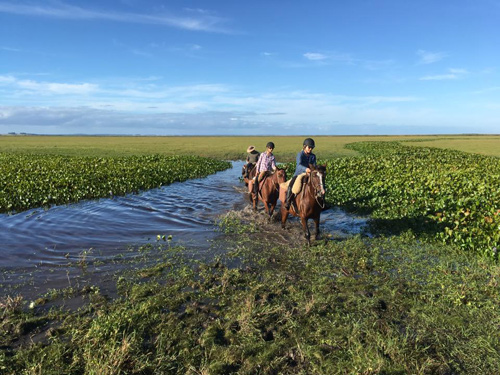
We ride from the traditional cattle breeding region of the country to the Coast of "Rocha" where we will cross the "Bañados del Este" Biosphere Reserve (UNESCO recognized), filled with an enormously diverse bird population - more than 400 species - and other wildlife like the endangered capybara, sea turtle, and the franca whale.
Enjoy the thrill of fast paced riding along the firm, sandy beaches pf Uruguay and across the vast grasslands on well trained and responsive riding horses. Enjoy breaks for traditional barbecue lunches and picnics, then ride on each day, over sand dunes, through palm groves, beside inland lakes teeming with wild waterfowl and on to the old Portuguese fort or your beach side hotels to admire stunning sunsets. Dolphins feeding in the beautiful bays, black-necked swans gliding across the lagoons, chattering parrots flying over, capybaras wading in the reeds - these are all things you can expect to find on a typical week in this paradise.
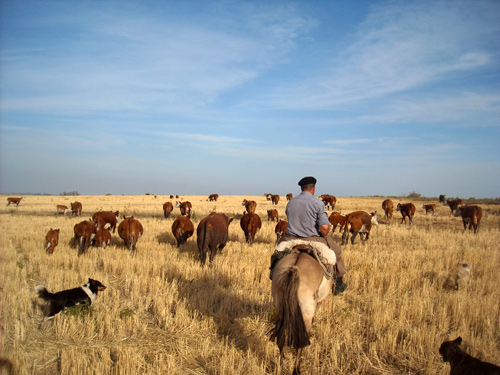
Incredibly friendly locals and skilled gauchos may accompany us and talk of their unique lives and their traditions. Listen to fascinating stories of the ancient battles and shipwrecks, including one of Nelson's fleet... and all this in one of the safest South American countries, still remarkably untouched by tourism despite all it has to offer! While staying at the working ranches – estancias – you can ride with, and help the gauchos with their cattle work and drives. You will undoubtedly come to feel connected to the traditions of this unexplored country by the time your vacation is over.
|
Progressive Ride (no camping)
Ride with Western Tack
|
|
Meeting:
|
Montevideo airport, bus terminal, ferry terminal or local hotel.
|
|
Airport:
|
Montevideo
|
|
Transfer:
|
Montevideo airport
|
|
Riders:
|
Min
4 riders
Max
8 riders
|
|
Trip Brochure (PDF)  Trip Rating
 Travel Stories
|
|
|
|
Rates and Dates for 2026
Rates include*:
Accommodations, Most meals with mineral water, 8 riding days & Transfers as indicated in the itinerary description.
| A | 2026 | 9 day trip
Nights at estancias and inns | 9d / 8n | $5960 |
* prices are per person based on double/twin occupancy
Rates Note:
Optional extensions: Haras Las Tordillas, Vineyards and Horses.
Transfer and Other Charges:
|
2026
|
Transfer from Carrasco International Airport (included)
|
$0
|
|
2026
|
Small group supplement (2-3 pax only), pp
|
$1,640
|
|
2026
|
Supplement for extra horse (riders 95+ kg)
|
$440
|
|
2026
|
Extensions - please inquire
|
$0
|
|
2026
|
Single supplement
|
$1,145
|
Transfers are available at any time from Carrasco International Airport (MVD) on the first and last day of your trip.
Please note that the last day includes riding during the morning and a quick lunch. Arrival in Montevideo is around 6:00 PM. This means riders should not book departure flights earlier than 7:30 PM.
Tour Dates for 2026
Additional dates are available for groups of 4+ riders from October to December and February to April
|
Rates do not include:
Dinner in Montevideo on Day 1, Departure taxes, Beverages (soft and alcoholic drinks), Gratuities & Medical Insurance (mandatory)
 Sample Itinerary (2024 - 2025 Season)
 - subject to changes
Day 1 (Saturday): Montevideo
Today is set aside to relax and explore the coastal city of Montevideo. We will stay at the residential neighbourhood of Carrasco from where we will enjoy an afternoon tour including lunch at the port market and a mate tasting.
Meals included: Lunch
Accommodation at Hotel Cottage
Day 2 (Sunday): Montevideo to La Coronilla
After breakfast, transfer to the Province of Rocha, arguably the most beautiful province in Uruguay with pristine beaches, emerald shores and a great network of lagoons. We will arrive to Hotel Parque Oceanico where we will enjoy a traditional Sunday asado. After lunch, we will drive to a local estancia to meet our horses and enjoy a wonderful ride along the estancia fields. We will return just on time for a well-deserved dinner.
Meals included: Breakfast, Lunch, Dinner
Accommodation at Hotel Parque Oceanico
Day 3 (Monday): The Pristine Beach of Barra del Chuy
After breakfast, we will be drive to our horses to begin our adventure! Today we will enjoy a 3-4 hour ride towards the coast! We will enjoy a picnic lunch at midday followed by a swim in the ocean or a pleasant “siesta” discovering that gauchos’ saddles are so comfortable to ride as to sleep!
During the afternoon, a fast-paced ride along the wonderful, isolated ocean beach of ‘Barra Chuy’, awaits us! Visitors seldom reach this beach so we can enjoy a long, exhilarating canter with no signs of habitation as we ride across the pure white sands alongside the Atlantic Ocean. We arrive 22km (12 miles) further south to "La Coronilla" and stay at our beachside hotel. Tonight, we will enjoy cocktails to toast to our first long ride! Dinner will be served at the hotel.
Meals included: Breakfast, Lunch, Dinner
Accommodation at Hotel Parque Oceanico
Day 4 (Tuesday): Santa Teresa national park, dolphins & shipwrecks
After breakfast, we will ride south alternating beaches, sand dunes, pine forests and coastal hills where we might see dolphins feeding before getting to the immense Santa Teresa National Park.
The centerpiece of the park is a fort started in 1762 by the Portuguese to defend the edge of their territories then completed by the Spaniards who took it by assault just a year later. This was just the start of a succession of conquering, losing and reconquering the fort; it was not until 1825 that the newly forming ‘Uruguay’ finally captured and held the fort. The fort located within 3000 hectares of forest containing over 2 million trees, most from other parts of the world. After a picnic lunch we will ride along the forest trails and down to the beach next to a shipwreck buried in the sand, one of many along this treacherous coast; indeed, Cabo Polonio (where we ride later) is named after a Spanish galleon that went down just off the point. Luckily ‘Beagle’ with Charles Darwin aboard did not succumb to this fate and Darwin spent quite some time in Uruguay collecting species and most likely starting to formulate his theories of evolution. Our afternoon ride to the small town of Punta del Diablo will take about 2 hours. On arrival, we will stay at a typical, local countryside home. Dinner and accommodation.
Meals included: Breakfast, Lunch, Dinner
Accommodation at Chacras De Laguna Negra
Day 5 (Wednesday): Punta Del Diablo to Don Bosco
After breakfast, short drive to our horses (6 minutes). Today we will ride across amazing untouched landscape of Palm groves including various ecosystems that offer the opportunity to experience the diverse flora and fauna of the area.
After a picnic lunch on the way, we arrive to the shores of the Laguna Negra by sunset just on time to go up the Cerro de la Virgen for an incredible view! This region is home to one of the largest freshwater wildlife reserves in the country. In the evening, we will enjoy a traditional asado dinner with the gauchos. Accommodation at Don Bosco where the premises are simple, but the landscape is amazing.
Meals included: Breakfast, Picnic Lunch, Dinner
Accommodation at Don Bosco
Day 6 (Thursday): Don Bosco to Valizas
After breakfast, our ride continues across the palm forests towards the coast. We will stop on the way for lunch. During the afternoon, we will continue our ride along the beach towards the small town of Valizas where we will stay at a typical “Rancho Valicero” built as a summer home and turned into a small local bed & breakfast. Single rooms are very limited in this accommodation so depending on the size of the group, guests may have to share bathrooms. Accommodation in alternate hotels may be available on request. We will enjoy dinner at a local restaurant.
Meals included: Breakfast, Lunch, Dinner
Accommodation at Posada Valizas
Day 7 (Friday): Cabo Polonio
After breakfast, the day begins with a morning walk to the Valizas stream where we will cross on a boat to meet our horses on the other side of the shore.
UNESCO has declared this area a Biosphere Natural Reserve. We will ride to Cabo Polonio, the charming fishing village that people can only arrive by horse, walking or on SUV trucks. The fascinating part of the area is the huge area of shifting sand dunes. As we ride, it is possible to imagine that we are right in the middle of the Sahara. We are literally riding into the desert! On arrival, we will enjoy lunch at La Perla Seaside restaurant and visit the lighthouse and the sea lions reserve that make up one of the largest populations of seals in the world; very occasionally, we can spot a migrating whale. Riders will be able to swim in one of the most beautiful beaches of the country. We will then begin our ride towards the entrance of the village to meet our van that will drive us to our next destination close to Jose Ignacio! We will enjoy dinner and accommodation at Estancia Anastasio
Meals included: Breakfast, Lunch, Dinner
Accommodation at Estancia Anastasio (or La Viuda de Jose Ignacio or a similar)
Day 8 (Saturday): Countryside, Lagoon and Beach
After breakfast, enjoy a morning ride across the estancia fields helping the gauchos to herd the cattle, vaccinate or do the daily chores of the day.
We will finish our morning with a kayak tour of the Aanastasio stream and a typical picnic lunch of local “chivitos”. During the afternoon, we will ride to the beach and enjoy amazing landscape of the ocean combined with the lagoon. Tonight we will enjoy dinner under the stars!
Meals included: Breakfast, Lunch, Dinner
Accommodation at Estancia Anastasio (or La Viuda de Jose Ignacio or a similar)
Day 9 (Sunday): Jose Ignacio to Montevideo
After breakfast, we will ride to the town of Jose Ignacio where we will enjoy lunch before heading back to Montevideo. Afternoon visit to Punta Del Este and surrounding area where we will say goodbye to Uruguay with a visit to the incredible Casapueblo! Transfer back to Montevideo arriving by 6:30pm.
Meals included: Breakfast & Lunch
Sample Itinerary (2025 - 2026 Season) - subject to changes
Day 1 (Saturday): Montevideo
Today is set aside to relax and explore the coastal city of Montevideo. We will stay at the residential neighborhood of Carrasco from where we will enjoy an afternoon tour including lunch at the port market and a mate tasting.
Meals included: Lunch
Accommodation at Hotel Cottage
Day 2 (Sunday): Montevideo to La Coronilla
After breakfast, transfer to the Province of Rocha, arguably the most beautiful province in Uruguay with pristine beaches, emerald shores and a great network of lagoons. We will arrive to Hotel Parque Oceanico where we will enjoy a traditional Sunday asado. After lunch, we will drive to a local estancia to meet our horses and enjoy a wonderful ride along the estancia fields. We will return just on time for a well-deserved dinner.
Meals included: Breakfast, Lunch, Dinner
Accommodation at Hotel Parque Oceanico
Day 3 (Monday): The Pristine Beach of Barra del Chuy
After breakfast, we will be drive to our horses to begin our adventure! Today we will enjoy a 3-4 hour ride towards the coast! We will enjoy a picnic lunch at midday followed by a swim in the ocean or a pleasant “siesta” discovering that gauchos’ saddles are so comfortable to ride as to sleep! During the afternoon, a fast-pace ride along the wonderful, isolated ocean beach of ‘Barra Chuy’, awaits us! Visitors seldom reach this beach so we can enjoy a long, exhilarating canter with no signs of habitation as we ride across the pure white sands alongside the Atlantic Ocean. We arrive 22km (12 miles) further south to "La Coronilla" and stay at our beachside hotel. Tonight, we will enjoy cocktails to toast to our first long ride! Dinner will be served at the hotel.
Meals included: Breakfast, Lunch, Dinner
Accommodation at Hotel Parque Oceanico
Day 4 (Tuesday): Santa Teresa national park, dolphins & shipwrecks
After breakfast, we will ride south alternating beaches, sand dunes, pine forests and coastal hills where we might see dolphins feeding before getting to the immense Santa Teresa National Park. The centerpiece of the park is a fort started in 1762 by the Portuguese to defend the edge of their territories then completed by the Spaniards who took it by assault just a year later. This was just the start of a succession of conquering, losing and reconquering the fort; it was not until 1825 that the newly forming ‘Uruguay’ finally captured and held the fort. The fort located within 3000 hectares of forest containing over 2 million trees, most from other parts of the world. After a picnic lunch we will ride along the forest trails and down to the beach next to a shipwreck buried in the sand, one of many along this treacherous coast; indeed, Cabo Polonio (where we ride later) is named after a Spanish galleon that went down just off the point. Luckily ‘Beagle’ with Charles Darwin aboard did not succumb to this fate and Darwin spent quite some time in Uruguay collecting species and most likely starting to formulate his theories of evolution. Our afternoon ride to the small town of Punta del Diablo will take about 2 hours. On arrival, we will stay at a typical, local countryside home. Dinner and accommodation.
Meals included: Breakfast, Lunch, Dinner
Accommodation at Terrazas de la Viuda
Day 5 (Wednesday): Punta Del Diablo to Don Bosco
After breakfast, short drive to our horses (6 minutes). Today we will ride across amazing untouched landscape of Palm groves including various ecosystems that offer the opportunity to experience the diverse flora and fauna of the area. After a picnic lunch on the way, we arrive to the shores of the Laguna Negra by sunset just on time to go up the Cerro de la Virgen for an incredible view! This region is home to one of the largest fresh water wildlife reserves in the country. After visiting the Ficus Forest, transfer to Valizas, our next location. In the evening, we will enjoy dinner at the Bed & Breakfast.
Meals included: Breakfast, Picnic Lunch, Dinner
Accommodation at Posada Valizas
Day 6 (Thursday): Cabo Polonio
After breakfast, the day begins with a morning walk to the Valizas stream where we will cross on a boat to meet our horses on the other side of the shore. UNESCO has declared this area a Biosphere Natural Reserve. We will ride to Cabo Polonio, the charming fishing village that people can only arrive by horse, walking or on SUV trucks. The fascinating part of the area is the huge area of shifting sand dunes. As we ride, it is possible to imagine that we are right in the middle of the Sahara. We are literally riding into the desert! On arrival, we will enjoy lunch at La Perla Seaside restaurant and visit the lighthouse and the sea lions reserve that make up one of the largest populations of seals in the world; very occasionally, we can spot a migrating whale. Riders will be able to swim in one of the most beautiful beaches of the country. We will then begin our ride towards the Valizas stream where we will cross onto the other side of the shore on a local boat. We will enjoy dinner and accommodation at Valizas.
Meals included: Breakfast, Lunch, Dinner
Accommodation at Posada Valizas
Day 7 (Friday): Castillos Lagoon
After breakfast, the day begins with a morning ride towards the Castillos lagoon through local trails, beachside and ranches. We will enjoy a picnic lunch overlooking the lagoon. On arrival to the ombu forest of Barra Grande, we will ride across the wetlands. After a traditional lunch, meet the transfer to drive us to our next destination close to Jose Ignacio! We will enjoy dinner and accommodation at La Viuda de Jose Ignacio.
Meals included: Breakfast, Lunch, Dinner
Accommodation at La Viuda de Jose Ignacio
Day 8 (Saturday): Countryside, Lagoon and Beach
After breakfast, enjoy a morning ride across the estancia fields helping the gauchos to herd the cattle, vaccinate or do the daily chores of the day. We will finish our morning with a kayak tour of the Anastasio stream and a typical picnic lunch of local “chivitos”. During the afternoon, we will ride to the beach and enjoy amazing landscape of the ocean combined with the lagoon. Tonight we will enjoy dinner at a local restaurant.
Meals included: Breakfast, Lunch, Dinner
Accommodation at La Viuda de Jose Ignacio
Day 9 (Sunday): Jose Ignacio to Montevideo
After breakfast, we will ride to the beach where we will enjoy lunch before heading back to Montevideo. Transfer back to Montevideo.
Meals included: Breakfast & Lunch
 SUGGESTED EXTENSIONS:
Extension 1: Haras Las Tordillas (3 days and 3 nights)
SUGGESTED EXTENSIONS:
Extension 1: Haras Las Tordillas (3 days and 3 nights)
A lovely extension tour to the rolling hills of Pueblo Eden region, where guests will be able to ride for an extra three more days surrounded by a completely different landscape. Located in the region of Pueblo Eden, the cozy “Haras Las Tordillas” offers an amazing experience for horse lovers. Guests will discover wonderful trails to ride around the hills and countryside, crossing streams that lead to hidden cascades and amazing local wineries. This extension tour can be the perfect option to ride some extra days and enjoy beautiful Arabian horses.
Extension 2: Vineyards and Horses (3 days and 3 nights)
An unforgettable extension tour to one of the prettiest areas in Uruguay: The province of Maldonado where the famous and renowned Punta del Este and Jose Ignacio are located. We will be staying at a Luxury Wine Lodge in the area of La Barra from where we will enjoy great rides along the vineyards, to local interesting places related to art and gastronomy and to the Beach. You will be able to visit the winery, enjoy a wine tasting combined with a lovely “farm to table” lunch overlooking the vineyards and visit art studios and exhibitions from local artists. This small extension tour is a perfect blend of horse riding, Uruguayan culture, wines and art.
 Non-Riders
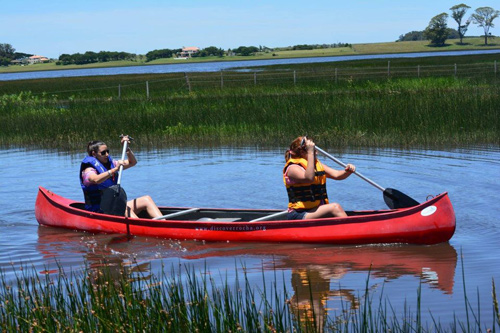
Non riding activities can be arranged including sight-seeing, hiking, fishing, surfing, biking, canoeing & bird watching.
Meeting:
Montevideo airport, bus terminal, ferry terminal or local hotel.
Airport:
Montevideo
Train station:
Not Available
Transfer:
Montevideo airport
Transfers are available at any time from Carrasco International Airport (MVD) on the first and last day of your trip.
Please note that the last day includes riding during the morning and a quick lunch. Arrival in Montevideo is around 6:00 PM. This means riders should not book departure flights earlier than 7:30 PM.
|
Tack:
|
|
South American saddles w/ sheepskin (similar to Western). Western neck reining is used.
|
|
Horses:
|
|
Uruguayan Criollo and crosses of Uruguayan Criollo.
|
|
Pace:
|
|
Lots of trots, canters and gallops (4 - 6 hours in saddle per day).
|
Walk |
Trot |
Canter |
Gallop |
|
|
Level:
|
|
 (3
to
3
out of 5) Intermediate
(3
to
3
out of 5) Intermediate
|
|
Weight:
|
|
Max
210 lbs / 95 kg
|
|
Riders:
|
|
Min
4 riders
|
Max
8 riders
|
|
 Riding Experience
We can accommodate all levels (from someone who has been on a horse but who does not necessarily feel comfortable at all paces to advanced) of riding for this trip and adjust the itinerary as need-be. Groups can be separated based on riding levels. We ride between 3-6 hours per day, which can also be adjusted.
Horses
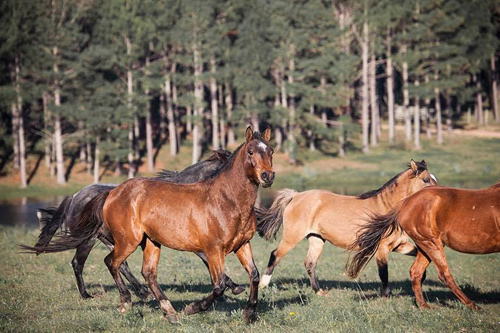
During our rides we work very hard to maintain two sets of horses throughout the whole tour. Our intention is that riders can actually build a bond with their horse and enjoy not only the landscape and ride but also the company of their horse. Depending on the size of the group, one or more spare horses will accompany us in case a change is needed.
The horses are the local Uruguayan Criollo breed and criollo cross, ideally suited to the terrain.
Tack
We use local, ‘western’ type saddle with a sheepskin. Neck reining (western ‘one-hand riding). Help will be given in adjusting to this tack, which is very suitable for long days in the saddle.
Emergencies
In case of accident, our guides will always carry a mobile phone, which they will use to contact local assistance. All of the towns along our route count on a medical emergency service.
Weight Restrictions
If your weight is more than 95 kilos (~210lbs) there is a surcharge so we can take an extra horse - so the weight is not too demanding for one horse.
Emergency
In case of accident, our guides will always carry a mobile phone to contact local assistance. All of the towns along our route have nearby medical emergency service
Non-Riders
Non-riders are welcome on this trip. Non-riding activities include sight-seeing, hiking, fishing, surfing, biking, trekking, canoeing and bird watching.
Passport and Visa Requirements:
Valid passport required by all nationals referred to in the chart.Not required by nationals referred to in the chart above except: 1. nationals of Estonia who do need a visa (please note that national. more
José Ignacio area
|
Month
|
Jan
|
Feb
|
Mar
|
Apr
|
May
|
Jun
|
Jul
|
Aug
|
Sep
|
Oct
|
Nov
|
Dec
|
|
Average High Temperature (°F)
|
78
|
78
|
75
|
71
|
65
|
59
|
58
|
60
|
61
|
66
|
70
|
76
|
|
Average Low Temperature (°F)
|
66
|
67
|
64
|
60
|
55
|
50
|
48
|
49
|
51
|
55
|
59
|
64
|
|
Average High Temperature (°C)
|
25
|
26
|
24
|
21
|
18
|
15
|
15
|
15
|
16
|
19
|
21
|
24
|
|
Average Low Temperature (°C)
|
19
|
20
|
18
|
16
|
13
|
10
|
9
|
10
|
10
|
13
|
15
|
18
|
Source: NOAA
Seasons
The weather in Uruguay is variable, but you can expect somewhat warm spring and autumn temperatures, although we can also get some cool days (especially early in the morning or at night) and some rainy days too. Except for the winters (July to September) the climate is usually mild with rainfalls scattered throughout the calendar.
Clothes and Equipment: Clothes and equipment should be light to accommodate for riding. You will also need: Sun block, insects repellent, a warm coat, jacket or sweater, hat (sun/rain), footwear (boots or sneakers) bathing suit and wet weather gear for the eventuality of rainy days. Don’t forget to bring your camera and binoculars. Remember that as your bags will be transferred from accommodation to accommodation by car, you can pack as much clothes as you want to feel comfortable.
|
This list is only a guideline for you
|
|
|
|
Travel documents and Voucher
|
|
Flight tickets
|
|
Passport
|
|
Visa (check with your consulate)
|
|
|
|
RIDING GEAR
|
|
2 Pairs of riding trousers (or jeans with full or half chaps)
|
|
T-shirts and long sleeved tops (cotton polo necks are good for layering)
|
|
Riding boots (well broken in) or ankle-high multi-purpose ride/walk boots which work well when worn with half-chaps and can comfortably be worn for walking too
|
|
Riding helmet (riders not wishing to wear a hard hat do so at their own risk)
|
|
1 Pair of insulating and quick-drying gloves for riding
|
|
Wool cap or other warm hat
|
|
Waterproof/windproof (gortex or other suitable fabric) jacket with hood
|
|
Waterproof pants
|
|
|
|
PERSONAL CLOTHING
|
|
Wool sweater or fleece
|
|
Fleece Jacket or waistcoat
|
|
Sun hat or visor
|
|
Comfortable T-Shirts/Shirts
|
|
Jeans
|
|
Shorts
|
|
Underwear
|
|
2 Pairs of socks (including a couple of knee-high socks for riding)
|
|
Pyjama
|
|
Bag for dirty clothes
|
|
Swimsuit
|
|
2 Bandannas or scarves
|
|
|
|
ADDITIONAL THINGS TO BRING
|
|
Personal Toiletries
|
|
Insect protection
|
|
Personal medications
|
|
Sore cream (for the emergency)
|
|
Sewing kit
|
|
Camera and enough extra films
|
|
Waterproof camera bag (or bring plastic bags to cover when in saddle bags i.e. Ziplocks)
|
|
Belt pack
|
|
Address book and pen (for pictures postcards!)
|
|
Sun glasses with strap
|
|
Sun tan lotion and lip balm
|
|
Minimum 1 Litre water bottle or two half-litre bottles
|
Sorry, no video is currently available for this tour.
*Important Notice: The following ratings have been submitted by guests and do not necessarily represent the views of Hidden Trails, its partners or employees.
Every care is taken to ensure accuracy but Hidden Trails is not liable for any errors or omissions.
..view other reports for different trips
 Accommodations*
This is a progressive ride, so you will be staying in different locations during the trip.
Description
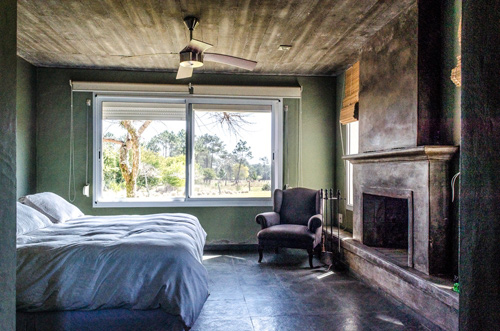
The accommodations provided in this program include the most interesting and charming seaside hotels and ranches available in the areas we visit, most of which include private bathrooms (except maybe at Posada Valizas - depending on group size, clients may have to share bathroom for 1 night). Some accommodations provide more comfort than others do but they are all special for some reason: either their location and landscape, character or authenticity. They are clean, comfortable and provide very good service. You will be able to get good night’s sleep in the pleasant surroundings.
If you are sharing your room, please let us know in advance if you prefer twin or double beds.
There is access to laundry facilities during some nights of this trip for an extra fee.
Accommodation Itinerary (2024 - 2025 season) - subject to changes based on availability
Night 1: Hotel Cottage in Montevideo
Night 2 & 3: Hotel Parque Oceánico in La Coronilla
Night 4: El Diablo y El Mar in Punta del Diablo
Night 5: Don Bosco in Palmares de Rocha
Night 6: Posada Valizas in Valizas
Night 7 & 8: Estancia Anastasio
Accommodation Itinerary (2025 - 2026 season) - subject to changes based on availability
Night 1: Hotel Cottage in Montevideo
Night 2 & 3: Hotel Parque Oceánico in La Coronilla
Night 4: Terrazas de la Viuda
Night 5 & 6: Posada Valizas
Night 7 & 8: Viuda de J. Ignacio
Hotel Cottage in Montevideo
This small hotel offers 64 modern bedrooms, all equipped with air conditioning, a smart TV, free Wi-Fi internet, a safe and ensuite facilities. Guests can relax in the garden or go for a swim in the outdoor pool.
Hotel Parque Oceánico in La Coronilla
This hotel is set amongst a beautiful park with elegant palm trees, just on the outskirts of La Coronilla, facing the Atlantic Ocean. The rooms are all air-conditioned and heated, depending on the season. Each room is equipped with wireless internet access, a TV and a private bathroom. Guests are welcome to walk in the garden or go for a swim in the indoor or outdoor swimming pool.
El Diablo y El Mar in Punta del Diablo
This small hotel has 7 cozy bedrooms, some with sea-view. All rooms are air-conditionned and come equipped with a TV and private bathroom. There is a small outdoor heated pool to relax in the evening.
Don Bosco
Located on the shores of the black lagoon, this magical place offers 6 simple rooms with private bathrooms. There is also a small outdoor pool.
Posada Valizas in Valizas
This small coastal accommodation only has 6 guestrooms (2 of which with ensuite bathrooms) that are simply decorated and comfortable at the same time. There is a common area where guest are welcome to play board games or read a book. The property also has a lovely garden and an outdoor swimming pool. WiFi is available in all areas and is free of charge.
In case you request a single room, you will need to share a bathroom at this location.
Estancia Anastasio
This charming estancia offers 5 guestrooms overlooking the central garden and the swimming pool. Each room features air conditioning, private bathroom and free Wi-Fi access.
Room Occupancy
If you attend as a single rider willing to share but we are unable to find another rider to share, the single supplement fee applies.
Please, note that there is a limit of 3 single rooms for each departure.
 Meals
Meals
All meals are included on this trip, except for dinner in Montevideo on the first day.
After a full day riding, it is comforting to know that you can return to fully prepared meals that reflect the local cuisine. All meals are prepared with completely natural and fresh products of the region. Red meat, fish and wine are specially recommended.
All breakfasts and dinners are eaten at the accommodations where we spent the night.
Lunches are picnic-style and out on horseback.
Alcoholic drinks are not included in this trip and guests are not able to bring their own. It is possible to purchase alcoholic beverages directly at the restaurants.
Dietary Restrictions
We can cater to all dietary restrictions with advanced notice.
This trip
can accommodate special dietary requests.
|
Tack:
|
|
South American saddles w/ sheepskin (similar to Western). Western neck reining is used.
|
|
Horses:
|
|
Uruguayan Criollo and crosses of Uruguayan Criollo.
|
|
Pace:
|
|
Lots of trots, canters and gallops (4 - 6 hours in saddle per day).
|
Walk |
Trot |
Canter |
Gallop |
|
|
Level:
|
|
(3
to
3
out of 5) Intermediate
|
|
Weight:
|
|
Max
210 lbs / 95 kg
|
|
Riders:
|
|
Min
4 riders
|
Max
8 riders
|
|
Riding Experience
We can accommodate all levels (from someone who has been on a horse but who does not necessarily feel comfortable at all paces to advanced) of riding for this trip and adjust the itinerary as need-be. Groups can be separated based on riding levels. We ride between 3-6 hours per day, which can also be adjusted.
Horses
During our rides we work very hard to maintain two sets of horses throughout the whole tour. Our intention is that riders can actually build a bond with their horse and enjoy not only the landscape and ride but also the company of their horse. Depending on the size of the group, one or more spare horses will accompany us in case a change is needed.
The horses are the local Uruguayan Criollo breed and criollo cross, ideally suited to the terrain.
Tack
We use local, ‘western’ type saddle with a sheepskin. Neck reining (western ‘one-hand riding). Help will be given in adjusting to this tack, which is very suitable for long days in the saddle.
Emergencies
In case of accident, our guides will always carry a mobile phone, which they will use to contact local assistance. All of the towns along our route count on a medical emergency service.
Weight Restrictions
If your weight is more than 95 kilos (~210lbs) there is a surcharge so we can take an extra horse - so the weight is not too demanding for one horse.
Emergency
In case of accident, our guides will always carry a mobile phone to contact local assistance. All of the towns along our route have nearby medical emergency service
Non-Riders
Non-riders are welcome on this trip. Non-riding activities include sight-seeing, hiking, fishing, surfing, biking, trekking, canoeing and bird watching.
Passports
Valid passport required by all nationals referred to in the chart.
Visas
Not required by nationals referred to in the chart above except:
1. nationals of Estonia who do need a visa (please note that nationals of Canada, Ireland, Malta and the USA are only permitted visa-free stays of up to three months);
2. US citizens travelling on diplomatic or offical passports require a visa.
Note: Nationals not referred to in the chart above are advised to contact the embassy to check visa requirements (see Contact Addresses).
Types of Visa and Cost
Tourist: £27. Business and Tourist: Enquire at consulate (or consular section at embassy) for cost as it may vary with the exchange rate. US visas: $42.
Validity
Visas are usually for stays of up to three months, but check with the consulate, as this is dependent on nationality. Extensions for a further three months are possible; apply at the immigration office in Uruguay.
Applications to:
Consulate (or consular section at embassy); see Contact Addresses.
Working Days Required 21.
| Passport Required? |
| British |
Yes |
| Australian |
Yes |
| Canadian |
Yes |
| USA |
Yes |
| Other EU |
Yes |
| Visa Required? |
| British |
No |
| Australian |
No |
| Canadian |
No |
| USA |
No/2 |
| Other EU |
No/1 |
| Return Ticket Required? |
| British |
Yes |
| Australian |
Yes |
| Canadian |
Yes |
| USA |
Yes |
| Other EU |
Yes |
This information is not being updated on a regular basis. Hidden Trails does not
take any responsibility for the accuracy of the above information. Please, consult
the embassy or consulate for updated info.
|

|
|
|
Laguna Negra Estancias Ride
Tour Code:
IT-URRT01
9 days /
8 nights
Dates :
Mar-Apr & Nov
Trip Rating :
Difficulty :

Riding Level Explained | A | Beginner
 | Beginner A rider who has limited experience, is unable to post the trot and does not canter. | | B | Novice
 | Novice A rider who is capable of mounting and dismounting unassisted, capable of
applying basic aids, comfortable and in control at the walk, moderate length posting
trots, and short canters. | | C | Intermediate
 | Intermediate A rider who has a firm seat, is confident and in control at all paces
(including posting trots, two point canters and gallops), but does not ride regularly. |
| D | Strong Intermediate
 | Strong Intermediate An intermediate rider who is currently riding regularly and is comfortable in the saddle for at least 6 hours per day. | | E | Advanced
 | All of the above, plus an independent seat, soft hands, and capable of handlinga spirited horse in open country. |

|