|
Horseback riding tours
Rides in
Canada
Intro to Canada
![]() Alberta Alberta![]() British Columbia British Columbia![]() Yukon Yukon
|

|
|

|
|
|
Kananaskis Continental Divide Ride
Alberta
Canada
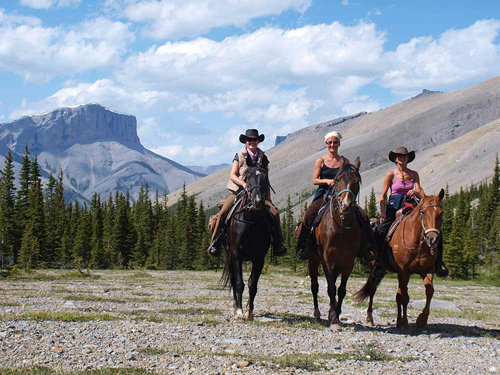
The Kananaskis Continental Divide Ride is designed for keen riders who are up to the challenge of covering between 170 and 200 km of rugged mountain trails in Kananaskis Country. Over the duration of the trek you will learn the basics of horse packing, wilderness horsemanship, low impact horse camping and a myriad of other skills to fully enjoy horse trekking.
Starting from the foothills, we move progressively westward and deeper into the mountains. Trails vary from difficult game tracks that require a knowledgeable guide to find, through to some that are suitable for cantering. We normally move camp 4 times, which allows us to remain for 2 days in two of the prettiest valleys in the Rockies and do some horseback exploring unencumbered with pack horses and unconcerned about breaking and resetting camp. This also allows us the opportunity to do more or less difficult rides depending on the interests and ability of the group.
Elevations range between 4400′ at the Ranch, to over 8400′ at Paradise Pass. Routes may vary due to a variety of natural conditions. On some sections of trail the riders are required to dismount and walk their horses for safety. There are other destinations that require the horses be tied and people hike the last mile or so to reach an alpine lake, so a reasonable level of personal fitness is required.
Explore beautiful lakes that invite for a refreshing swim, snowcapped mountain passes, and lush meadows with clear streams running through.
|
Camping Ride with pack horses
Family Vacation
Suitable for riders over 210 lbs
|
|
Meeting:
|
Bragg Creek
|
|
Airport:
|
Calgary International Airport (YYC)
|
|
Transfer:
|
Calgary Airport/ hotels
|
|
Riders:
|
Min
3 riders
Max
8 riders
(per riding group)
Max Capacity
8
|
|
Trip Brochure (PDF)  Trip Rating

|
|
|
|
Rates and Dates for 2026 | 2027
Rates include*:
Accommodations, All meals, 8 riding days & Transfers
All camping gear, sleeping bags, mats, and duffels provided. Oil-slicker cost $5 per day per person.
| A | 2026 | 10 day trip - 7 nights camping and 2 nights Lodge | 10d / 9n | Can$5940 | $4455 |
* prices are per person based on double/twin occupancy
GST (VAT) 5%
Transfer and Other Charges:
|
2026
|
Transfer from/to Calgary Airport at 4:00pm included
|
Can$
0
|
$0
|
|
2026
|
Transfer from/to hotel in Calgary at 5:00pm included
|
Can$
0
|
$0
|
|
2026
|
Special diet (gluten-free or dairy-free) supplement
|
Can$
100
|
$75
|
Pick up at Calgary Airport at 4:00pm. Return transfer leaves at 9:30am on departure day. (Please don't book domestic flight before 12:00pm and international flights before 1:00pm)
Pickup from hotel near airport or downtown Calgary is possible after airport pick up
Rates do not include:
Alcoholic drinks, Special diet request, Taxes & Gratuities
 Sample Itinerary - subject to changes
While we have a route planned at the outset of every trip, changes are sometimes forced upon us by weather, bear activity or other environmental hazards. The guides reserve the option of changing the day's activity from the published schedule based on any concern they have for the safety of the party. In these cases, various alternatives will normally be presented to the group and a decision made in consultation with them.
Day 1 (Sunday): Arrival
Sample Itinerary - subject to changes
While we have a route planned at the outset of every trip, changes are sometimes forced upon us by weather, bear activity or other environmental hazards. The guides reserve the option of changing the day's activity from the published schedule based on any concern they have for the safety of the party. In these cases, various alternatives will normally be presented to the group and a decision made in consultation with them.
Day 1 (Sunday): Arrival
We will arrange pick-up from Calgary in the afternoon, either from the international airport or a hotel. The exact pick up time will be coordinated with you directly, but typically we don’t schedule pick-ups before 4:00pm. After approximately a 1 hour drive, you will be dropped off at the Ranch where we have a welcome meet & greet BBQ with all guests and the staff to give you and us the chance to get to know each other a bit, ask questions, and – most importantly – go over the plan for the next days, including weather forecast and reminders of what you need to bring. We will talk to you about your riding skills and preferences and dislikes in a horse so we can select a good match for you to ride over the next days. You will then be issued a sturdy duffel bag, sleeping bag, and mattress. After you check into your room, you will have time to pack and prepare for the trip and socialize with the other guests.
Meals included: Dinner
Overnight at the Ranch
Day 2 (Monday): Introductory Ride
After a short test ride in our arena, we will pack a lunch and leave the ranch – either on horseback or by loading them on a trailer and departing from a near trailhead. We take it easy the first day and ride through the forests and meadows of the Foothills until we reach our first camp. It takes 5 hours to get to the first camp.
When arriving in camp, we take care of the horses, groom and feed them and then have time to rest ourselves with a good cup of cowboy coffee or tea. The camp is located near a small river that is refreshing on a hot day for those who like to take a splash!
Dinner is made over an open fire. We have put up large wall tents that offer enough space and shelter for the group.
Riding approx. 4-5 hours
Meals included: Breakfast, Lunch & Dinner
Overnight camping at Threepoint Camp
Day 3 (Tuesday): Threepoint Camp to Elbow River
If the weather for the day is favorable we will break camp after breakfast and depart for our longest day of the week. A breathtaking ride through the foothills and across a mountain range will take the better part of 7 hours to get top our next camp. This ride can’t be done in poor weather conditions.
Riding approx. 7 hours
Meals included: Breakfast, Lunch & Dinner
Overnight camping near Elbow River
Day 4 (Wednesday): Elbow River on Horseback
The plan is to make a short but dramatic ride up a hidden valley. Because we’ll be returning to the same camp, we can make a leisurely start, and we should be back early enough in the afternoon for a refreshing swim I’m the river near camp.
Meals included: Breakfast, Lunch & Dinner
Overnight camping near Elbow River
Day 5 (Thursday): Elbow River on Horseback
Weather permitting, the plan is to navigate our way around a mountain range using some very challenging trails. It will take more than 7 hours to complete that loop that is well described as an equestrian obstacle course. Return to the same camp late in the afternoon.
Meals included: Breakfast, Lunch & Dinner
Overnight camping near Elbow River
Day 6 (Friday): Sheep River Ride
After breakfast, we will break camp, pack up the horses and move up valley, crossing a low pass into the drainage of the Sheep River. This ride takes us past the highest mountain we’ll see, rising 3200m. It’s a fairly easy day covering about 24 kms
Meals included: Breakfast, Lunch & Dinner
Overnight camping near Sheep River
Day 7 (Saturday): Ride to Paradise Valley
We pack up again and head north, past some alpine lakes where we’ll take lunch and maybe a swim if it is warm enough. We’ll arrive in our new camp in a beautiful meadow before supper.
Meals included: Breakfast, Lunch & Dinner
Overnight camping near Paradise Valley
Day 8 (Sunday): Paradise Pass
There are several options in Paradise Valley, but if conditions are suitable our favourite is to climb to Paradise Pass (2575M). If people feel strong we might continue around a nameless mountain range and make our way back to camp by descending a rugged and steep valley.
Meals included: Breakfast, Lunch & Dinner
Overnight camping near Paradise Valley
Day 9 (Monday): Ride back to Elbow River Valley
After breakfast, we break camp for the last time, pack the horses, and ride down the valley where we will be met by the truck and trailer. After 8 days of riding through Kananaskis Country, you will return to civilization, where you can enjoy a shower and a nice dinner in the company of your new found friends.
Meals included: Breakfast, Lunch & Dinner
Overnight at the Ranch
Day 10 (Tuesday): Departure
After breakfast, it’s time to say good bye. The shuttle will pick you up around 9.30am to take you back to Calgary. With you will be the memories of an unforgettable adventure in Kananaskis Country.
Meals included: Breakfast
Note: Elevations range between 4400' at the Ranch, to over 8400' at Paradise Pass. Routes may vary due to a variety of natural conditions.
There are some trails we use where it is necessary to hike over rocky terrain, either to avoid undue risk or to enjoy a vista that cannot be ridden to. For most people this is a refreshing change that allows them to stretch their legs. We recommend that you bring or wear comfortable footwear that you can hike for a kilometer or two in. A reasonable level of personal fitness is required.
Meeting:
Bragg Creek
Airport:
Calgary International Airport (YYC)
Transfer:
Calgary Airport/ hotels
Distance:
80 km
Pick up at Calgary Airport at 4:00pm. Return transfer leaves at 9:30am on departure day. (Please don't book domestic flight before 12:00pm and international flights before 1:00pm)
Pickup from hotel near airport or downtown Calgary is possible after airport pick up
|
Tack:
|
|
Western
|
|
Horses:
|
|
Canadian, Arab, Quarter Horse, Morgan, Welsh pony, Paint and cross breeds
|
|
Pace:
|
|
Moderate pace. Slow in the mountains, but nice opportunities for faster paced riding across open meadows, 4 -7 hours per day. Some dense forest areas and extreme steep and rocky terrain sections.
|
Walk |
Trot |
Canter |
|
|
Level:
|
|
 (3
to
4
out of 5) Intermediate +
(3
to
4
out of 5) Intermediate +
|
|
Age:
|
|
Min
8
|
|
|
Weight:
|
|
Max
220 lb / 100 kg
|
|
Riders:
|
|
Min
3 riders
|
Max
8 riders
(per riding group)
|
Max Capacity
8
|
 Riding Experience
The Kananaskis Continental Divide Ride is designed for riders who are up to the challenge of covering between 170 and 200 km of rugged mountain trails in Kananaskis Country. This vacation is for riders with intermediate to advanced experience and a keen sense of adventure. Since the packhorse train uses different trails than the riding guests we will often canter wherever the trail is suitable. This is why it is important you are well balanced and comfortable at trots and canters! Over the duration of the trek you will learn the basics of horse packing, wilderness horsemanship, low impact horse camping and a myriad of other skills to fully enjoy horse trekking. The guests are expected to help in tending to the horses and other camp duties.
There are some trails we use where it is necessary to hike over rocky terrain, either to avoid undue risk or to enjoy a vista that cannot be ridden to. For most people this is a refreshing change that allows them to stretch their legs. We recommend that you bring or wear comfortable footwear that you can hike for a kilometer or two in.
Pace
5-7 hours per day will be spent on trail covering normally about 20 - 30 kilometers.
Horses
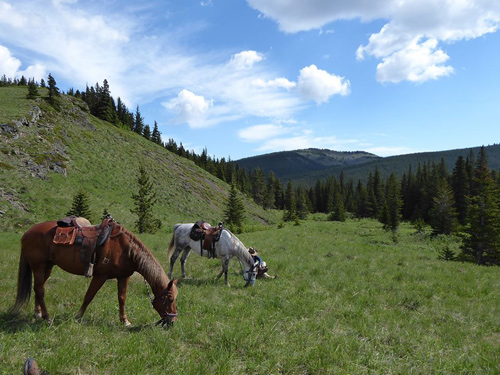
The horses have been chosen for their endurance, spirit, and reliability in the mountains. Our horses are trained western style (neck-reining), but most English trained riders adapt very quickly to this style of riding with a bit of instruction and advice! The guests are expected to help in tending to the horses and other camp duties. Most horses will be fitted with western style saddles but those with a distinct preference for English riding may be accommodated.
Guides
Interesting and entertaining guides share their knowledge of the different areas we visit. You can learn about horsemanship, back-country navigation, survival skills, and living in nature.
Depending on the group size you will have one or two backcountry guides with you at all times. Wranglers lead the packhorses with your gear into camp, usually on a different, easier and less scenic route than the one the group takes. We all share the same love and pride for this country and are delighted to pass it on to our guests.
Requirements
We consider 8 to be optimal maximum group size for our back-country trips, but can handle groups as large as 10 if you are one big group who book together!
The minimum age for pack trips is 8 years old. Anyone under 15 should be a regular and enthusiastic rider and be adventurous, and must be accompanied by a parent or guardian. We have also had people in their 70's on pack trips, but again, they were fit, in good health, and rode regularly prior to their holiday. We ask that you judge yourself (and your children) honestly in this regard, as we will take your word for it and plan the trip accordingly.
The maximum weight for riders is 220 lbs. Exceptions may be made for very experienced/athletic riders!
For all age groups: It is important that you feel fit and healthy before going on the trail. We are traveling in the wilderness, and medical services (beyond first aid) will not be readily available.
Passport and Visa Requirements:
Passport valid for at least one day beyond the intended departure date from Canada required by all nationals referred to in the chart except the following: (a) 1. Canadian citizens holding a Canadian . more
Bragg Creek area
|
Month
|
Jan
|
Feb
|
Mar
|
Apr
|
May
|
Jun
|
Jul
|
Aug
|
Sep
|
Oct
|
Nov
|
Dec
|
|
Average High Temperature (°F)
|
30
|
36
|
41
|
50
|
59
|
66
|
72
|
71
|
62
|
54
|
40
|
32
|
|
Average Low Temperature (°F)
|
1
|
7
|
13
|
23
|
31
|
38
|
41
|
40
|
32
|
24
|
11
|
4
|
|
Average High Temperature (°C)
|
-1
|
2
|
5
|
10
|
15
|
19
|
22
|
22
|
17
|
12
|
4
|
0
|
|
Average Low Temperature (°C)
|
-17
|
-14
|
-11
|
-5
|
-1
|
3
|
5
|
4
|
0
|
-5
|
-11
|
-16
|
|
Average Precipitation (days of rain)
|
4
|
4
|
6
|
7
|
10
|
10
|
8
|
8
|
7
|
5
|
4
|
3
|
Source: NOAA
Seasons
During the riding season of June to September, temperatures will range widely, with the hottest daytime temperatures reaching 30 C (85 F). We are riding at elevations ranging from 1400 m (4400') to well above the tree line at 2700m (8400'), so wide fluctuations in temperature can be expected. This region always cools off at night, and frequently experiences frost even in mid-summer. We always take our rain gear with us on the saddle. Even if it doesn't rain, it may be necessary to cut the wind when we're above the tree line
On day 1 you will receive a Duffle bag with a warm sleeping bag and mat. All your personal gear will have to go into this duffle bag including mat and sleeping bag.
The duffel bags are waterproof (length is 30”). Maximum weight allowed in the duffel bag is 11kg or 25lbs and that would include sleeping bag and thermarest mattress provided.
We suggest to bring
- 2 pair of jeans or riding pants
- 3 long sleeve shirts
- Fleece or sweater (fleece is lighter)
- Jacket or vest as wind breaker
- Brimmed hat (protects from rain, sun and low branches)
- Healed, ankle-high, water-repellant boots
- Gloves
- Toque (warm hat)
- Warm socks (1 pair per day)
- Underwear (1 set per day)
- Towel and swimsuit (optional)
- Personal hygiene items
- Comfortable camp shoes
- Warm underwear
- Camera (please not that there is no possibility to charge batteries!)
- Flashlight
- Knife
- Chaps (if available)
- Reusable water bottle 750-1000 ml- plastic or steel only- (no glass)
- Sleeping bag rated to at least -5 degrees Celsius or warmer (you can borrow one from us at no extra charge)
- Therm-a-rest / sleeping pad (you can borrow one from us at no extra charge)
* If you have any medical condition like allergies, or are on medication, please tell your guide.
Available to borrow (no extra charge)
- Rainwear (oil-skin slicker)
- Riding Helmet
Weight of Gear
Because everything must be loaded on pack-horses, guests must pack their gear in 1 standard sized duffel bag, weighing no more than 25 lbs (11 kg) - not including what you wear and carry on your saddle horse.
If you have luggage that is not required for the horse trip you may leave that at the ranch
Saddle bags
Your trail horse will have 2 saddlebags tied to the saddle. One is for your personal items to carry on the trail, such as camera, sun protection, water bottle, extra layer of clothes, etc. The other bag is reserved for "group items" such as lunch or first aid kit. Your rain wear will also travel with you tied behind the saddle.
Sorry, no video is currently available for this tour.
*Important Notice: The following ratings have been submitted by guests and do not necessarily represent the views of Hidden Trails, its partners or employees.
Every care is taken to ensure accuracy but Hidden Trails is not liable for any errors or omissions.
..view other reports for different trips
Accommodations
This is a pack trip so nights will be spent at different campsites.
Description
The first and last night of the trip will be spent at the ranch, and the remaining 7 nights will be spent camping in 4 different campsites.
Accommodation Itinerary - subject to changes
Night 1: Ranch
Night 2: Threepoint Camp
Night 3-5: Elbow River Camp
Night 6: Tombstone Backcountry Camp
Night 7-8: Paradise Valley Camp
Night 9: Ranch
Ranch
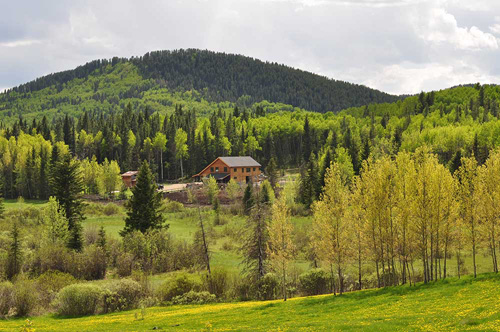
The ranch lies in the foothills of the Rocky Mountains, 13km south of the picturesque hamlet of Bragg Creek and roughly 60 kilometers southwest of Calgary - a wilderness area stretching to the Continental Divide! Landscape changes from one of rolling ridges and open forests to one of high alpine meadows, thick primal forests, and shear limestone cliffs. The heart of the guest quarters is a large, bright communal space where we socialize, eat, cook, listen to stories or just enjoy the view over the horse pasture.
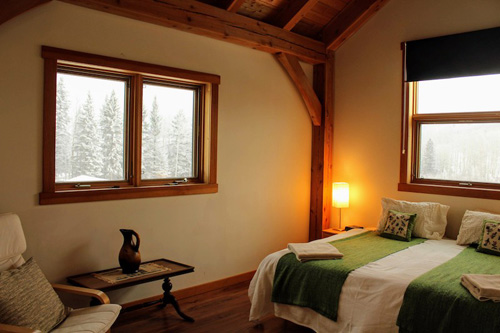
The guesthouse has 5 rooms (1 single room with one double bed, 1 room with one queen bed, and 3 rooms with king bed, two twins, or two double beds). There are 2 full bathrooms, which are shared amongst all guests. We provide all bed linen and towels, but please bring your own soap and shampoo. There is a hairdryer in each bathroom. We have an outdoor fireplace with picnic area.
Smoking is prohibited anywhere on the property except for around the outdoor fire pit. There is no TV or cell service in the guest house, but there is complimentary WIFI. You are welcome use the i-pod docking station, boards games, and a large selection of books and magazines available. There is a telephone in the guest house that can be used for local calls or long distance if you bring a calling card.
Laundry is available for an additional fee at certain times of the day.
Camping
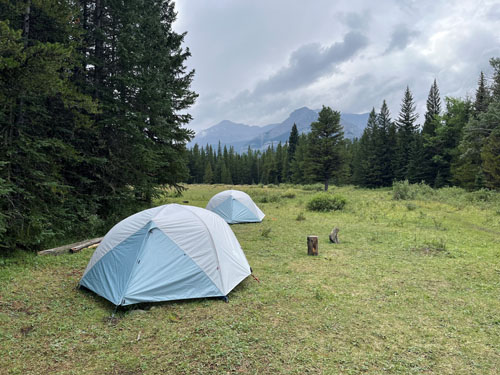
On the trail we stay in simple but comfortable camps, their locations are well chosen within the given geography.
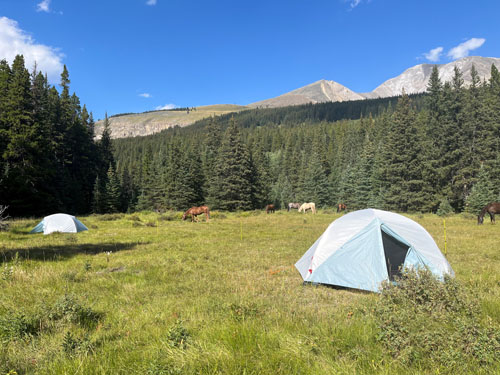
Some campsites are primitive camps where you can sleep under the stars in a cozy lean-to. Tents, sleeping bags and mats are provided.
We always camp within easy walking distance of a clear stream or river where you can swim or wash yourself. Bathroom facilities are pit latrines dug in each camp a short walk from the tenting area. They aren’t quite out-houses (only tarps for walls), but they have toilet seats. There is no electricity in camp, we recommend power bars or solar chargers.
 Room Occupancy
Starting 2026, solo travelers must be willing to share since there is only one single room at the ranch.
Also, we don't normally offer single or private tents unless people want to bring their own. Space on the packhorses is limited. Thank you for understanding.
 Meals
Meals
All meals are included from dinner on Day 1 to breakfast on the last day.
At the Lodge: Full breakfast and dinner, prepared with local and fresh ingredients. Breakfast is typically served around 8.30 AM, dinner around 6.30 PM.
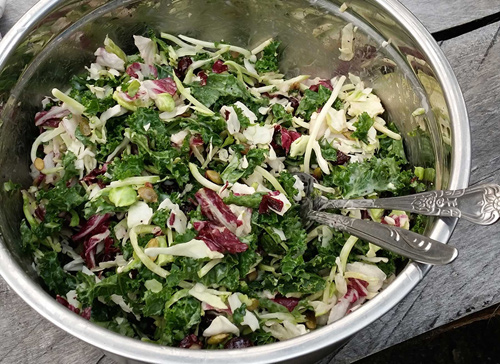
In camp: all meals are cooked over an open campfire and prepared with fresh ingredients. The menu changes daily and offers typical local dishes but also internationally inspired cuisine. Ingredients include locally raised organic beef and pork, fresh vegetables and fruits. Breakfast is typically hot and dinner is typically a main course with a salad and dessert. Lunch is picnic-style with sandwiches or wraps, fruit and granola bars.
Coffee, teas, water, juice for breakfast, and hot chocolate are complimentary while you stay with us. Please note that we do not serve alcohol, but feel free to bring your own as well as any other favourite drink you like.
Dietary Restrictions
We cater to most dietary restrictions with prior notice. Gluten-free requests are $10 extra per day.
This trip
can accommodate special dietary requests.
|
Tack:
|
|
Western
|
|
Horses:
|
|
Canadian, Arab, Quarter Horse, Morgan, Welsh pony, Paint and cross breeds
|
|
Pace:
|
|
Moderate pace. Slow in the mountains, but nice opportunities for faster paced riding across open meadows, 4 -7 hours per day. Some dense forest areas and extreme steep and rocky terrain sections.
|
Walk |
Trot |
Canter |
|
|
Level:
|
|
(3
to
4
out of 5) Intermediate +
|
|
Age:
|
|
Min
8
|
|
|
Weight:
|
|
Max
220 lb / 100 kg
|
|
Riders:
|
|
Min
3 riders
|
Max
8 riders
(per riding group)
|
Max Capacity
8
|
Riding Experience
The Kananaskis Continental Divide Ride is designed for riders who are up to the challenge of covering between 170 and 200 km of rugged mountain trails in Kananaskis Country. This vacation is for riders with intermediate to advanced experience and a keen sense of adventure. Since the packhorse train uses different trails than the riding guests we will often canter wherever the trail is suitable. This is why it is important you are well balanced and comfortable at trots and canters! Over the duration of the trek you will learn the basics of horse packing, wilderness horsemanship, low impact horse camping and a myriad of other skills to fully enjoy horse trekking. The guests are expected to help in tending to the horses and other camp duties.
There are some trails we use where it is necessary to hike over rocky terrain, either to avoid undue risk or to enjoy a vista that cannot be ridden to. For most people this is a refreshing change that allows them to stretch their legs. We recommend that you bring or wear comfortable footwear that you can hike for a kilometer or two in.
Pace
5-7 hours per day will be spent on trail covering normally about 20 - 30 kilometers.
Horses
The horses have been chosen for their endurance, spirit, and reliability in the mountains. Our horses are trained western style (neck-reining), but most English trained riders adapt very quickly to this style of riding with a bit of instruction and advice! The guests are expected to help in tending to the horses and other camp duties. Most horses will be fitted with western style saddles but those with a distinct preference for English riding may be accommodated.
Guides
Interesting and entertaining guides share their knowledge of the different areas we visit. You can learn about horsemanship, back-country navigation, survival skills, and living in nature.
Depending on the group size you will have one or two backcountry guides with you at all times. Wranglers lead the packhorses with your gear into camp, usually on a different, easier and less scenic route than the one the group takes. We all share the same love and pride for this country and are delighted to pass it on to our guests.
Requirements
We consider 8 to be optimal maximum group size for our back-country trips, but can handle groups as large as 10 if you are one big group who book together!
The minimum age for pack trips is 8 years old. Anyone under 15 should be a regular and enthusiastic rider and be adventurous, and must be accompanied by a parent or guardian. We have also had people in their 70's on pack trips, but again, they were fit, in good health, and rode regularly prior to their holiday. We ask that you judge yourself (and your children) honestly in this regard, as we will take your word for it and plan the trip accordingly.
The maximum weight for riders is 220 lbs. Exceptions may be made for very experienced/athletic riders!
For all age groups: It is important that you feel fit and healthy before going on the trail. We are traveling in the wilderness, and medical services (beyond first aid) will not be readily available.
Passports
Passport valid for at least one day beyond the intended departure date from Canada required by all nationals referred to in the chart except the following:
(a) 1. Canadian citizens holding a Canadian Certificate of Identity, Canadian birth certificate or a certificate of Canadian citizenship;
(b) permanent residents of Canada with proof of status, ie Permanent Resident Card, Record of Landing, Returning Resident Permit or a Refugee Travel Document issued by the government of Canada to refugees who have been resettled in Canada;
(c) 2. citizens of the USA holding proof of citizenship (eg US birth certificate or US naturalisation papers).
Note: As of 23 January 2007 all persons, including US citizens, travelling by air between the USA and Canada, Central and South America, the Caribbean and Bermuda are required to present a valid passport or other approved document when entering or re-entering the USA. Similar requirements for those travelling by land or sea will be introduced as early as 1 January 2008. For further details about the Western Hemisphere Travel Initiative, visit the website of the US Department of State: http://travel.state.gov/travel/cbpmc/cbpmc_2223.html.
(d) persons entering from St Pierre & Miquelon or the USA who are legal permanent residents of the USA and hold a US alien registration card (Green Card);
(e) 3. citizens of France who are residents of and entering from St Pierre & Miquelon.
Note: (a) Children under 18 years must have information with them on the people responsible for their welfare, if travelling alone; this includes a letter of permission to travel from guardian(s), and also a letter from the custodian in Canada. (b) Depending on circumstance and nationality, certain applicants may need to undergo a medical examination in order to receive their visas; this must be carried out by a physician on Canada's list of Designated Medical Practitioners.
Passport Note
Visitors to Canada must satisfy an examining officer at the Port of Entry that they are genuine visitors, in good health, with no criminal convictions, and have sufficient funds to maintain themselves during their stay in Canada and to return to their country of origin, as well as evidence of confirmed onward reservations out of Canada. Persons under 18 years of age who are unaccompanied by an adult should bring with them a letter from a parent or guardian giving them permission to travel to Canada.
Identity/travel documents issued to non-national residents of the country of issue, refugees or stateless persons are recognized for travel to Canada.
Visas
Not required by all nationals referred to in chart above (visitor or transit) for stays of up to six months except the following:
(a) 4. holders of passports endorsed ‘British Subjects’ and ‘British Protected Persons’;
(b) 5. nationals of Bulgaria and Romania;
(c) those visiting Canada who, during that visit, also visit the USA or St Pierre & Miquelon (a French Overseas Territory) and return directly to Canada as visitors within the period authorised on their initial entry (or any extension thereto).
Note: Nationals not referred to in the chart above are advised to contact the high commission to check visa requirements (see Contact Addresses).
Visa Note
The Government of Canada refuses admission to: (a) holders of passports issued by the UK Government entitled 'British Temporary Resident's Passport'.
(a) A single-entry visa is still valid if used to visit the USA. (b) Persons wishing to attend a course of six months duration or less, at any level, do not require a study permit. However, if there is the possibility that you will extend your period of study in Canada, or if you are a full time student and wish to work on campus, you may apply for a study permit.
Types of Visa and Cost
Visitor: C$75 (single-entry); C$150 (multiple-entry). Family: C$400 (for families of six or more persons). Transit: free. Transit visas are necessary for all nationals who require a visitor visa. Although transit visas are not required by British citizens, they may be required by foreign nationals with British passports; check with the embassy or high commission for details. For further information on payment methods, contact the high commission. Prices are subject to frequent change.
Validity
Up to six months depending on circumstances of individual applicant. The determination regarding length of stay in Canada can only be decided by the examining officer at the port of entry, but visas cannot exceed the validity of the passport and cannot be longer than five years. If no actual departure date is indicated within the visitor’s passport, then the visitor will be required to depart within three months from the date of entry. Visitors must effect their departure from Canada on or before the date authorised by the examining officer on arrival. If an extension of stay is desired, an application must be made in writing to the nearest Canada Immigration Centre at least three weeks before the expiry of the visitor visa. Multiple-entry visas cannot be valid longer than passport. Transit visas are only allocated if a national's flight/onward journey is continuing within 24 hours. Single-entry visas can be used multiple times by nationals of St Pierre & Miquelon and the USA.
Applications to:
Consulate (or consular section at embassy or high commission)
Working Days Required
10 days are required from receiving applications, but applications should be made at least one month prior to the intended date of departure. Certain nationals are subject to longer processing times. For urgent applications it is advised to apply in person. Same-day processing is available for applications made in person and 24-hour processing for those using the drop-in service.
| Passport Required? |
| British |
Yes |
| Australian |
Yes |
| Canadian |
1 |
| USA |
2 |
| Other EU |
3 |
| Visa Required? |
| British |
No/4 |
| Australian |
No |
| Canadian |
N/A |
| USA |
No |
| Other EU |
5 |
| Return Ticket Required? |
| British |
Yes |
| Australian |
Yes |
| Canadian |
N/A |
| USA |
No |
| Other EU |
Yes |
This information is not being updated on a regular basis. Hidden Trails does not
take any responsibility for the accuracy of the above information. Please, consult
the embassy or consulate for updated info.
|

|
|
|
Kananaskis Continental Divide Ride
Tour Code:
RTAB18-S
10 days /
9 nights
Dates :
July to August
Trip Rating :
Difficulty :

Riding Level Explained | A | Beginner
 | Beginner A rider who has limited experience, is unable to post the trot and does not canter. | | B | Novice
 | Novice A rider who is capable of mounting and dismounting unassisted, capable of
applying basic aids, comfortable and in control at the walk, moderate length posting
trots, and short canters. | | C | Intermediate
 | Intermediate A rider who has a firm seat, is confident and in control at all paces
(including posting trots, two point canters and gallops), but does not ride regularly. |
| D | Strong Intermediate
 | Strong Intermediate An intermediate rider who is currently riding regularly and is comfortable in the saddle for at least 6 hours per day. | | E | Advanced
 | All of the above, plus an independent seat, soft hands, and capable of handlinga spirited horse in open country. |

|