|
|

|
|
|
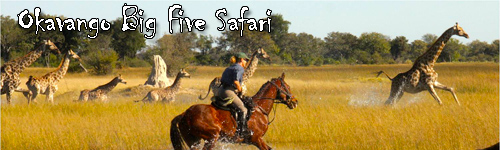
Okavango Big Five Safari
Okavango Delta
Botswana
A remote and exciting horseback safari deep into the world renowned wilderness of the Okavango Delta!
The Okavango Delta is undoubtedly the most outstanding of Botswana’s natural wonders, a 15,000 square kilometer wilderness of floodplain and forest interlaced with lagoons and waterways, and teeming with game and birds. A riding safari through this spectacular wetland sanctuary is an exciting and memorable experience for experienced horse riding enthusiasts with a passion of nature and international travel. Botswana is quintessential African wilderness: A vast country of savannah, desert, wetlands and salt pans, making it an ideal and varied safari destination. While nearly three quarters of the country is covered by the magnificent Kalahari Desert, yet in the north lies the Okavango Delta, the largest wetland delta in the world and an amazing contrast to behold. Botswana's huge wildlife populations make for some of the best game viewing in all of Africa. On the safaris here, you regularly encounter elephant, giraffe, buffalo, zebra and a multitude of other plains game and the big cats!
This is an extremely professional establishment, owned and operated by PJ and Barney Bestelink for more than two decades. They offer the very best in African riding safaris today; among other accolades, they have most recently been given the title, 'Winnner of Best Riding Safari Property in Africa' for 2013 awarded by 'The Safari Awards.' The safaris operate in their own private concession of the Moremi Game Reserve in the Western region of the Okavango Delta. Guests will be riding for four to six hours a day through some of the most scenic and top quality game viewing areas available in the world! The immediate area includes three major river systems of the Okavango Delta: the Xudum, the Matsibie and the Kiri. These rivers have created palm islands, grassy flood plains, mopane forests and clear streams. When the flood plains are full, the horses can wade through the water from island to island. Game viewing includes the sought after Big Five, as well as equivocal African game such as meerkats, honey badgers and red lechwe.
Safari groups are kept small, which allows for a personal touch on each individual departure which usually last for five, seven or ten nights in the wilderness; your overnight accommodations will be at a selection of luxury bush camps, pending on the safaris trail chosen for the group. Kujwana Camp is the base camp with luxury tented chalets combining double or twin beds with ensuite bathrooms - each with private facilities. The other two camps - Moklowane Camp and Kiri Fly Camp - consist of dome tents or bed rolls under the stars. Meals are cooked by an expert chef and are prepared every day to suit the activities organized – saddlebag picnic breakfasts and lunches are a specialty before a three course candlelit gourmet dinner is served once back at camp. With over 50 horses schooled and brought up in the African bush, the guides can and do go to any length to make the best match of horse and rider.
The game trails you follow are sometimes the same routes used by the herds of elephant or buffalo, and when lucky, you may get the exhilarating opportunity to gallop alongside the giraffe or zebras. As you will be riding in an area of dangerous game, notably the elephant, buffalo and cats – these riding safaris in Botswana can only experienced riders who are confident and capable riding at all paces. Rides are usually early in the day to avoid the most intense heat and sun, while afternoons are spent at leisure with a siesta or relaxing bird walks or mokoro rides (water levels permitting), or jeep game drives. Non-Riders are welcome here too! They can have their own guide and enjoy game drives, walks and Mokoros while their friends are out riding.
|
Camping Ride with vehicle support
Family Vacation
Safari Ride
|
|
Meeting:
|
Xudum Camp
|
|
Airport:
|
Maun, Kasane
|
|
Transfer:
|
Maun (charter flight) usually in at 12 noon, return by 1 pm.
|
|
Riders:
|
Min
2 riders
Max
8 riders
|
|
Trip Brochure (PDF)  Trip Rating

|
|
|
|
Rates and Dates for 2026 | 2027
Rates include*:
Accommodations, All meals including local drinks within reason for dinner, 7 riding days, Guided game drives & walks, Laundry service, Concession fees & Taxes
A limited assortment of half chaps and riding gloves are kept in the camp for loan
| A | 2026 | 8 day trip (High Season) | 8d / 7n | £7945 | $10565 |
| Daily rate, dbl, pp | £1135 | $1420 |
| B | 2026 | 8 day trip (Mid Season) | 8d / 7n | £6475 | $8610 |
| Daily rate, dbl, pp | £925 | $1155 |
| C | 2026 | 8 day trip (Low Season) | 8d / 7n | £5390 | $7170 |
| Daily rate, dbl, pp | £770 | $960 |
Minimum Deposit:
50 %
* prices are per person based on double/twin occupancy
Transfer and Other Charges:
|
2026
|
Transfer from/to Maun via helicopter (25 min) per person (min of 2), per way
|
£
340
|
$435
|
|
2026
|
Fixed wing transfer from/to Maun via Xaranna, per person (min 2), per way (seasonal)
|
£
280
|
$360
|
|
2026
|
Fixed wing transfer from/to Kasane via Xaranna, per person (min 2), per way (seasonal)
|
£
450
|
$575
|
|
2026
|
Road transfer from/to Kasane to Victoria Falls via vehicle, pp (min 2), per way
|
£
105
|
$135
|
|
2026
|
Upgrade to Riverside suite, per room, per night
|
£
100
|
$125
|
|
2026
|
Upgrade to Mini suite, per room, per night
|
£
50
|
$60
|
|
2026
|
Single supplement - please inquire
|
£
0
|
$0
|
Transfers are available from Maun or Kansane. Type of transfer dependent on water levels.
On your last day, our partner will take you back to Maun airport in time for mid-day flights.
** Transfers to or from Maun should co-ordinate with Air Botswana's flight BP211, BP212 and South African AirLink’s flight SA8300, SA8301.
Tour Dates for 2026 | 2027
Check here for details and availability
|
| A |
2026
|
05/30
- 06/06
|
8d / 7n
|
8 day trip (High Season)
|
2
/8
|
Expired
|
| A |
2026
|
06/06
- 06/13
|
8d / 7n
|
8 day trip (High Season)
|
2
/8
|
Expired
|
| A |
2026
|
06/13
- 06/20
|
8d / 7n
|
8 day trip (High Season)
|
2
/8
|
Expired
|
| A |
2026
|
06/20
- 06/27
|
8d / 7n
|
8 day trip (High Season)
|
2
/8
|
Expired
|
| A |
2026
|
06/27
- 07/04
|
8d / 7n
|
8 day trip (High Season)
|
2
/8
|
Expired
|
| A |
2026
|
07/04
- 07/11
|
8d / 7n
|
8 day trip (High Season)
|
2
/8
|
Expired
|
| A |
2026
|
07/11
- 07/18
|
8d / 7n
|
8 day trip (High Season)
|
2
/8
|
Expired
|
| A |
2026
|
07/18
- 07/25
|
8d / 7n
|
8 day trip (High Season)
|
2
/8
|
Expired
|
| A |
2026
|
07/25
- 08/01
|
8d / 7n
|
8 day trip (High Season)
|
2
/8
|
Expired
|
| A |
2026
|
08/01
- 08/08
|
8d / 7n
|
8 day trip (High Season)
|
2
/8
|
Expired
|
| A |
2026
|
08/08
- 08/15
|
8d / 7n
|
8 day trip (High Season)
|
2
/8
|
Reserve
|
| A |
2026
|
08/15
- 08/22
|
8d / 7n
|
8 day trip (High Season)
|
2
/8
|
Reserve
|
| A |
2026
|
08/22
- 08/29
|
8d / 7n
|
8 day trip (High Season)
|
2
/8
|
Reserve
|
| A |
2026
|
08/29
- 09/05
|
8d / 7n
|
8 day trip (High Season)
|
2
/8
|
Reserve
|
| A |
2026
|
09/05
- 09/12
|
8d / 7n
|
8 day trip (High Season)
|
2
/8
|
Reserve
|
| A |
2026
|
09/12
- 09/19
|
8d / 7n
|
8 day trip (High Season)
|
2
/8
|
Reserve
|
| A |
2026
|
09/19
- 09/26
|
8d / 7n
|
8 day trip (High Season)
|
2
/8
|
Reserve
|
| A |
2026
|
09/26
- 10/03
|
8d / 7n
|
8 day trip (High Season)
|
2
/8
|
Reserve
|
| B |
2026
|
10/03
- 10/10
|
8d / 7n
|
8 day trip (Mid Season)
|
2
/8
|
Reserve
|
| B |
2026
|
10/10
- 10/17
|
8d / 7n
|
8 day trip (Mid Season)
|
2
/8
|
Reserve
|
| B |
2026
|
10/17
- 10/24
|
8d / 7n
|
8 day trip (Mid Season)
|
2
/8
|
Reserve
|
| B |
2026
|
10/24
- 10/31
|
8d / 7n
|
8 day trip (Mid Season)
|
2
/8
|
Reserve
|
| B |
2026
|
10/31
- 11/07
|
8d / 7n
|
8 day trip (Mid Season)
|
2
/8
|
Reserve
|
| B |
2026
|
11/07
- 11/14
|
8d / 7n
|
8 day trip (Mid Season)
|
2
/8
|
Reserve
|
| B |
2026
|
11/14
- 11/21
|
8d / 7n
|
8 day trip (Mid Season)
|
2
/8
|
Reserve
|
| B |
2026
|
11/21
- 11/28
|
8d / 7n
|
8 day trip (Mid Season)
|
2
/8
|
Reserve
|
| C |
2026
|
11/28
- 12/05
|
8d / 7n
|
8 day trip (Low Season)
|
2
/8
|
Reserve
|
| C |
2026
|
12/05
- 12/12
|
8d / 7n
|
8 day trip (Low Season)
|
2
/8
|
Reserve
|
| C |
2026
|
12/12
- 12/19
|
8d / 7n
|
8 day trip (Low Season)
|
2
/8
|
Reserve
|
| C |
2026
|
12/19
- 12/26
|
8d / 7n
|
8 day trip (Low Season)
|
2
/8
|
Reserve
|
| C |
2026
|
12/26
- 01/02
|
8d / 7n
|
8 day trip (Low Season)
|
2
/8
|
Reserve
|
|
Trips can also be booked for January, February and December. However, they are from the base camp only - no fly camps. Shorter stays during this time, minimum 2 riders.
10-day & 7-day trips can be arranged for groups of 4+ pax (please inquire)
|
Rates do not include:
Transfers, Optional upgrade to Riverside suite while at Kujwana Camp, Travel and medical insurance (mandatory) & Gratuities
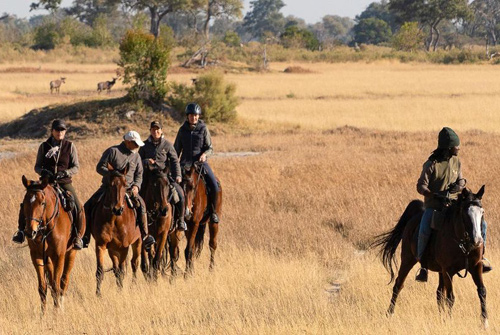 Sample Itinerary: 6-day program - subject to changes
Day 1 (Sunday): Arrival
You are met at Maun Airport before a 25 minute transfer by helicopter straight into camp, or by light aircraft to Pompom airstrip, which is then roughly an hour’s drive to camp by vehicle or boat. Once you arrive in camp you will be given time to settle in before lunch and an introduction talk with demonstration on tack and advice on game viewing from horseback. This is followed by an orientation ride (about 1-2 hours).
Meals included: Lunch & Dinner
Overnight at Kujwana Camp
Day 2 (Monday): Xudum Ride
Wake up each day is 30 minutes before dawn to ensure best game viewing. After breakfast, a morning ride in the Xudum area, wading through lush green malapos that lead you from island to island, surprising a timid reedbuck
out his dense cover on a heavily wooded island, or enjoy the herds of lechwe and zebra moving through the open spaces.
In the afternoon head out for a peaceful mokoro expedition on the river and enjoy the tranquility of the Delta from our dug out canoes. Enjoy the beautiful colours of the Delta as the sun starts to sink behind the horizon.
Meals included: Breakfast, Lunch & Dinner
Overnight at Kujwana Camp
Day 3 (Tuesday): Qwaapu Ride & Game Drive
A full morning ride heading to the east exploring the Qwaapu area – a different river system with exciting game viewing opportunities and a different landscape.
Return to camp for lunch followed by a siesta.
Afternoon game drive with sunset drinks, followed by a bush dinner and an evening night drive.
Meals included: Breakfast, Lunch & Dinner
Overnight at Kujwana Camp
Day 4 (Wednesday): Mastsebe River Exploration
A full day ride from Kujwana Camp, of approximately 30km heading northwest. The route moves through open floodplains and scattered islands towards the Matsebe river system, where you will see a wide variety of game.
A picnic lunch is served on a shady island followed by siesta with camp beds, maybe a swim, and then a further 2 hours ride in the afternoon. Arrive at back at Kujwana Camp at sunset and enjoy a refreshing drink as you admire the stunning views over the floodplain.
Meals included: Breakfast, Lunch & Dinner
Overnight at Kujwana Camp
Day 5 (Thursday): Matsebi River Ride & Game Drive
A full morning ride exploring the southern Matsebi area. This ride moves through a variety of game areas fording the Matsebi River through numerous hippo channels.
Afternoon a game drive or power boat to hippo pans; a great area for bush walks and tracking. The vehicle drops;you off and you can walk to the platforms for Sunset drinks. The platforms are 4 meters above the ground, camouflaged by a canopy of mangosteen trees. Enjoy the great view and wildlife moving freely below you.
Meals included: Breakfast, Lunch & Dinner
Overnight at Kujwana Camp
Day 6 (Friday): Departure
Early morning game ride out of Kujwana camp if flight times permit. Guests leave after breakfast. One hour’s game drive to the nearest airstrip for transfer by light aircraft into Maun or a 20 minute helicopter ride.
Meals included: Breakfast
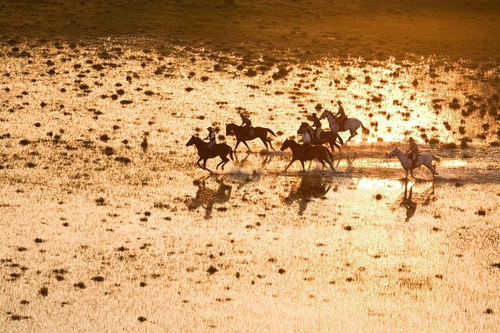
Sample Itinerary: 8-day program - subject to changes
Day 1 (Saturday): Arrival
You are met at Maun Airport before a 25 minute transfer by helicopter straight into camp, or by light aircraft to Pompom airstrip, which is then roughly an hour’s drive to camp by vehicle or boat. Once you arrive in camp you will be given time to settle in before lunch and an introduction talk with demonstration on tack and advice on game viewing from horseback. This is followed by an orientation ride for approximately 1 – 2 hours.
Meals included: Lunch & Dinner
Overnight at Kujwana Camp
Day 2 (Sunday): Qwaapu Ride
Wake up each day is 1 hour before dawn to ensure best game viewing. You start with a full morning ride heading to the east exploring the Qwaapu area – a different river system with exciting game viewing opportunities and a different landscape.
In the afternoon head out for a peaceful mokoro expedition up the river and enjoy the tranquility of the Delta from our dug out canoes. Enjoy the beautiful colours of the Delta as the sun starts to sink behind the horizon.
Meals included: Breakfast, Lunch & Dinner
Overnight at Kujwana Camp
Day 3 (Monday): Morning Ride & Game Drive
After breakfast, a morning ride in the Xudum area, wading through lush green malapos that lead you from island to island, surprising a timid reedbuck out his dense cover on a heavily wooded island, or enjoy the herds of lechwe and zebra moving through the open spaces.
Return to camp for lunch followed by a siesta. Afternoon game drive with sunset drinks, dinner in the bush and evening night drive with a spot light to end.
Meals included: Breakfast, Lunch & Dinner
Overnight at Kujwana Camp
Day 4 (Tuesday): Matsebe River Ride
A full day ride from Kujwana Camp, of approximately 30km heading northwest. The route moves through open floodplains and scattered islands towards the Matsebe river system, where you will see a wide variety of game.
A picnic lunch is served on a shady island followed by siesta with camp beds, maybe a swim, and then a further 2 hours ride to in the afternoon. Arrive at back at Kujwana Camp at sunset and enjoy a refreshing drink as you admire the stunning views over the floodplain.
Meals included: Breakfast, Lunch & Dinner
Overnight at Kujwana Camp
Day 5 (Wednesday): Kujwana Ride & Mokolowane Game Drive
Today you'll spend the morning on horseback, exploring the open plains to the south of the camp.
After lunch and a siesta, you'll game drive Northwest to our sister camp, Mokolowane (Mok), and stay overnight in its beautiful stilted accommodation which is raised up to be above the highest water.
The Mok experience specialises in predator viewing - lion and leopard are frequently seen and an afternoon game drive looking for these predators is often rewarded.
Meals included: Breakfast, Lunch & Dinner
Overnight at Mokolowane Camp
Day 6 (Thursday): Game Drive to Kujwana & Afternoon Ride
Rising early, back in the game drive vehicle by dawn, ready to head out to look for lions and leopards in the area surrounding Mokolowane. After the thrill of watching predators in the wild, head back to Mok for lunch overlooking over the floodplains.
After lunch return to Kujwana with a game drive, with time for a short siesta before getting back in the saddle to explore the immediate area around camp on horseback.
Meals included: Breakfast, Lunch & Dinner
Overnight at Kujwana Camp
Day 7 (Friday): Xudum Ride
An option of another full day ride exploring the Xudum area - picnic lunch along the way. The ride covers around 35 km, with 4 hours ridden in the morning and two hours in the afternoon.
This ride moves through a variety of game areas fording the Xudum River through numerous hippo channels.
Meals included: Breakfast, Lunch & Dinner
Overnight at Kujwana Camp
Day 8 (Saturday): Departure
Early morning game ride out of Kujwana camp if flight times permit. Guests leave after breakfast. One hour’s game drive to the nearest airstrip for transfer by light aircraft into Maun or a 20 minute helicopter ride.
Meals included: Breakfast
Note: We reserve the right to alter the itinerary according to water levels and game movements. Mokoros (dugout Canoes) are offered as an activity depending on water levels.
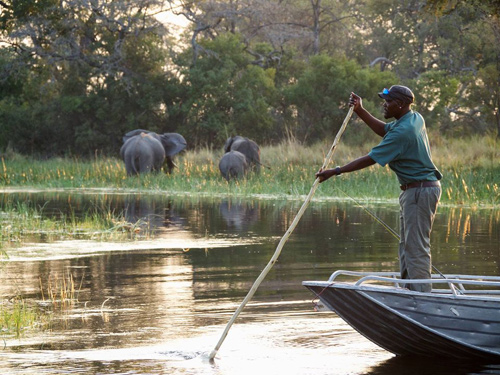 Non-Riding Activities
Although our priority is riding, we offer alternative activities during the afternoons that are not day rides. A 6-hour morning can be tiring so afternoons are spent at leisure with evening bird walks or mokoro rides (water levels permitting). Afternoon game drives and night spotting are also offered.
Non-Riders
We can accommodate non-riders but they must be booked in as such.
We offer exciting walking itineraries combining two or three of our camps, as well as non-riding itineraries for those accompanying a riding party. Non-riding guests will meet up with riding parties at every meal and for every non-riding activity, so you won’t feel left out! These itineraries are built entirely around you to fit in with your requirements.
With your very own guide, our non-riding itineraries are put together on a case by case basis, depending on the interests of individuals and the time of year. However they often include the following:
- walking safaris
- land-rover driven safaris
- power boat safaris
- mokoro expeditions
- bush-craft lessons
For more information about our non-riding safari itineraries contact us, and we can put together and itinerary just for you.
Meeting:
Xudum Camp
Airport:
Maun, Kasane
Train station:
--
Transfer:
Maun (charter flight) usually in at 12 noon, return by 1 pm.
Distance:
80 miles from Maun
Transfers are available from Maun or Kansane. Type of transfer dependent on water levels.
On your last day, our partner will take you back to Maun airport in time for mid-day flights.
** Transfers to or from Maun should co-ordinate with Air Botswana's flight BP211, BP212 and South African AirLink’s flight SA8300, SA8301.
|
Tack:
|
|
English leather saddles to a very high standard, some South African trail saddles. All horses go in snaffle bridles.
|
|
Horses:
|
|
American Saddler, Arabs, Boerperds, Draft cross, Thoroughbred and Thoroughbred crosses, Kalahari and Homebreds
|
|
Pace:
|
|
The terrain offers a wide range of pace with many areas that we can move on, flooded malapos allow for water canters but when game viewing we also move at a leisurely pace. 4 to 6 hrs in the saddle each day
|
Walk |
Trot |
Canter |
|
|
Level:
|
|
 (3.5
to
4
out of 5) Intermediate+
(3.5
to
4
out of 5) Intermediate+
|
|
Age:
|
|
Min
12
|
|
|
Weight:
|
|
Max
200 lbs / 90 kg
|
|
Riders:
|
|
Min
2 riders
|
Max
8 riders
|
|
 Riding Ability
Participants all need to master the basic aids, be able to post to the trot for stretches of 10 minutes at a time, be comfortable at all paces and be able to gallop out of trouble. It is a great advantage if you are a fit and a proficient rider.
Pace & Riding Terrain
We spend between 4-6 hours in the saddle a day. This is broken by refreshment stops and a 10-minute walk for every two hours spent in the saddle. This eases up the rider using different muscles, and helps the horse from constant pressure of the rider’s weight.
The Okavango Delta has been described as a water meadow. Palm islands, grassy flood plains, mopane forests and clear streams. Highest water is normally between May to September. Many of the flood plains are full at this time and the horses wade through from island to island.
The going is normally quite good and firm along the edges of the islands allowing the ride to move on at a trot and canter.
Horses
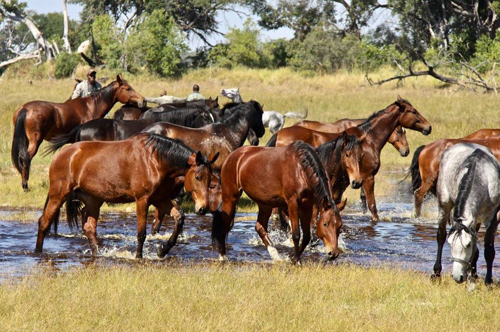
Full and part Thoroughbred, Pure Arab, Anglo Arab, Friesian cross, and Botswana Warmbloods (American Saddle bred cross African Boerperd) between 14 and 17 hands. All are well-schooled, responsive and even tempered. There is a wide range of horses (over 50) suitable for all kinds of riders. Every effort is made to match horse and rider.
The horses are chosen with temperament and suitability at the forefront. Many of the horses have either been sourced through close friends in Harare, Zimbabwe or are selected from well-known breeders in South Africa. In recent years, we have carefully selected mares to join our team and using Lamu, an American Saddlebred, we are breeding more of our own horses now.
When not on safari the horses freely graze the grassy molapos of the delta through the day. They graze loose and this truly is one of the amazing sights you will see while on safari with us.
Tack
Tack is English Style and South African Trail saddles. Each saddle has a seat saver for comfort. Tack is of high quality and kept in good condition. Saddles are well known makes such as Ideals, Albion, and Symonds. Most horses are in snaffle bridles.
Weight Limit
Maximum weight is 200 lbs (14 ½ stone or 90 kg). Guests may be required to step on the scales. We do not accept riders over that weight.
Group size
The 2 camps can accommodate up to 6 guests each so the rides are normally no larger than a group of 6-8 riders.
Children
We accept children over 12 years of age unless special arrangement is made with the camp for younger children and family groups. In order for a child to ride, we ask for a letter confirming the child's competence from an independent equine professional.
Safety
All rides are led by qualified, specialized and/or professional guides and a back up guide. A 375 rifle is carried on all the rides. All camps and vehicles have radio communication and guides ride with hand held radios. A demonstration is given at the beginning of the safari with a talk on how to handle big game situations. Should an accident happen all guests are registered with a helicopter evacuation service which can get you to a hospital within 20 minutes.
A medical kit is kept in the camp.
Guides
All rides are lead by qualified, specialized and professional guides as well as a back up guide. A keen interest is taken in birds as well as fauna and flora. Other activities including game drives, Mekoros, walks and power boats are also led by qualified, specialized and/or professional guides.
Insurance
All guests must have adequate medical and travel insurance to join this trip. Guests must check that there travel insurance covers horse riding. This is often an extra that must be added on.
Passport and Visa Requirements:
Passports valid for at least six months required by all nationals referred to in the chart.Not required by all nationals referred to in the chart above for stays of up to 90 days except the following:. more
Maun area
|
Month
|
Jan
|
Feb
|
Mar
|
Apr
|
May
|
Jun
|
Jul
|
Aug
|
Sep
|
Oct
|
Nov
|
Dec
|
|
Average High Temperature (°F)
|
92
|
91
|
90
|
88
|
84
|
80
|
79
|
85
|
93
|
96
|
95
|
92
|
|
Average Low Temperature (°F)
|
68
|
68
|
66
|
60
|
53
|
47
|
46
|
52
|
60
|
67
|
68
|
68
|
|
Average High Temperature (°C)
|
33
|
33
|
32
|
31
|
29
|
27
|
26
|
30
|
34
|
36
|
35
|
33
|
|
Average Low Temperature (°C)
|
20
|
20
|
19
|
16
|
11
|
8
|
8
|
11
|
16
|
20
|
20
|
20
|
|
Average Precipitation (days of rain)
|
12
|
9
|
8
|
2
|
0
|
0
|
0
|
0
|
0
|
2
|
6
|
9
|
Source: NOAA
Seasons
October, November and February are the hottest months, with temperatures sometimes peaking to 38 degrees C at midday. The rains can start in October, with the occasional thundershower. December to February are the wettest months.
Autumn (March- April)
Weather: Last of the rains fall during March. Temperatures start to drop toward the end of April. Temp 20 – 30 degree.
Area: Normally no flood water so molapos dry. Local rains over Dec – Feb create a very green environment and top up lagoons. Rain pans holding water big attraction for game as they become more concentrated.
Game: Zebra and wildebeest start their mini migration back to the delta from the rainpans. Migrant bird species start to leave. A lot of elephant in the dry area as the clay bottomed rain pans become their main source of water. Marula trees are ripe, good food for the elephant. Good sightings of hippo and crocodile in the lagoons as they await the arrival of the floodwater.
May- start of dry season
Weather: One of the most interesting months. The flood usually arrives in May.
Area: Dry riverbeds start flowing and the sudden growth of vegetation and sound is phenomenal.
Game: Usually exceptional game viewing on the tongue of the flood as it moves through the area.
Winter (June- July)
Weather: Coldest months especially in the evening. Pleasant during day and dry. Temperature varies 10 –20 degree. Sun shines every day. No rain.
Area: Flood normally arrives at Mokolwane mid May and Kujwana about 2 weeks later. Qwaapu receives water mid June. Exciting time to be in the delta. Watching the annual transformation of the delta. Deep wades and swimming begin.
Game: Great birding with the arrival of the floods. As the molapos start to fill they attract big herds of zebra, giraffe and impala. Large herds of buffalo. Elephant start feeding on Mokolwane palms.
Spring (August- October)
Weather: Warming up to hot.
Area: Trees start to flower. Water at its peak and starts to drop toward September and October. Molapas are green and lush. Water lilies fill the lagoons. Very pretty time of year.
Game: Migrant bird species start to arrive. Carmine bee-eaters start to nest. Wattled crane are nesting and in August the elephants feed on the fruit of the palm tree.
Summer (September-February)- start of rainy season
Weather: Temperatures reach 30 – 40 degrees. October, November and February are the hottest months. The rains can start in October, with the occasional thundershower. December to February are the wettest months.
Area: Water levels dropping fast. Good ground.
Game: Ungulates i.e. impala and tsessebe start to calve. Zebra start to foal. Big herds of buffalo.
Luggage must be packed in soft sided bags only! Air transfers are in light charter aircraft - there is a weight restriction of 20 kg, including hand luggage, per person! We recommend all riding equipment/clothing be carried in hand luggage in case of lost luggage. Any extra luggage can be left with our office in Maun.
Riding clothes should be in neutral, khaki or bush colours, no red or white if possible.
Laundry is done daily in camp but not when moving to fly camp. All laundry is washed by hand by camp staff. Ladies underwear and other personal items may not be sent to the laundry. Washing powder is provided in the bathrooms. Soap, Shampoo, hair conditioner, and body lotion is provided in Kujwana camp. Bedrolls are complete with sheets, duvet and towels provided. A medical kit is kept in the camp.
A limited assortment of half chaps and riding gloves are kept in the camp for loan. Please let us know at the time of booking if you wish to borrow any items.
What to Bring
- Jodpurs or riding jeans: at least two pairs!
- Half or full leather chaps
- Light cotton pants to wear under chaps and or evenings
- Shorts for the midday break
- Helmet
- Riding shoes
- Riding gloves
- Long-sleeve shirt
- T-shirts
- Sweatshirt
- Warm jacket (April to September)
- Plastic poncho for rainy season
- Pants for evenings
- Swimsuit
- Kikoi or sarong
- Socks- 2 changes per day
- Rubber Flip Flop -1 pair
- Sneakers: when not riding
- Hat -wide brim /straw for shade
- Sunglasses
- Suntan lotion
- Lip balm
- Insect repellent
- Antihistamine cream, medication, and malaria pills
- Bumbag (Fanny Pack)
- Camera and film
- Binoculars
- Flashlight and spare batteries
- Recharging batteries: facilities are available at Kujwana camp. Power point is British and Botswana (three prong round, or three prong square)
-For Extra Spending: accept cash USD, GBP and credit cards (charge 5% for any transaction)
Sorry, no video is currently available for this tour.
*Important Notice: The following ratings have been submitted by guests and do not necessarily represent the views of Hidden Trails, its partners or employees.
Every care is taken to ensure accuracy but Hidden Trails is not liable for any errors or omissions.
..view other reports for different trips
 Accommodations
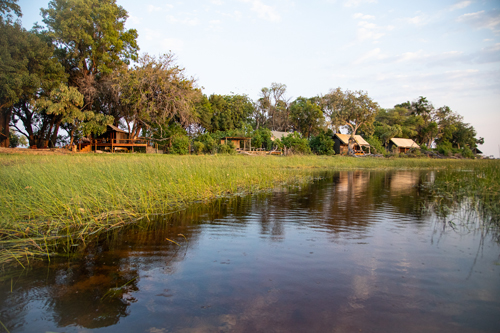
This is a wilderness ride, so nights will be spent in safari tents in different locations.
6-day Accommodation Itinerary - subject to changes based on availability
All nights are spent at Kujwana Camp.
8-day Accommodation Itinerary - subject to changes based on availability
Most nights are spent at Kujwana Camp, except for night 5, which will be at Mokolowane Camp.
 Kujwana Camp
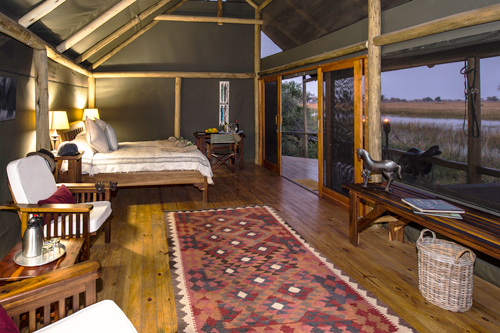
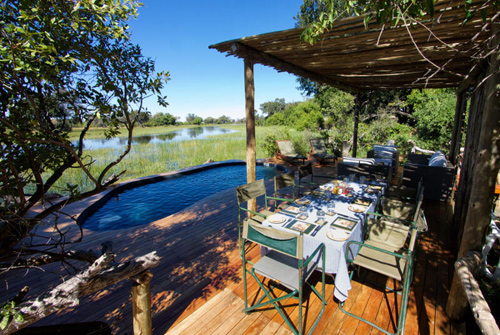
Kujwana camp is situated on the Xudum River south west of Chiefs Island in the Okavango Delta. Tents are a mixture of pole-and-canvas lodging with sliding doors and Meru tents, with very comfortable handmade bespoke beds. There are two double-bedded tents and two twin bedded tents complete with attractive furnishings, bedside tables, hanging cupboard, luggage rack, floor rug, and chairs. Bathrooms are en-suite with flushing toilets and lovely hot showers.
There are 2 spacious Riverside suites with spectacular views built on the river (The Hippo Cradle or The Rocking Horse - can be booked on request for an extra fee).
This camp has a swimming pool, a bar, and a library to keep you entertained for when you are not riding. WiFi access allows you to stay in touch with family. The camp has 220volt solar power. Limited recharging of camera batteries is possible (no hair dryers or electrical appliances). Laundry and ironing is completed every day, inclusive of total cost.
Mokolwane Camp
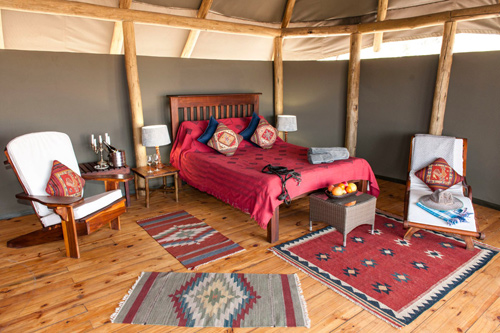
Mokolwane camp is North West of Kujwana on the Matsebi River which is the main feeder for Lake Ngami. This camp is situated in the open flood plains, which receive floodwater 3 weeks earlier than Kujwana camp. The vegetation consists of smaller palm islands and wide-open spaces. Mokolwane is an 8-bedded camp with 5 tree houses. The tree houses (accommodation) are 10 feet off the ground boasting superb views, each with private bathroom with flushing toilets and hot showers. There is no WIFI or laundry on this site.
Room Occupancy
The first two singles to book will have their own guaranteed “no single supplement”. After this, guests would be requested to share or pay a single supplement.
Please, note that single supplements might also apply to transfers.
 Meals
Meals
All meals are included from lunch on Day 1 to breakfast on the last day.
Safari cooks prepares three meals a day including a 3 course dinner plus saddlebag snacks and vehicle support picnic lunches.
Emphasis is on fresh vegetables and salads. Fresh bread is baked every day.
Meals are eaten alfresco style in open aired boutique dining room, with tea and coffee served afterwards around the camp fire.
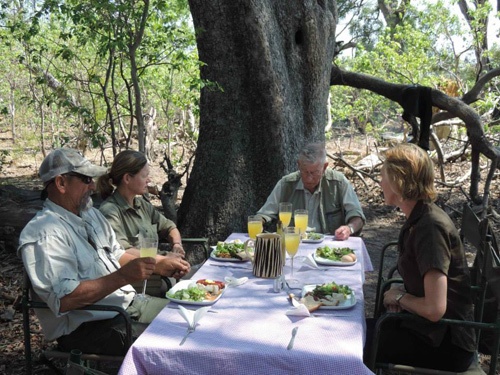
Picnics are served on long tables dressed with silver ware out in the bush under a shaded tree.
Beer, bottled water, an assortment of cool drinks, and a limited choice of spirits are available. Cordials, tea, and coffee are freely available, and house wine is served with dinner.
Special requests can be catered for with advance notice and billed out accordingly.
Dietary Restrictions
We can cater to most dietary restrictions with prior notice. Please let us know at the time of booking.
This trip
includes some wine with dinner
and
can accommodate special dietary requests.
|
Tack:
|
|
English leather saddles to a very high standard, some South African trail saddles. All horses go in snaffle bridles.
|
|
Horses:
|
|
American Saddler, Arabs, Boerperds, Draft cross, Thoroughbred and Thoroughbred crosses, Kalahari and Homebreds
|
|
Pace:
|
|
The terrain offers a wide range of pace with many areas that we can move on, flooded malapos allow for water canters but when game viewing we also move at a leisurely pace. 4 to 6 hrs in the saddle each day
|
Walk |
Trot |
Canter |
|
|
Level:
|
|
(3.5
to
4
out of 5) Intermediate+
|
|
Age:
|
|
Min
12
|
|
|
Weight:
|
|
Max
200 lbs / 90 kg
|
|
Riders:
|
|
Min
2 riders
|
Max
8 riders
|
|
Riding Ability
Participants all need to master the basic aids, be able to post to the trot for stretches of 10 minutes at a time, be comfortable at all paces and be able to gallop out of trouble. It is a great advantage if you are a fit and a proficient rider.
Pace & Riding Terrain
We spend between 4-6 hours in the saddle a day. This is broken by refreshment stops and a 10-minute walk for every two hours spent in the saddle. This eases up the rider using different muscles, and helps the horse from constant pressure of the rider’s weight.
The Okavango Delta has been described as a water meadow. Palm islands, grassy flood plains, mopane forests and clear streams. Highest water is normally between May to September. Many of the flood plains are full at this time and the horses wade through from island to island.
The going is normally quite good and firm along the edges of the islands allowing the ride to move on at a trot and canter.
Horses
Full and part Thoroughbred, Pure Arab, Anglo Arab, Friesian cross, and Botswana Warmbloods (American Saddle bred cross African Boerperd) between 14 and 17 hands. All are well-schooled, responsive and even tempered. There is a wide range of horses (over 50) suitable for all kinds of riders. Every effort is made to match horse and rider.
The horses are chosen with temperament and suitability at the forefront. Many of the horses have either been sourced through close friends in Harare, Zimbabwe or are selected from well-known breeders in South Africa. In recent years, we have carefully selected mares to join our team and using Lamu, an American Saddlebred, we are breeding more of our own horses now.
When not on safari the horses freely graze the grassy molapos of the delta through the day. They graze loose and this truly is one of the amazing sights you will see while on safari with us.
Tack
Tack is English Style and South African Trail saddles. Each saddle has a seat saver for comfort. Tack is of high quality and kept in good condition. Saddles are well known makes such as Ideals, Albion, and Symonds. Most horses are in snaffle bridles.
Weight Limit
Maximum weight is 200 lbs (14 ½ stone or 90 kg). Guests may be required to step on the scales. We do not accept riders over that weight.
Group size
The 2 camps can accommodate up to 6 guests each so the rides are normally no larger than a group of 6-8 riders.
Children
We accept children over 12 years of age unless special arrangement is made with the camp for younger children and family groups. In order for a child to ride, we ask for a letter confirming the child's competence from an independent equine professional.
Safety
All rides are led by qualified, specialized and/or professional guides and a back up guide. A 375 rifle is carried on all the rides. All camps and vehicles have radio communication and guides ride with hand held radios. A demonstration is given at the beginning of the safari with a talk on how to handle big game situations. Should an accident happen all guests are registered with a helicopter evacuation service which can get you to a hospital within 20 minutes.
A medical kit is kept in the camp.
Guides
All rides are lead by qualified, specialized and professional guides as well as a back up guide. A keen interest is taken in birds as well as fauna and flora. Other activities including game drives, Mekoros, walks and power boats are also led by qualified, specialized and/or professional guides.
Insurance
All guests must have adequate medical and travel insurance to join this trip. Guests must check that there travel insurance covers horse riding. This is often an extra that must be added on.
Passports
Passports valid for at least six months required by all nationals referred to in the chart.
Visas
Not required by all nationals referred to in the chart above for stays of up to 90 days except the following:
(a) 1. nationals of Bulgaria, Czech Republic, Estonia, Hungary, Latvia, Lithuania, Poland, Romania, Slovak Republic and Slovenia, who do need a visa);
(b) transit passengers provided continuing their journey by the same or first connecting aircraft and not leaving the airport.
Note: Nationals not referred to in the chart above are advised to contact the high commission/embassy to check visa requirements (see Contact Addresses).
Visa Note
Nationals travelling to South Africa, before or after entering Botswana, will require two clear pages in their passport for the South African stamp.
Types of Visa and Cost
General Entry: £60 (single- or multiple-entry).
Validity
Up to 90 days from the date of issue. Extensions are available from the Department of Immigration in Botswana.
Applications to:
Consulate (or consular section at embassy or high commission); see Contact Addresses.
Working Days Required
One to three.
| Passport Required? |
| British |
Yes |
| Australian |
Yes |
| Canadian |
Yes |
| USA |
Yes |
| Other EU |
Yes |
| Visa Required? |
| British |
No |
| Australian |
No |
| Canadian |
No |
| USA |
No |
| Other EU |
1 |
| Return Ticket Required? |
| British |
Yes |
| Australian |
Yes |
| Canadian |
Yes |
| USA |
Yes |
| Other EU |
Yes |
This information is not being updated on a regular basis. Hidden Trails does not
take any responsibility for the accuracy of the above information. Please, consult
the embassy or consulate for updated info.
|

|
|
|
Okavango Big Five Safari
Tour Code:
IT-BORT01
8 days /
7 nights
Dates :
Available all Year
Trip Rating :
Difficulty :

Riding Level Explained | A | Beginner
 | Beginner A rider who has limited experience, is unable to post the trot and does not canter. | | B | Novice
 | Novice A rider who is capable of mounting and dismounting unassisted, capable of
applying basic aids, comfortable and in control at the walk, moderate length posting
trots, and short canters. | | C | Intermediate
 | Intermediate A rider who has a firm seat, is confident and in control at all paces
(including posting trots, two point canters and gallops), but does not ride regularly. |
| D | Strong Intermediate
 | Strong Intermediate An intermediate rider who is currently riding regularly and is comfortable in the saddle for at least 6 hours per day. | | E | Advanced
 | All of the above, plus an independent seat, soft hands, and capable of handlinga spirited horse in open country. |

|