|
|

|
|
|
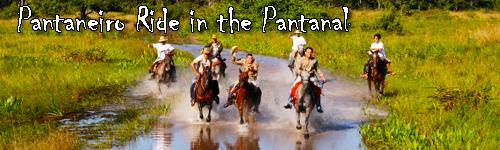
Pantaneiro Ride in the Pantanal
Pantanal
Brazil
Pantanal is the largest continuous wetland in the world. It has an area of 140.000 square kilometers of floodplain in Brazil and it also spreads through Paraguay, Bolivia and Argentina. It was formed between 02 and 05 million years ago, as a large sedimentary basin and now is an isolated plain surrounded by several mountain areas. An area more than a third the size of France. The name translates loosely as "big swampy place," pântano being the Portuguese word for swamp, but the Pantanal is really an alluvial plain, one so nearly flat that rainwater just loafs across it, flooding it in the full season, draining away in the dry. It is a World Heritage Site.
Pantanal has a diverse aquatic animal life, hundreds of different fish guarantee a rich bird population (more than 600 species live in the area). There are also huge population of reptiles and mammals such: caimans, capybaras, monkeys, jaguars, armadillos, coatis and anteaters.
Over a period of more than 200 years of occupation by farmers, the Pantanal’s biodiversity and landscape are basically the same as they were in their ancestor’s time. The Pantanal is an untouched and beautiful wilderness with open grasslands, “vazantes” (low-lying areas that are often seasonally flooded), “brejos” (swamps), “capões” (which in the Tupi Indian language means: caa = forest + pon = round that are patches of slightly elevated ground that are not subjected to inundation), “cordilheiras” (larger than capões), “corixos” and bays which are permanently flooded areas.
In these uncommon Pantanal habitats, there is a rich flora and exuberant fauna which delights everyone. Those who have the opportunity to visit this hidden tropical paradise in the heart of South America and to experience even for a lithe while, its wildlife and lush vegetation as well as to get to know the people, will see the world with different eyes.
|
Progressive Ride (no camping)
Safari Ride
Suitable for riders over 210 lbs
|
|
Meeting:
|
Aquidauana
|
|
Airport:
|
Campo Grande
|
|
Transfer:
|
Transfer from Campo Grande
|
|
Riders:
|
Min
4 riders
Max
12 riders
|
|
Trip Brochure (PDF)  Trip Rating

|
|
|
|
Rates and Dates for 2027
Rates include*:
Accommodations, All meals with drinks, 6 or 5 riding days with English speaking guide & Activities as described in the itinerary
| A | 2027 | 7 day trip | 7d / 6n | $6640 |
* prices are per person based on double/twin occupancy
Rates Note:
Note that transfer rates can vary due to several factors including fuel cost
Transfer and Other Charges:
|
2027
|
Transfer from Campo Grande by land, on Day 1, per vehicle (1-4 pax) - May to November only
|
$560
|
|
2027
|
Transfer to Campo Grande by land, on last day, per vehicle (1-4 pax) - May to November only
|
$580
|
|
2027
|
Transfer from Campo Grande by plane, on Day 1, per plane (1-3 pax) - possible all year
|
$2,000
|
|
2027
|
Transfer to Campo Grande by plane, on last day, per plane (1-3 pax) - possible all year
|
$2,000
|
|
2027
|
Combo transfer (land+air) from Campo Grande, on Day 1 (1-3 pax) - May to November only
|
$1,520
|
|
2027
|
Combo transfer (land+air) to Campo Grande, on last day (1-3 pax) - May to November only
|
$1,520
|
|
2027
|
Please inquire about transfer pricing for groups of 3+ pax
|
$0
|
|
2027
|
Single supplement + 20 % (if requested)
|
$0
|
Transfers from Campo Grande possible by air (1-hour trip / all year round), by vehicle (6-hour trip / only from May to November), or a combination of the two (only from May to November).
*Prices for any type of transfer are linked to the Brazilian Real, in case of strong exchange variation or increase in fuel prices beyond expectations, the price of the transfer can be readjusted up to 4 weeks before departure.
Tour Dates for 2027
|
| A |
2027
|
05/01
- 11/30
|
7d / 6n
|
7 day trip
|
4
/12
|
Reserve
|
|
This ride is available on request for groups of 4+ pax between May and October (we need the booking at least 1 month in advance).
|
Rates do not include:
Gratuities, Additional non-riding activities, Insurance (mandatory) & Airport transfers
Sample Itinerary - subject to changes
Day 1: Arrival
After the long journey, arrival at the fazenda located in the most preserved region of the Pantanal, with abundance of wildlife and nature.
In the afternoon, you'll get to meet the horses. You will stay the next 3 nights on this traditional Pantanal farm with approximately 16000 acres and 4000 head of cattle. On this farm will have the opportunity to become a Pantaneiro for one or two days.
Meals included: Dinner
Overnight at Fazenda Baia
Day 2: Pantaneiro Cattle Work
You will be included in the real work of the farm, a true life experience. Expect the unexpected because at each time of the year there are different tasks to be carried out in the daily routine of a Pantaneiro cowboy: pulling calves apart, curing cattle, lassoing, rounding up the cattle, changing the wintering or farm cattle as in a cattle move.
At the end of the day, you will need to rest in order to keep up with the heavy workload of the next day so you will have good accommodation and good food.
Riding approx. 6 hours
Meals included: Breakfast, Lunch & Dinner
Overnight at Fazenda Baia
Day 3: Pantaneiro Cattle Work
As you help with cattle work, you will have the opportunity to see many of the countless species of birds and animals that inhabit this region and will be experiencing the legitimate Pantanal traditions. In the Pantanal, the pace of activities is dictated by nature, which does not prevent livestock from observing all the necessary managements that over time have been adjusted to be carried out in harmony with the energy balance and sustainability of the region.
Riding approx. 6 hours
Meals included: Breakfast, Lunch & Dinner
Overnight at Fazenda Baia
Day 4: Ride to Refuge Primavera
This morning, you leave early for a full day in the saddle, riding along the banks of Vazante Castelo. Ride until you reach the Fly Camp Refuge Primavera, which as the name implies, is a wooden bush camp in the middle of the Pantanal.
Tonight, you will have a unique experience sleeping in a hammock* with lighting lanterns. The Refuge has comfortable infrastructures: screens to protect against insects, 2 bathrooms and a kitchen.
* it is very nice to sleep in hammocks under a fixed roof, for those who don’t like it, we can provide a mattress (let us know at time of booking)
Riding approx. 6 hours
Meals included: Breakfast, Lunch & Dinner
Overnight at Refuge Primavera
Day 5: Refuge Primavera to Fazenda Eldorado
You will wake up with the sounds of the birds in the trees around the Refuge. After an early breakfast, depart to Fazenda Eldorado. You will ride across the beautiful Pantanal landscape, where will enjoy the lush flora and varied fauna. Great opportunity for bird and wildlife watching.
Meals included: Breakfast, Lunch & Dinner
Overnight at Fazenda Eldorado
Days 6: Cattle Farm -- additional day(s) here possible (please inquire)
To bring to a perfect end to this great experience, your last 2 days will be spent in a large breeding farm with thousands of cattle. On this farm you may have the rare opportunity to witness the morning fishing of a giant otter family as dawn breaks, observe the ritual of alligator mating and, with luck and patience, to look into the eyes of the biggest cat of the Americas: the jaguar.
Meals included: Breakfast, Lunch & Dinner
Overnight at cattle farm
Day 7: Departure
Depending on your flight time, you still will be able to do some activity in the morning before return to Campo Grande.
Meals included: Breakfast
Note about transfer options:
There are different ways to get to the Ranches/lodges: by air/panoramic flights (all year round) or by land in 4WD vehicles (from May to November).
The air transfer/panoramic flights offer an amazing view of the Pantanal – a fantastic experience!
You can choose on flying directly from Campo Grande (1 hour flight) or by a combination land + air transfers, which goes by car from Campo Grande to Aquidauana (130km pavement road – 01h30 min duration) and then by air from Aquidauana to the Ranch (30 min flight). The aircrafts’ capacities are up to 3 or 5 passengers with a luggage limit of 20kg per person (preferred soft bags).
For groups with more than 05 passengers it is necessary to quote two or more aircrafts, according to the number of people in the trip.
The overland transfer by 4WD vehicle is the most economic and also a great option - an expedition which takes about 6 hours from Campo Grande on asphalt and sandy roads, a great experience on introducing one to Pantanal's environment. The 4WD vehicles are comfortable and their capacities are up to 06 passengers. For groups with more than 06 passengers it is necessary to quote two vehicles, according to the number of people in the trip.
Our suggestion is to combine having the 4WD vehicle one way and the air transfer on the other way.
Either way, with either transfer option, one seat will be reserved for one English/French speaking guide who will escort the group.
* Prices for any type of transfer are linked to the Brazilian Real, in case of strong exchange variation or increase in fuel prices beyond expectations, the price of the transfer can be readjusted up to 4 weeks before departure.
** If transfer by air is selected, maximum luggage weight is 20 kg per person. You can leave your additional luggage at your hotel in Campo Grande or with the airline staff who will deliver it to you on your way back.
Meeting:
Aquidauana
Airport:
Campo Grande
Transfer:
Transfer from Campo Grande
Distance:
121 miles
Transfers from Campo Grande possible by air (1-hour trip / all year round), by vehicle (6-hour trip / only from May to November), or a combination of the two (only from May to November).
*Prices for any type of transfer are linked to the Brazilian Real, in case of strong exchange variation or increase in fuel prices beyond expectations, the price of the transfer can be readjusted up to 4 weeks before departure.
|
Tack:
|
|
Gaucho saddles with sheep skin
|
|
Horses:
|
|
Pantaneiro and Quarter mix
|
|
Pace:
|
|
Moderate, trots and canters. 5 to 6 hrs per day
|
Walk |
Trot |
Canter |
|
|
Level:
|
|
 (3
to
5
out of 5) Intermediate
(3
to
5
out of 5) Intermediate
|
|
Weight:
|
|
Max
220 lbs
|
|
Riders:
|
|
Min
4 riders
|
Max
12 riders
|
|
Riding Level
You should be a competent rider, comfortable at all paces and confident enough to try a different style of riding. There is a variety of terrain to cross; from wide sandy trails to forests, you should be used to riding in open spaces.
Horses
The Pantaneiro horses are well mannered, forward going, sure footed and very obedient. The horses respond to neck reining and are used to a loose rein wherever possible.
Guides
You will be accompanied by an English speaking guide and a local guide. Both guides have good knowledge of the local area.
Cattle Work
You will be able to accompany the cowboys in their work routine with the cattle. Move the cattle to other parts of the farm (cattle drive), take care of the calves or see the cowboys working at the corral. (* this will happen according to their season work with the cattle) It is also a good opportunity to learn a little bit more about the culture and habits of the people from Pantanal.
Passport and Visa Requirements:
Passports valid for at least six months from date of entry required by all nationals referred to in the chart.Passport NoteAll non-Brazillian nationals under 18 years of age, when not accompanied by b. more
Campo Grande area
|
Month
|
Jan
|
Feb
|
Mar
|
Apr
|
May
|
Jun
|
Jul
|
Aug
|
Sep
|
Oct
|
Nov
|
Dec
|
|
Average High Temperature (°F)
|
89
|
89
|
89
|
88
|
84
|
83
|
84
|
88
|
89
|
90
|
90
|
89
|
|
Average Low Temperature (°F)
|
72
|
72
|
71
|
69
|
64
|
63
|
62
|
65
|
67
|
70
|
71
|
72
|
|
Average High Temperature (°C)
|
32
|
32
|
32
|
31
|
29
|
28
|
29
|
31
|
32
|
32
|
32
|
32
|
|
Average Low Temperature (°C)
|
22
|
22
|
22
|
21
|
18
|
17
|
16
|
18
|
19
|
21
|
21
|
22
|
|
Average Precipitation (days of rain)
|
14
|
11
|
10
|
6
|
6
|
3
|
2
|
2
|
6
|
8
|
10
|
12
|
Source: NOAA
Seasons
The tropical climate of the Pantanal region has an annual average of 27°C and is characterized 3 cycles every year that changes its landscape:
Rainy or Flood season (November-December & January-March)
Temperatures are hot at this time of the year. Most of the animals search for higher areas such as “caapões” and “cordilheiras”.
Vazante / Intermediate season (April to June)
When the rains stop, the water levels begin to slowly drop. The mammals that had scattered with the flood return to the plain once again. The end of the rains brings mild weather that makes overnights more delightful.
Dry season (June to October)
The land dries out and many species can be seen searching for waterholes. It's the best season to watch the wildlife. The rivers and lagoons return to their normal level and thousands of fish are concentrated, offering a plentiful feast that feeds the wildlife populating the margins of the ecosystem. It's the birds mating season. They're showing off their feathers and singing. Anteaters and South-American Coatis are a common presence, the Jaguars are enjoying the weather and the dry landscape acquires shades of yellow along with colorful tints provided by the blooming pink trumpet trees.
Sometimes there are cold snaps between June and August but they only last for a few days.
It is recommended to put your luggage in travel bag instead of a hard suitcase. 10 bags are easier to get in the backup vehicle than 10 suitcases.
Travel documents and Voucher
Flight tickets
Passport
Visa (check with your consulate)
Travel Insurance
Pocket money (you can change money on arrival at the airport)
Riding pants or Jodhpurs (used if possible!) - as they are not too hot, and they dry out quickly if they get wet.
Riding boots (short) or hard-soled shoes + Minichaps or Longchaps
Riding helmet - please bring your own. NOTE – It's not mandatory in Brazil.
Riding gloves
Hat (with chin strip) for sun protection
Lightweight Rain coat
Tall boot socks to prevent chaffing
4 to 5 Long-sleeved shirts for protection sun
Water canteen
This list is only a general guideline for you from Ride in Brazil
Jacket or sweater for cool evenings
Comfortable T-Shirts/Shirts
Jeans
Shorts
Underwear and socks
Pyjama
Bag for dirty clothes
Trekking boots/ comfortable shoes
Swimsuit / Bathing suit
Personal Toiletries
Insect Repellent
Personal medications (please consult with your G.P. for health advise)
Sewing kit
Handkerchiefs
Adapter for electric appliances
Small Camera/Phone with Camera and batteries
Belt pack
Sunglasses
Sunscreen (spf-30 or higher) and Lip Balm with sunscreen
One towel
Torch / Flashlight
Sorry, no video is currently available for this tour.
*Important Notice: The following ratings have been submitted by guests and do not necessarily represent the views of Hidden Trails, its partners or employees.
Every care is taken to ensure accuracy but Hidden Trails is not liable for any errors or omissions.
** No trip reports found
with the tour ID you provided.
|
..view other reports for different trips
Accommodations
This is a progressive ride where nights are spent in different locations.
Description
Accommodations have been chosen for the exceptional natural environment.
Accommodation Itinerary - subject to changes based on availability
Night 1, 2 & 3: Fazenda Baia
Night 4: Primavera Refuge
Night 5: Fazenda Eldorado
Night 6 & 7: Cattle Farm
Fazenda Baia
The lodge sits beside a massive floodplain called the Vazante do Castelo. The main house of the lodge is very charming and spacious. There are communal areas both inside and out – whether you choose to stretch out in a hammock under a mango tree, or read one of the lodge’s many interesting books, there are several ways to relax in this beautiful and serene environment. There is a TV room and a small shop at the lodge.
The guest rooms (5 guest rooms in total) are comfortable and all include air conditioning and private bathrooms.
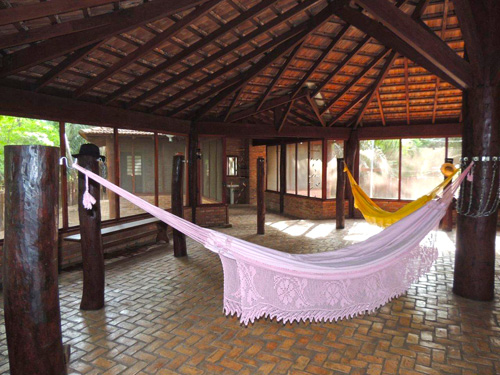 Primavera Refuge
This refuge is located in the heart of Pantanal and features very rustic accommodation. Guests will be sleeping in hammocks* located inside the main lodge, which features screened windows. Washroom and toilet facilities are shared and there is no internet and no electricity. At night, candles illuminate the lodge, giving it a special charm.
* it is very nice to sleep in hammocks under a fixed roof. For those who don’t like it, we can provide a mattress (let us know at time of booking)
Room Occupancy
Single supplement is mandatory if we are unable to find another rider to share the room with you.
 Meals
Meals
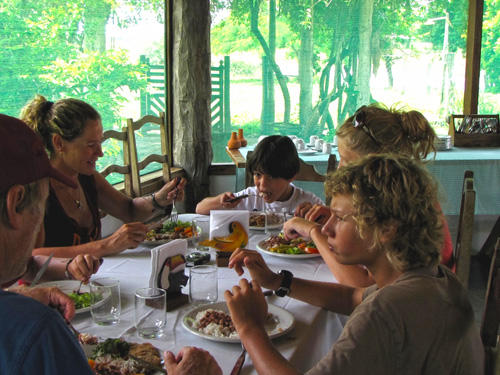
All meals are included with this trip from dinner on Day 1 to breakfast on Day 7.
Breakfasts and dinners are eaten at the accommodations and lunches are eaten on the trail.
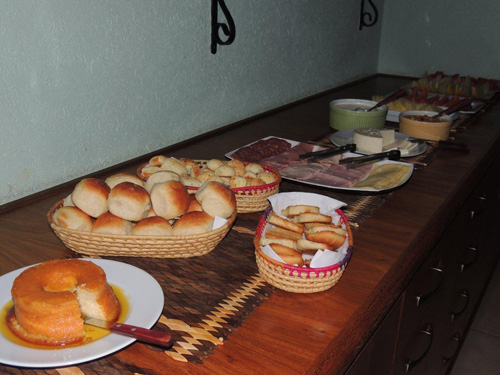
Breakfasts usually feature bread, yoghurt, jams, cakes and other treats, mostly homemade.
For lunch and dinner, typical Brazilian dishes (both regional and national) will be served. The beef and some of the vegetables and fruits are produced seasonally at the farms. There is a lot of variety, and we always include vegetarian dishes. Fish from Pantanal, like dourado (gilded catfish) and others are cooked in stews or even deep fried and served with manioc.
Some specialities include: Porco Monteiro (Feral pig), Fried pork casings, Rice with Pequi (a local fruit of the Brazilian Savannah) “Chipa” - a type of cheese bread and Sopa Paraguaia (a typical corn pie that takes white cheese).
At dawn, you can participate the cow milking and later eat the milk caramel (dolce de leite). In the morning, riders can see the preparation of “Quebra-Torto”, the local plentiful breakfast of the Pantaneiros cowboys composed of macarrão tropeiro (noodles with beef jerky).
All soft drinks and all alcoholic drinks (beer, caipirinha, cachaça and wine) are included.
Dietary Restrictions
We can cater to all dietary restrictions with prior notice.
This trip
can accommodate special dietary requests.
|
Tack:
|
|
Gaucho saddles with sheep skin
|
|
Horses:
|
|
Pantaneiro and Quarter mix
|
|
Pace:
|
|
Moderate, trots and canters. 5 to 6 hrs per day
|
Walk |
Trot |
Canter |
|
|
Level:
|
|
(3
to
5
out of 5) Intermediate
|
|
Weight:
|
|
Max
220 lbs
|
|
Riders:
|
|
Min
4 riders
|
Max
12 riders
|
|
Riding Level
You should be a competent rider, comfortable at all paces and confident enough to try a different style of riding. There is a variety of terrain to cross; from wide sandy trails to forests, you should be used to riding in open spaces.
Horses
The Pantaneiro horses are well mannered, forward going, sure footed and very obedient. The horses respond to neck reining and are used to a loose rein wherever possible.
Guides
You will be accompanied by an English speaking guide and a local guide. Both guides have good knowledge of the local area.
Cattle Work
You will be able to accompany the cowboys in their work routine with the cattle. Move the cattle to other parts of the farm (cattle drive), take care of the calves or see the cowboys working at the corral. (* this will happen according to their season work with the cattle) It is also a good opportunity to learn a little bit more about the culture and habits of the people from Pantanal.
Passports
Passports valid for at least six months from date of entry required by all nationals referred to in the chart.
Passport Note
All non-Brazillian nationals under 18 years of age, when not accompanied by both parents, must have a birth certificate (an original or authenticated photocopy). This must be in English, French, Portuguese or Spanish, otherwise an official translation must be presented as well. When travelling alone or with one parent, a declaration from the absent parent(s) must be presented authorising the journey and giving the name and address of the person in Brazil who will be responsible for the minor. In the case of divorced or deceased parents, papers attesting to full custody must be presented.
All travellers must be in possession of onward or return tickets and sufficient funds to cover their stay.
Visas
Required by all nationals referred to in the chart above except the following:
(a) 1. nationals of EU countries (except nationals of Cyprus, Estonia, Latvia, Lithuania and Malta who do require a visa) for touristic and business stays of up to 90 days;
(b) transit passengers continuing their journey to a third country by the same or first connecting flight, provided holding onward documentation and not leaving the airport.
Note: Nationals not referred to in the chart above are advised to contact the embassy to check visa requirements (see Contact Addresses).
Types of Visa and Cost
Tourist: cost varies according to nationality. Generally, it is around £30. Other prices, based on reciprocity, are £28 (for nationals of Australia); £52 (for nationals of Canada); free, but £104 processing fee (for nationals of the USA). British citizens requiring visas with a validity over 180 days will be subject to a processing fee of £124. Business and Transit: cost varies according to nationality; contact the consulate for details.
Validity
Normally 90 days from date of issue, although this is at the discretion of Brazilian immigration officials. Tourist visas can be used for multiple entry within the period of validity. Tourist visas can be extended up to a further 90 days, provided the application is made at least two weeks before the expiration of the visa. Nationals should apply in Brazil to the federal police; this must be done before the visa expires or nationals risk deportation.
Note: Some Brazilian immigration officials have been restricting single male tourists aged 25-50 to stays of up to 30 days, particularly in the north east region, in an effort to combat sex tourism.
Applications to:
Consulate (or consular section at the embassy); see Contact Addresses. Applications made through travel agents or by post are subject to a fee of £8.
Working Days Required
Depends on nationality. Up to three days for applications made in person and 10 days for applications made by a third party. Additional time is required to process applications made by post.
| Passport Required? |
| British |
Yes |
| Australian |
Yes |
| Canadian |
Yes |
| USA |
Yes |
| Other EU |
Yes |
| Visa Required? |
| British |
No |
| Australian |
Yes |
| Canadian |
Yes |
| USA |
Yes |
| Other EU |
1 |
| Return Ticket Required? |
| British |
Yes |
| Australian |
Yes |
| Canadian |
Yes |
| USA |
Yes |
| Other EU |
Yes |
ENTRY / EXIT REQUIREMENTS FOR U.S. CITIZENS: Brazil requires U.S. citizens to carry a valid U.S. passport and visa when traveling to Brazil for any purpose. You must obtain your Brazilian visa in advance from the Brazilian Embassy or Consulate nearest to your place of residence in the United States. There are no "airport visas" and immigration authorities will refuse entry into Brazil to anyone not possessing a valid visa. The U.S. government cannot assist you if you arrive in Brazil without proper documentation.
Travelers under 18 years of age and their parents should carefully review the visa application requirements. The adjudicating official at the Brazilian Embassy or Consulate may require a birth certificate and notarized travel authorization to issue a visa to a minor.
Visit the web site of the Brazilian Embassy in Washington, D.C. for the most current visa information.
U.S. citizens and other foreign travelers must fill out a small immigration form on arrival that will be stamped and handed back by immigration officials at the airport. It is important to retain this form to hand back to immigration officials upon exit from the country. According to the Brazilian Embassy’s website, visitors who lose this form will have to get clearance from the Brazilian Federal Police to leave the country and may have to pay a fine.
Remember that while in Brazil, you are subject to local law. Showing contempt to a Brazilian government official at the port of entry, or elsewhere, is a serious offense.
Additionally, if you have recently visited certain countries, including most other Latin American countries, you may be required to present an inoculation card indicating you had a yellow fever inoculation or you may not be allowed to board the plane or enter the country. Check with the Brazilian Embassy for more information.
The U.S. Department of State is unaware of any HIV/AIDS entry restrictions for visitors to or foreign residents of Brazil.
For current entry and customs requirements for Brazil, travelers may contact the Brazilian Embassy, which is temporarily located at 1025 Thomas Jefferson St., NW, Suite 300 W (3rd floor), Washington, D.C. 20007-5250, Phone: (202) 238-2805. Travelers may also contact the Brazilian Consulates in Atlanta, Boston, Chicago, Hartford, Houston, Los Angeles, Miami, New York, and San Francisco. Addresses, phone numbers, web and e-mail addresses, and jurisdictions of these consulates may be found at the Brazilian Embassy website.
Special Entry/Exit Requirements for Dual Nationals: U.S. citizens who also have Brazilian nationality cannot be issued Brazilian visas and must obtain a Brazilian passport from the Brazilian Embassy or Consulate nearest to their place of residence to enter and depart Brazil. In addition to being subject to all Brazilian laws affecting U.S. citizens, dual nationals may also be subject to other laws that impose special obligations on Brazilian citizens. Information about dual nationality can be found on our website.
Special Entry/Exit Requirements for Minors: Brazilian minors age 17 years and under, including minors who have both Brazilian and U.S. citizenship, are subject to strict exit requirements. Brazilian minors departing Brazil, if not accompanied by both parents, must prove that both parents authorized the departure. If accompanied by only one parent, the minor must have a notarized letter from the other parent indicating permission to depart the country, a court order proving that the accompanying parent has sole custody, or a Brazilian court order authorizing the child’s departure. If accompanied by neither parent, the minor must have a notarized letter from both parents authorizing departure, or a Brazilian court order authorizing the same. There are no exceptions, even if the child remained in Brazil only a short time. The authorization must be notarized by a Brazilian notary to be considered valid by the Brazilian authorities. If prepared in the United States, the authorization must be in Portuguese or accompanied by an official translation into Portuguese, and must be notarized by either the Brazilian Embassy or a Brazilian Consulate, or notarized by a U.S. notary public and then authenticated at the Brazilian Embassy or Consulate. Prior to departing the United States, parents traveling to Brazil with children who are Brazilian nationals may wish to obtain an authorization for each parent to return with the children to the United States without the other parent, just in case. Note that children adopted from Brazil are still considered Brazilian citizens and must be documented as such should they return to Brazil.
Minors age 17 years and under who are not Brazilian nationals are not technically subject to the same strict travel requirements as Brazilian minors. However, there have been cases where the travel of non-Brazilian minors has been delayed or prevented when accompanied by only one parent or a third party. To avoid potential difficulties, parents of non-Brazilian minors may want to follow the procedures above if their children will be traveling to Brazil accompanied by only one parent or by a third party.
Parents contemplating separation or divorce should resolve custody matters before leaving the country. Pursuant to the Hague Convention on the Civil Aspects of International Child Abduction, to which both Brazil and the United States are party, custody will ultimately be decided by a court in the country where the child is a habitual resident. Information about the prevention of international child abduction can be found on our website. The State Department hotline for Child Abduction Prevention during regular business hours is: (202) 663-3330 and after hours: (888) 407-4747.
For further information about customs regulations, please read our customs information page.
This information is not being updated on a regular basis. Hidden Trails does not
take any responsibility for the accuracy of the above information. Please, consult
the embassy or consulate for updated info.
|

|
|
|
Pantaneiro Ride in the Pantanal
Tour Code:
IT-BRRT03
7 days /
6 nights
Dates :
May-November
Difficulty :

Riding Level Explained | A | Beginner
 | Beginner A rider who has limited experience, is unable to post the trot and does not canter. | | B | Novice
 | Novice A rider who is capable of mounting and dismounting unassisted, capable of
applying basic aids, comfortable and in control at the walk, moderate length posting
trots, and short canters. | | C | Intermediate
 | Intermediate A rider who has a firm seat, is confident and in control at all paces
(including posting trots, two point canters and gallops), but does not ride regularly. |
| D | Strong Intermediate
 | Strong Intermediate An intermediate rider who is currently riding regularly and is comfortable in the saddle for at least 6 hours per day. | | E | Advanced
 | All of the above, plus an independent seat, soft hands, and capable of handlinga spirited horse in open country. |

|