|
Horseback riding tours
Rides in
Iceland
Intro to Iceland
![]() East and South East and South![]() Highland Tours Highland Tours![]() Iceland Shorts Iceland Shorts![]() Northern Tours Northern Tours![]() West West
Also see:
Hiking Trips
Horseback in:
Norway
Finland
Europe Overview
|

|
|

|
|
|
Around the Glaciers
East and South
Iceland
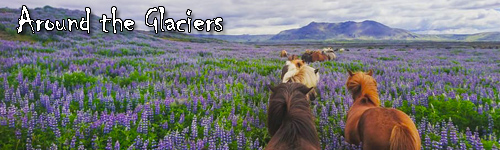
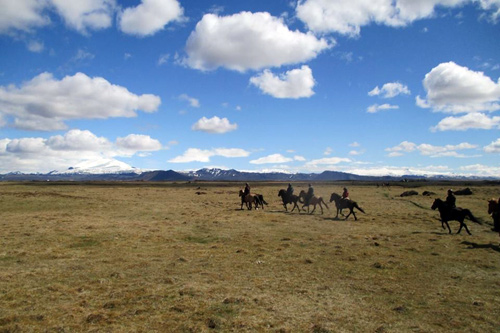
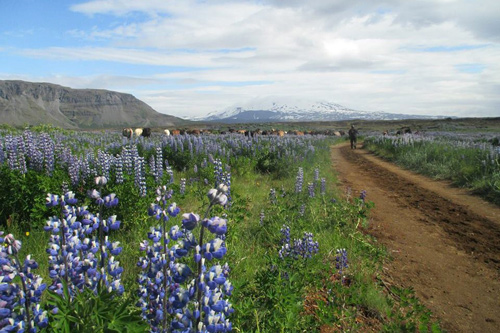
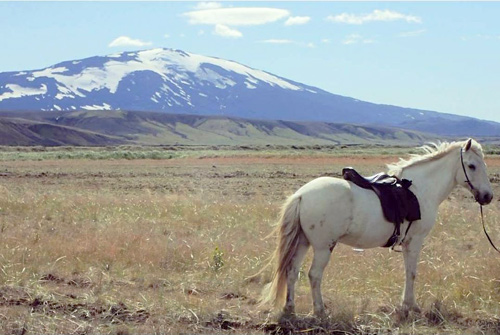
This tour takes us to the colorful landscape between the famous volcano Hekla and Tindafjallajökull glacier. This area is known for amazing nature shaped by the forces of volcanoes and glaciers. We ride with a herd of free running horses on nice, soft riding paths on black sandy ground covered by green grass and through lava fields in a mystic scenery of volcanic formations created by many eruptions of the volcano Hekla through the centuries. Some of the eruptions destroyed the habitation in certain areas. We can feel the presence of the natural force and the mystique surrounding Hekla, together with elements from the old Sagas. Our riding path follows an old Viking trail that the Viking Gunnar from Hlíðarendi in Njál´s Saga was riding when he ended up in one of his many battles. On our way we enjoy hidden valleys, wide green pastures and mighty rivers. The combination of beautiful nature, great horses and fantastic riding paths makes this tour a memory for life!
|
Progressive Ride (no camping)
Ride with Gaited Horses
Suitable for riders over 210 lbs
|
|
Meeting:
|
Reykjavik
|
|
Airport:
|
Keflavik Airport
|
|
Transfer:
|
Reykjavik BSI central bus station on Day 1 at 5:30PM or hotels/guesthouse
|
|
Riders:
|
Min
8 riders
Max
16 riders
|
|
Trip Brochure (PDF)  Trip Rating

|
|
|
|
Rates and Dates for 2026
Rates include*:
Accommodations in guesthouses/farmhouses, All meals, transfers from/to Reykjavik city center & 5 riding days
Helmets & rain gear is provided
| A | 2026 | 6 day trip | 6d / 5n | €2320 | $2550 |
* prices are per person based on double/twin occupancy
Transfer and Other Charges:
|
2026
|
Transfer from Reykjavik BSI bus station is included
|
€
0
|
$0
|
|
2026
|
Upgrade to hotel accommodations for first night, dbl, pp - please inquire
|
€
0
|
$0
|
|
2026
|
Upgrade to hotel accommodations for first night, single - please inquire
|
€
0
|
$0
|
|
2026
|
Children discount (14 and younger) - 20% off
|
€
0
|
$0
|
|
2026
|
Lodging tax, pp
- to be paid locally
|
ISK
1,400
|
$10
|
Transfers are only included from the Central Bus Station (BSI). Our representatives will greet you at 17:30 (5:30pm) at the BSÍ station!
Rates do not include:
Airport transfer (take the Flybus), Alcoholic Drinks & Gratuities
Please, bring your own sleeping bag and pillow.
 Sample itinerary - subject to changes
Day 1: Arrival
Sample itinerary - subject to changes
Day 1: Arrival
The tour starts in the evening. Tour members who arrive the same day in Iceland should take the “Flybus” from the airport to the final bus station BSÍ in Reykjavík. We will greet you at the bus station or at your hotel / guesthouse in Reykjavik for 17:30 and drive you to our farm Vellir near Hveragerði. There you will be lodged at the farm's guesthouse. We will get to know each other during dinner. The day will end with a detailed description of the tour (might be the following morning).
Meals included: Dinner
Overnight at the Guesthouse
Day 2: Vellir – Hrólfsstaðahellir
In the morning we get to know the horses during a short ride. After an early lunch we go by bus to the farm Fellsmúli in the beautiful area Landssveit, on the foot of Volcano Hekla. From there we first ride northwards to the farm Leirubakki, and then on nice trails eastwards to the Vestri-Rangá River. The tour continues southward along the river to the farm Hrólfsstaðahellir, where we pend the night in a cottage and have the opportunity to enjoy a relaxing bath in a hot tub.
Riding 23 km (approx. 4 hours)
Meals included: Breakfast, Lunch & Dinner
Overnight at the Guesthouse
Day 3: Hrólfsstaðahelli – Foss
We start the day by crossing the river Vestri-Rangá and continue over the moss-covered lava field Botnahraun, which was created several hundreds of years ago in one of Hekla´s many eruptions. We follow an ancient riding path over the lava field and across wide plains of grassland, and later on we continue over another lava field, called Axarhraun, until we reach the mountain hut Foss. This hut is located in the area south of the volcano Hekla which is well known from the great Saga of Njáll.
Riding 35 km (approx. 7 hours)
Meals included: Breakfast, Lunch & Dinner
Overnight at Foss hut
Day 4: Foss
Today we leave the herd at the hut Foss and ride with our best tölters to experience the beautiful surroundings with scenic valleys and special formations of clefts. From the farm Foss we ride on nice, soft trails mainly through grassland towards an impressing cave. After visiting the cave we will pass the abandoned farms Þorleifsstaði and Reynistaði on our way back to Foss for a relaxing lunch break. In the afternoon we follow a scenic path in the very special area next to the volcanic mountain Hafrafell. We spend the night in Foss.
Riding 20 km (approx. 5 hours)
Meals included: Breakfast, Lunch & Dinner
Overnight at Foss hut
Day 5: Foss – Rjúpnavellir
Today we yet again ride over the lava field Axarhraun to see the area west of the volcano Hekla, and spend the lunch break in beautiful nature next to the farm Kot. Afterwards, we will pass the so-called farms of Hekla which are the farms closest to the volcano. We continue through an area covered with soft black lava sand and enjoy a nice view of the wide landscape and mountains, weather permitting, until we reach and cross the mighty river Vestri-Rangá. We spend the night at the cottage Rjúpnavellir, a nice cottage situated close to Hekla. In these area the landscape is imprinted by natural forces such as wind and volcanic eruptions.
Riding 40 km (approx. 8 hours)
Meals included: Breakfast, Lunch & Dinner
Overnight at Rjúpnavellir
Day 6: Rjúpnavellir – Þjófafoss – Fellsmúli
We ride with the herd of horses on towards the glacial river Þjórsá, the longest river in Iceland, where we will reach the Waterfall of the Thieves, Þjófafoss. We continue in brisk tölt on soft sandy paths through a beautifully green forest of birches to the old farm Skarfanes. The horses are on their way home now, and it is usually going fast on these paths. We end the tour where it started, at the farm Fellsmúli, where refreshments are waiting for us. In the afternoon we will be driven back to Reykjavík. End of tour.
Riding 24 km (approx. 5 hours)
Meals included: Breakfast & Lunch
Meeting:
Reykjavik
Airport:
Keflavik Airport
Transfer:
Reykjavik BSI central bus station on Day 1 at 5:30PM or hotels/guesthouse
Transfers are only included from the Central Bus Station (BSI). Our representatives will greet you at 17:30 (5:30pm) at the BSÍ station!
|
Tack:
|
|
Icelandic
|
|
Horses:
|
|
Icelandic Horses
|
|
Pace:
|
|
Moderate with long tolts.
Daily rides are between 4-8 hours (23 - 40 km). Approx. 160km total. 5 riding days
|
|
Level:
|
|
 (3
to
3
out of 5) Intermediate
(3
to
3
out of 5) Intermediate
|
|
Weight:
|
|
Max
110 kg
|
|
Riders:
|
|
Min
8 riders
|
Max
16 riders
|
|
 Riding Experience
This ride is suitable for intermediate riders with a secure, balanced seat and a good physical condition. We ride up to 45 km per day mostly in the gait tölt and take a herd of free-running horses with us part of the tour, which requires a certain speed.
Pace
We cover about 160 km total over 5 riding days. On average, we ride between 4-8 hours every day, covering approx. 23 - 40 km.
Tack and Riding Style
The riding style in Iceland is similar to English riding. We use simple snaffle bits, bridles with detachable nosebands and clips on the end of the reins so they can be easily removed when grazing. Our saddles are comfortable with soft, rather flat seat, it is not necessary to bring saddle seat pads.
Riding Gear – Disinfect!
Used boots, riding wear, helmets, saddlebags etc. must be disinfected before arrival in Iceland. Chaps, bridles and other used leather gear must not be brought to Iceland. That is because infectious, contagious diseases can easily be brought into the country, which poses a great threat for the horses, as they are not vaccinated. Riding wear is normally washed and shoes and are washed and cleaned with VirkonS, Iodine or some other fluid disinfectant.
We can lend you a riding helmet for the length of the tour.
Backpacks, large cameras, selfie sticks and other bulky items cannot be taken on horseback tours. Small waist bags are allowed.
Horses
Since 2007, our breeding program has followed two fundamental ideas. First, we strive to breed well-behaved and well-gaited riding horses that ought to suit most of our guests. Second, we breed horses with experienced riders in mind, suitable for riding classes and the company’s horse shows. As our greatest challenge has always been combining well-behaved and reliable horses with soft and simple gaits, we invested in mares that are likely to produce the expected results. Another important factor in achieving the desired outcome is choosing the right stallion for those mares.
Free running herd of horses
Experience the diversity of the Icelandic horse in its natural environment, far from civilization. On this trip, we travel with herd of free-running horses, as Icelanders used to travel in the old days. You may switch horses from time to time.
Passport and Visa Requirements:
Passport valid for at least three months beyond length of stay required by all except:(a) 1. nationals of Austria, Belgium, Denmark, Finland, France, Germany, Greece, Italy, Luxembourg, the Netherland. more
Reykjavík area
|
Month
|
Jan
|
Feb
|
Mar
|
Apr
|
May
|
Jun
|
Jul
|
Aug
|
Sep
|
Oct
|
Nov
|
Dec
|
|
Average High Temperature (°F)
|
37
|
37
|
39
|
43
|
49
|
54
|
57
|
57
|
51
|
45
|
40
|
37
|
|
Average Low Temperature (°F)
|
27
|
28
|
29
|
33
|
39
|
44
|
48
|
47
|
42
|
36
|
31
|
28
|
|
Average High Temperature (°C)
|
3
|
3
|
4
|
6
|
10
|
12
|
14
|
14
|
11
|
7
|
4
|
3
|
|
Average Low Temperature (°C)
|
-3
|
-2
|
-2
|
1
|
4
|
7
|
9
|
8
|
6
|
2
|
-1
|
-2
|
|
Average Precipitation (days of rain)
|
13
|
13
|
14
|
11
|
10
|
9
|
9
|
12
|
12
|
12
|
12
|
14
|
Source: NOAA
Seasons
As its name suggests, Iceland is cold, but not as cold as might be expected; thanks to the passing warm waters of the Gulf Stream, which regulate the climate. Its average mid-winter temperatures are no lower than those in New York City. The city's coastal location does, however, also mean it is prone to wind, and gales are common in winter. Reykjavik is also a very wet city, having on average 213 rainy days out of the year, with spring having slightly more sunny days! The south is the wettest part of the country. Coastal areas tend to experience winter gales and are generally windy.
Icelandic weather is known to be unpredictable and changing several times a day. A beautiful day can suddenly turn windy and rainy (and vice versa). Travelers to Iceland should be prepared for anything and dress in layers.
Winter
The average January temperature is 31°F (-0.5°C). From mid-November until the end of January, in the darkness of winter, the country only experiences a few hours of daylight each day.
Summer
The summer temperatures in Reykjavík range from 41°F (5°C) at night to as high as 77°F (25°C) during the day. During the summer months there is almost continuous daylight; early spring and late autumn feature long twilights.
The Northern Lights are often visible in autumn and early winter.
We provide the following:
·Safety helmets
·Rainwear
·During the wintertime we also provide winter overalls
·Rubber boots
You should bring:
•Warm clothes in layers (long underwear, woolen socks, scarf, gloves, woolen sweater or fleece, wind- and waterproof jacket). Eldhestar provides good rain gear. Please have in mind that you might experience “T-shirt weather” as well as temperatures close to 0°C, especially on Wilderness tours!
•Thin hat to wear under the helmet, “buff” is well suited. You can buy a “buff” at Eldhestar.
•Sleeping bag. We recommend a small pillow and a bed sheet if you use your sleeping bag as a blanket. A sleeping bag is not needed for tours with all nights at Hotel or Guesthouse Eldhestar.
•A small waist bag (not a backpack!) for using when riding. (Backpacks are bumpy when you are riding and may hurt you if you fall off).
•Swimwear and towel.
•Riding pants (If you don’t have riding pants, any seamless tight garment will do), for long tours you should bring two pants suitable for riding.
•Riding or hiking boots which should be comfortable with a thick sole for walking over rocks. Hiking boots are fine if they are not too broad for the stirrups. High riding boots might get uncomfortable, rubber boots are not necessary.
•Sun lotion
•Sun glasses (also for long tours to protect eyes from dust).
•Fly net (can be purchased at Eldhestar).
•Band-aids and second skin plasters for chaffing.
•Some comfortable clothes and shoes (slippers) for using in the evening, after the riding. Normal street clothes are not necessary except for your stay in Reykjavik the last night.
•Your travel insurance card/information.
Please note: Please do not use large and bulky suitcases as we have limited space in the trailer. If you need more luggage for travelling in Iceland before / after the tour you are welcome to store it at Hotel Eldhestar during the tour.
Cameras:
We recommend to bring a small camera that can be taken in a pocket, a waist/hip bag or in the saddle bag.
Large camera equipment we can not allow on the horses for security reasons. Tours are operated with a free running herd - at speed of tölt or trot for most of the day. We take breaks to relax the horses and then it is possible to take pictures. While on the horse taking pictures is rather difficult since the horses are constantly moving. Because of the herd instinct it is not possible to stop an individual horse, they all will follow each other.
You can leave larger Digital SLR with your luggage at the farm or put it in their luggage that will be transferred to the new accommodation.
It is not yet legally mandatory that riders need to wear riding helmets. Nevertheless we strongly recommend clients wear one. Clients will be experiencing a new breed of horses in new terrain, involving gravel, stones and rocks. Therefore it is in the clients best interest to take precautions. If they feel they do not want to wear a helmet after the first few days it is up to them. However, some insurance companies in Europe refuse to pay in case of an accident if the client has not been wearing a riding helmet. We provide helmets here in Iceland which clients are welcome to use but if you want to bring your own it is fine with us. If you bring your own it has to be sterilized before bringing it into Iceland.
Regarding the sterilization: What can be washed in a washing machine at medium temperature or dry cleaned is fine (even riding trousers). But what can not be washed or dry-cleaned or is a full leather garment needs to be sterilized.
You should be ready for all kinds of weather as it can change very quickly. We provide you with good rain-clothes, a riding helmet and at winter time a thermo overall, gloves and rubber boots.
Luggage that is not needed on the tour can be left at the office and recovered at the end of the tour.
Caution: Used boots, riding wear, saddlebags etc. must be disinfected before arrival to Iceland. That is because infectious diseases can easily be brought into the country, which pose a great danger for the horses. Riding wear is normally washed and shoes and cleaned with iodine or some other fluid disinfectant. All used leather articles are prohibited.
| This list is only a guideline for you |
|
|
| Hidden Trails Travel Documents and TripVoucher (contains important local tour contact info.) |
| Flight tickets |
| Passport |
| Visa (check with your consulate) |
|
|
| RIDING GEAR |
| Riding pants or Jodhpurs |
| Riding boots (rubber is best) |
| Riding helmet (provided, but bring your own if you like) |
| Riding gloves |
|
|
| PERSONAL CLOTHING |
| Jacket or sweater for cool evenings, long underwear, scarf |
| Comfortable T-Shirts/Shirts |
| Jeans |
| Underwear and warm socks |
| Pyjamas and slippers (Icelanders take off their shoes when entering a house) |
| Bag for dirty clothes |
| Comfortable shoes |
| Swimsuit and towel |
| |
| For Camping trips: |
| Sleeping Bag and Pillow!! (not provided) |
| Towel and small bar of soap |
| |
| |
| ADDITIONAL THINGS TO BRING |
| Personal Toiletries |
| Insect protection |
| Personal medications |
| Sore cream and bandaids/ second skin plasters for chaffing |
| Sewing kit |
| Handkerchiefs |
| Adapter for electric appliances |
| Camera and extra film or batteries |
| Waist pack |
| Address book and pen (for postcards!) |
| Sun glasses with strap |
| Sun tan lotion and lip balm |
Sorry, no video is currently available for this tour.
*Important Notice: The following ratings have been submitted by guests and do not necessarily represent the views of Hidden Trails, its partners or employees.
Every care is taken to ensure accuracy but Hidden Trails is not liable for any errors or omissions.
** No trip reports found
with the tour ID you provided.
|
..view other reports for different trips
 Accommodation
This is a progressive ride so you will be staying in different locations.
Description
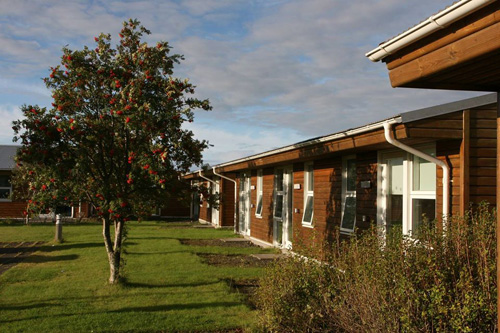
Accommodation during the tour is at farms, guesthouses, community centers and simple mountain huts (sometimes dormitory style accommodation). Please, bring your own sleeping bag and pillow. Bathrooms are shared everywhere except while staying at the accommodations in Vellir.
Wi-Fi access is only available at the accommodations in Vellir. There are no laundry facilities available during this trip.
Accommodation Itinerary - subject to changes based on availability
Night 1: Guesthouse in Vellir
Night 2: Farmhouse in Hrólfsstaðahellir
Night 3 & 4: Mountain Hut in Foss
Night 5: Cottage in Rjúpnavellir
 Guesthouse in Vellir
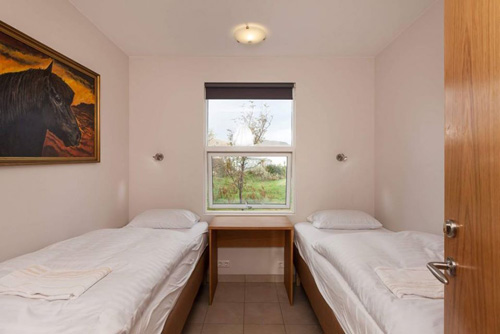
You will sleep in made-up beds at the riding farm's guesthouse (2-4 bed rooms, shared facilities - no double beds). The guesthouse offers a comfortable living room, shared bathroom facilities, tea kettle that can also be used to make instant coffee, and small refrigerator. Guests that stay at the guesthouse are welcome to use all facilities and services of our Hotel, including the hot tub.
An upgrade to our hotel is possible for a supplement (if rooms available).
Room Occupancy
If we are unable to find another rider to share the room with you, a single supplement fee applied.
Single room accommodations are subject to availability.
 Meals
Meals
All meals are included from dinner on Day 1 to lunch on the last day.
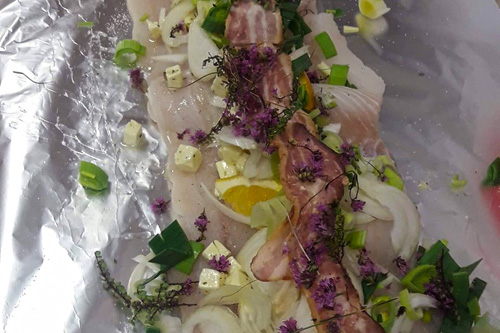
The chefs try and provide a nice variety of foods. Specialties include fish, kjötsúpa (an Icelandic soup, with meat, vegetable and rice) and BBQ.
Alcohol is not included in the price. However, we do bring wine, beer and soda on tour for those who would like to buy it at a discounted price.
We do not allow the consumption of alcohol while people are riding – for instance at lunchtime.
Dietary Restrictions
We are able to cater to most dietary needs with prior notice. However, we are unable meet the needs of those who have food allergies which cause anaphylaxis.
This trip
can accommodate special dietary requests.
|
Tack:
|
|
Icelandic
|
|
Horses:
|
|
Icelandic Horses
|
|
Pace:
|
|
Moderate with long tolts.
Daily rides are between 4-8 hours (23 - 40 km). Approx. 160km total. 5 riding days
|
|
Level:
|
|
(3
to
3
out of 5) Intermediate
|
|
Weight:
|
|
Max
110 kg
|
|
Riders:
|
|
Min
8 riders
|
Max
16 riders
|
|
Riding Experience
This ride is suitable for intermediate riders with a secure, balanced seat and a good physical condition. We ride up to 45 km per day mostly in the gait tölt and take a herd of free-running horses with us part of the tour, which requires a certain speed.
Pace
We cover about 160 km total over 5 riding days. On average, we ride between 4-8 hours every day, covering approx. 23 - 40 km.
Tack and Riding Style
The riding style in Iceland is similar to English riding. We use simple snaffle bits, bridles with detachable nosebands and clips on the end of the reins so they can be easily removed when grazing. Our saddles are comfortable with soft, rather flat seat, it is not necessary to bring saddle seat pads.
Riding Gear – Disinfect!
Used boots, riding wear, helmets, saddlebags etc. must be disinfected before arrival in Iceland. Chaps, bridles and other used leather gear must not be brought to Iceland. That is because infectious, contagious diseases can easily be brought into the country, which poses a great threat for the horses, as they are not vaccinated. Riding wear is normally washed and shoes and are washed and cleaned with VirkonS, Iodine or some other fluid disinfectant.
We can lend you a riding helmet for the length of the tour.
Backpacks, large cameras, selfie sticks and other bulky items cannot be taken on horseback tours. Small waist bags are allowed.
Horses
Since 2007, our breeding program has followed two fundamental ideas. First, we strive to breed well-behaved and well-gaited riding horses that ought to suit most of our guests. Second, we breed horses with experienced riders in mind, suitable for riding classes and the company’s horse shows. As our greatest challenge has always been combining well-behaved and reliable horses with soft and simple gaits, we invested in mares that are likely to produce the expected results. Another important factor in achieving the desired outcome is choosing the right stallion for those mares.
Free running herd of horses
Experience the diversity of the Icelandic horse in its natural environment, far from civilization. On this trip, we travel with herd of free-running horses, as Icelanders used to travel in the old days. You may switch horses from time to time.
Passports
Passport valid for at least three months beyond length of stay required by all except:
(a) 1. nationals of Austria, Belgium, Denmark, Finland, France, Germany, Greece, Italy, Luxembourg, the Netherlands, Portugal, Spain and Sweden who are only required to produce national identity cards issued by the competent authorities in their countries of origin.
Passport Note
Iceland is a signatory to the 1995 Schengen Agreement.
Visas
Not required by all nationals of referred to in the chart above for stays of up to 90 days.
2. EU nationals staying longer than 90 days will need to apply for a residence permit from the directorate of immigration in Iceland.
Note: Nationals not referred to in the chart above are advised to contact the embassy to check visa requirements (see Contact Addresses).
Visa Note
A stay in another Schengen-Zone country counts as the same as a stay in Iceland.
| Passport Required? |
| British |
Yes |
| Australian |
Yes |
| Canadian |
Yes |
| USA |
Yes |
| Other EU |
Yes/1 |
| Visa Required? |
| British |
No |
| Australian |
No |
| Canadian |
No |
| USA |
No |
| Other EU |
No |
| Return Ticket Required? |
| British |
No |
| Australian |
Yes |
| Canadian |
Yes |
| USA |
Yes |
| Other EU |
No |
This information is not being updated on a regular basis. Hidden Trails does not
take any responsibility for the accuracy of the above information. Please, consult
the embassy or consulate for updated info.
|

|
|
|
Around the Glaciers
Tour Code:
IT-ICRT-E15
6 days /
5 nights
Dates :
June to August
Difficulty :

Riding Level Explained | A | Beginner
 | Beginner A rider who has limited experience, is unable to post the trot and does not canter. | | B | Novice
 | Novice A rider who is capable of mounting and dismounting unassisted, capable of
applying basic aids, comfortable and in control at the walk, moderate length posting
trots, and short canters. | | C | Intermediate
 | Intermediate A rider who has a firm seat, is confident and in control at all paces
(including posting trots, two point canters and gallops), but does not ride regularly. |
| D | Strong Intermediate
 | Strong Intermediate An intermediate rider who is currently riding regularly and is comfortable in the saddle for at least 6 hours per day. | | E | Advanced
 | All of the above, plus an independent seat, soft hands, and capable of handlinga spirited horse in open country. |

|