|
Horseback riding tours
Rides in
Iceland
Intro to Iceland
![]() East and South East and South![]() Highland Tours Highland Tours![]() Iceland Shorts Iceland Shorts![]() Northern Tours Northern Tours![]() West West
Also see:
Hiking Trips
Horseback in:
Norway
Finland
Europe Overview
|

|
|

|
|
|
Snaefellsnes Beach Ride
Iceland Shorts
Iceland
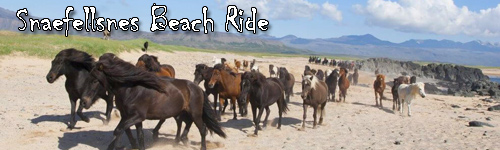
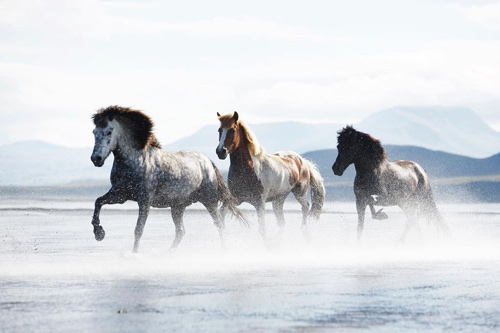
The beautiful Snæfellsnes Peninsula extends far out into the Atlantic from the west coast. You can find many features of the Icelandic nature in this part of the country. We ride down to the shore and continue along the expansive beach. This traditional trail, only revealed when the tide is out, offers horse and rider an ideal opportunity to try their skill at “tölting” over long distances.
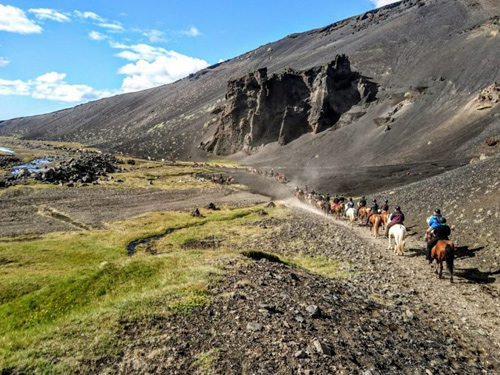
This horseback riding tour takes us through a landscape of extensive lava fields, craters, and ash from ancient eruptions in Hítardalur valley. We also enjoy wide-open stretches of light-coloured sand at Löngufjörur beach, where only the tide sets a limit to the freedom for horses and men. The impressive 50-meter deep crater Eldborg is a distinctive landmark, where the light sand turns black once you reach its lava field.
Participants on this tour join the longer Snæfellsnes Tour for four days, but return to Reykjavík on the fifth day while those on the longer ride continue.
|
Short Getaway
Ride with Gaited Horses
Center-based ride
|
|
Meeting:
|
Reykjavik City
|
|
Airport:
|
Keflavik Airport
|
|
Transfer:
|
Reykjavik City
|
|
Riders:
|
Min
6 riders
Max
14 riders
|
|
Trip Brochure (PDF)  Trip Rating

|
|
|
|
Rates and Dates for 2026
Rates include*:
Accommodations, All meals, Transfers from/to Reykjavik city center & 4 riding days
Rain wear, Water bottle, Saddle bag & Riding helmet can be provide
| A | 2026 | 6 day trip | 6d / 5n | €1840 | $2025 |
* prices are per person based on double/twin occupancy
Transfer and Other Charges:
|
2026
|
Pick up at BSÍ Bus station on Day 1
between 18:00-19:00
|
€
0
|
$0
|
|
2026
|
Children's discount (under 12) - 25% off
|
€
0
|
$0
|
|
2026
|
Extra fee for vegan & gluten-free diet
|
€
100
|
$110
|
Pick up at BSÍ Bus station in Reykjavik around 4:00 pm on Day 1.
Tour Dates for 2026
Saturday- Wednesday
|
Rates do not include:
Alcoholic beverages (can be bought at Duty Free ahead of time) & Gratuities
 Sample Itinerary - subject to changes
Day 1 (Monday): Arrival
Sample Itinerary - subject to changes
Day 1 (Monday): Arrival
Pick up at BSÍ Bus station in Reykjavik around 4:00 pm. Our bus will transfer you and your fellow riders to Hraunholt Farm, where your hosts are waiting for you. After a lovely introductory meal where we get to know each other, we relax and rest so we are well prepared for the adventure ahead of us.
Meals included: Dinner
Overnight at Hraunholt Farm
Day 2 (Tuesday): Traðir to Kolviðarnes
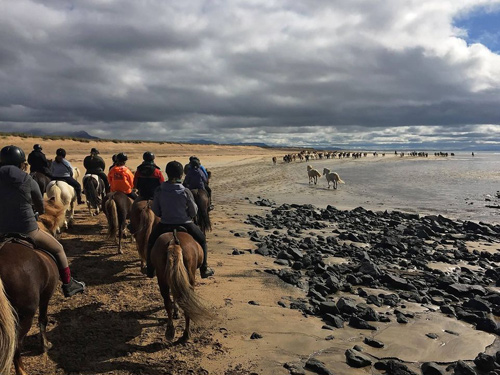
After a lovely breakfast we meet our horses and head out to the yellow colored, sandy beach, a unique experience for everyone with lava-fields and mountains on one side of the trail and the Atlantic Ocean on the other. We leave the horses at the Farm and spend the night at Hraunholt Farm.
Riding approx. 35 km
Meals included: Breakfast, Lunch & Dinner
Overnight at Hraunholt Farm
Day 3 (Wednesday): Ride to Hausthúsahringur
We leave the herd at Kolviðarnes and go out and play, enjoying another brisk ride on the beach with fantastic views of the ocean, the mountains and the majestic Snæfellsnes Glacier. The horses stay at Kolviðarnes and we drive back to Hraunholt.
Riding approx. 18 km
Meals included: Breakfast, Lunch & Dinner
Overnight at Hraunholt Farm
Day 4 (Thursday): Ride back to Hraunholt
We take all the horses with us and ride into the mountains and lava, on our way back to Hraunholt. We ride through fertile farmlands and along good riding tracks over the river Haffjarðará and travel through an area well known as the hideout of Iceland‘s most famous outlaw, Grettir.
Riding approx. 25 km
Meals included: Breakfast, Lunch & Dinner
Overnight at Hraunholt Farm
Day 5 (Friday): Ride to Rauðaneslaug
On the last day we choose our best horses and continue riding in amazing landscape surounded with lava, mountains, rivers and lakes. We ride to Rauðaneslaug where we can have a bath in the Rauðaneslaug swimming pool.
We will then ride our last part of the tour before we enjoy the farewell dinner at Hraunholt.
Riding approx. 22 km
Meals included: Breakfast, Lunch & Dinner
Overnight at Hraunholt Farm
Day 6 (Saturday): Departure
After breakfast, transfer back to Reykjavik. We should arrive in the city around 11:30am.
Meals included: Breakfast
Meeting:
Reykjavik City
Airport:
Keflavik Airport
Transfer:
Reykjavik City
Pick up at BSÍ Bus station in Reykjavik around 4:00 pm on Day 1.
|
Tack:
|
|
Icelandic
|
|
Horses:
|
|
Icelandic Horses
|
|
Pace:
|
|
Daily rides are between 6-7 hours. Knee-high rubber boots are recommended for this ride. Approx. 125km total. 4 riding days
|
|
Level:
|
|
 (3.5
to
5
out of 5) Strong Intermediate
(3.5
to
5
out of 5) Strong Intermediate
|
|
Weight:
|
|
Max
242 lbs / 110 kg
|
|
Riders:
|
|
Min
6 riders
|
Max
14 riders
|
|
 Riding Experience
This tour is a great riding experience that is suitable for strong intermediate-advanced riders. You need to be comfortable and in control at all paces, have a firm seat, and feel comfortable riding for up to 7 hours per day. Riders are expected to ride regularly and be capable of handling horses in an open country. Riding days can be as long as up to 35 km in the saddle so you should be in good physical condition and have a basic knowledge of horsemanship. You will get a thorough introduction into the gaits of the Icelandic horse and feel the Tölt, the extremely soft traveling gate of the Icelandic horse.
Riding Gear – Disinfect!
Riding gear (riding trousers, jackets, etc.) needs to be washed (40°C) or dry cleaned. Items which cannot be washed or dry cleaned (riding boots, riding hats) need to disinfected at least 5 days prior to arriving in Iceland. The Icelandic Veterinary Authority recommends the broad-spectrum disinfectant Virkon S for disinfection. Used riding gloves, whips, saddles, bridles, chaps and other used leather gear may not be brought into the country.
Please understand that these precautions are necessary because there are no contagious animal diseases in Iceland. Horses are not vaccinated and are therefore susceptible to infectious agents from abroad. Please help us to protect Iceland’s fragile nature!
We provide saddle bags, rain wear and safety helmet.
Tack & Riding Style
The tack used for Icelandic horses is slightly different then the tack ordinarily used for other breeds.
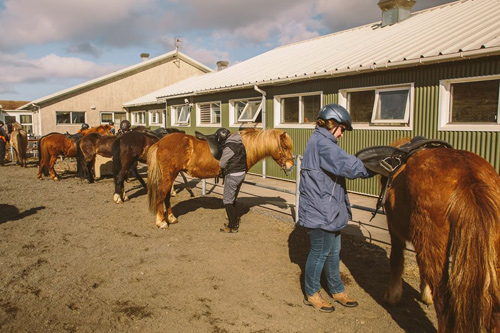
The saddle is built close to a dressage saddle and has a relatively flat seat. Saddles come with plain or quilted seats. On longer rides, a crupper helps keeping the saddle in place. Riding style used on Icelandic horses is close to English riding style, but stirrups are worn long.
Bits used are mostly simple snaffles. Bridles have a detachable noseband and clip on reins.
The Farmers
The real connoisseurs of the local terrain and history. We make sure that each tour has its own charm and is organized by the local expert, the farmer, and his family. They use their own horses and ride through the part of the country they know so well.
Our farmers have over 30 years of experience in leading riding groups through Iceland.
Herd of Horses
On this ride, you will be riding several days (except for two days) with a free running herd of horses. Herding along free running horses is the traditional way of travelling in Iceland, since horses are changed at least once a day on longer tours. You get to ride a variety of horses.
Horses
The Icelandic horse is best known for its four-beat smooth gait, the “tölt”, which is very comfortable for the rider, especially on a longer tour. Riding an Icelandic horse in its native habitat land is an authentic riding experience. The horses are especially chosen for this trip and are suited even for riders who have not had much riding experience.
 Passport and Visa Requirements:
Passport valid for at least three months beyond length of stay required by all except:(a) 1. nationals of Austria, Belgium, Denmark, Finland, France, Germany, Greece, Italy, Luxembourg, the Netherland. more
Reykjavík area
|
Month
|
Jan
|
Feb
|
Mar
|
Apr
|
May
|
Jun
|
Jul
|
Aug
|
Sep
|
Oct
|
Nov
|
Dec
|
|
Average High Temperature (°F)
|
37
|
37
|
39
|
43
|
49
|
54
|
57
|
57
|
51
|
45
|
40
|
37
|
|
Average Low Temperature (°F)
|
27
|
28
|
29
|
33
|
39
|
44
|
48
|
47
|
42
|
36
|
31
|
28
|
|
Average High Temperature (°C)
|
3
|
3
|
4
|
6
|
10
|
12
|
14
|
14
|
11
|
7
|
4
|
3
|
|
Average Low Temperature (°C)
|
-3
|
-2
|
-2
|
1
|
4
|
7
|
9
|
8
|
6
|
2
|
-1
|
-2
|
|
Average Precipitation (days of rain)
|
13
|
13
|
14
|
11
|
10
|
9
|
9
|
12
|
12
|
12
|
12
|
14
|
Source: NOAA
Seasons
As its name suggests, Iceland is cold, but not as cold as might be expected; thanks to the passing warm waters of the Gulf Stream, which regulate the climate. Its average mid-winter temperatures are no lower than those in New York City. The city's coastal location does, however, also mean it is prone to wind, and gales are common in winter. Reykjavik is also a very wet city, having on average 213 rainy days out of the year, with spring having slightly more sunny days! The south is the wettest part of the country. Coastal areas tend to experience winter gales and are generally windy.
Icelandic weather is known to be unpredictable and changing several times a day. A beautiful day can suddenly turn windy and rainy (and vice versa). Travelers to Iceland should be prepared for anything and dress in layers.
Winter
The average January temperature is 31°F (-0.5°C). From mid-November until the end of January, in the darkness of winter, the country only experiences a few hours of daylight each day.
Summer
The summer temperatures in Reykjavík range from 41°F (5°C) at night to as high as 77°F (25°C) during the day. During the summer months there is almost continuous daylight; early spring and late autumn feature long twilights.
The Northern Lights are often visible in autumn and early winter.
You should be ready for all kinds of weather as it can change very quickly.
We provide you with good rain-clothes, a riding helmet and a saddle bag (where you can keep the picnic lunch, a small camera, extra pair of gloves etc.).
Bring bags rather than hard cover suitcases. Pack light because transport space is limited.
Knee-high rubber boots are recommended for the beach ride!
You should be ready for all kinds of weather as the weather can change very quickly. We recommend that the following items are included when preparing for our longer tours.
• Knee high riding boots - water resistant/ waterproof
• Warm jacket or overcoat.
• Warm (woolen or fleece) sweater.
• Warm socks and gloves, at least two pairs, scarf and a cap or hat.
• Warm underwear, long if possible (protects also against chafing).
• For the ladies – sports bra.
• Riding trousers.
• Track suit.
• A pair of slippers to wear in the accommodation (Icelanders take off their shoes when entering a house).
• Swim suits, towels, soap etc.
• A small camera to take with you on the ride.
• Band aids and second skin plasters for chaffing.
• Insect repellent, gnat net head cover.
• Chocolate or glucose sweets for strenuous riding days.
• Sun lotion for face and lips (with high sun factor).
• Sunglasses.
• For those with sensitive eyes/contact lenses, goggles.
• Ear plugs. Some people snore!
Disinfecting of the riding gear
It is important to follow the regulation regarding the disinfecting of used riding clothes. Riding gear (riding trousers, jackets, etc.) needs to be washed (40°C) or dry cleaned. Items which can not be washed or dry cleaned (riding boots, riding hats) need to be disinfected at least five days prior to arriving in Iceland. The Icelandic Veterinary Authority recommends the broad-spectrum disinfectant Virkon S for disinfection. Used riding gloves, whips, saddles, bridles and other used leather gear may not be brought into the country. Please understand that these precautions are necessary because there are no contagious animal diseases in Iceland. Horses are not vaccinated and are therefore susceptible to infectious agents from abroad. Please help us to protect Iceland's fragile nature! For further information please take a look at: www.mast.is
Cameras:
We recommend to bring a small camera that can be taken in a pocket, a waist/hip bag or in the saddle bag.
Large camera equipment we can not allow on the horses for security reasons. Tours are operated with a free running herd - at speed of tölt or trot for most of the day. We take breaks to relax the horses and then it is possible to take pictures. While on the horse taking pictures is rather difficult since the horses are constantly moving. Because of the herd instinct it is not possible to stop an individual horse, they all will follow each other.
You can leave larger Digital SLR with your luggage at the farm or put it in their luggage that will be transferred to the new accommodation.
Sorry, no video is currently available for this tour.
*Important Notice: The following ratings have been submitted by guests and do not necessarily represent the views of Hidden Trails, its partners or employees.
Every care is taken to ensure accuracy but Hidden Trails is not liable for any errors or omissions.
** No trip reports found
with the tour ID you provided.
|
..view other reports for different trips
Accommodations
This is a stationary ride where all nights are spent at the same location.
Description
You will be accommodated at Hraunholt farm, a cozy farmhouse in the Snæfellsnes peninsula. Made up beds in shared rooms (2-4 beds per room) and shared facilities.
Room Occupancy
Single rooms are not available on this trip.
Meals
During the ride all meals are provided.
The menu consists of a large breakfast and traditional Icelandic meals (fish or lamb). All riders make their own packed lunch from the breakfast table.
Dietary Restrictions
Vegetarian meals are available upon request. Please, notify us at the time of booking.
This trip
can accommodate special dietary requests.
|
Tack:
|
|
Icelandic
|
|
Horses:
|
|
Icelandic Horses
|
|
Pace:
|
|
Daily rides are between 6-7 hours. Knee-high rubber boots are recommended for this ride. Approx. 125km total. 4 riding days
|
|
Level:
|
|
(3.5
to
5
out of 5) Strong Intermediate
|
|
Weight:
|
|
Max
242 lbs / 110 kg
|
|
Riders:
|
|
Min
6 riders
|
Max
14 riders
|
|
Riding Experience
This tour is a great riding experience that is suitable for strong intermediate-advanced riders. You need to be comfortable and in control at all paces, have a firm seat, and feel comfortable riding for up to 7 hours per day. Riders are expected to ride regularly and be capable of handling horses in an open country. Riding days can be as long as up to 35 km in the saddle so you should be in good physical condition and have a basic knowledge of horsemanship. You will get a thorough introduction into the gaits of the Icelandic horse and feel the Tölt, the extremely soft traveling gate of the Icelandic horse.
Riding Gear – Disinfect!
Riding gear (riding trousers, jackets, etc.) needs to be washed (40°C) or dry cleaned. Items which cannot be washed or dry cleaned (riding boots, riding hats) need to disinfected at least 5 days prior to arriving in Iceland. The Icelandic Veterinary Authority recommends the broad-spectrum disinfectant Virkon S for disinfection. Used riding gloves, whips, saddles, bridles, chaps and other used leather gear may not be brought into the country.
Please understand that these precautions are necessary because there are no contagious animal diseases in Iceland. Horses are not vaccinated and are therefore susceptible to infectious agents from abroad. Please help us to protect Iceland’s fragile nature!
We provide saddle bags, rain wear and safety helmet.
Tack & Riding Style
The tack used for Icelandic horses is slightly different then the tack ordinarily used for other breeds.
The saddle is built close to a dressage saddle and has a relatively flat seat. Saddles come with plain or quilted seats. On longer rides, a crupper helps keeping the saddle in place. Riding style used on Icelandic horses is close to English riding style, but stirrups are worn long.
Bits used are mostly simple snaffles. Bridles have a detachable noseband and clip on reins.
The Farmers
The real connoisseurs of the local terrain and history. We make sure that each tour has its own charm and is organized by the local expert, the farmer, and his family. They use their own horses and ride through the part of the country they know so well.
Our farmers have over 30 years of experience in leading riding groups through Iceland.
Herd of Horses
On this ride, you will be riding several days (except for two days) with a free running herd of horses. Herding along free running horses is the traditional way of travelling in Iceland, since horses are changed at least once a day on longer tours. You get to ride a variety of horses.
Horses
The Icelandic horse is best known for its four-beat smooth gait, the “tölt”, which is very comfortable for the rider, especially on a longer tour. Riding an Icelandic horse in its native habitat land is an authentic riding experience. The horses are especially chosen for this trip and are suited even for riders who have not had much riding experience.
Passports
Passport valid for at least three months beyond length of stay required by all except:
(a) 1. nationals of Austria, Belgium, Denmark, Finland, France, Germany, Greece, Italy, Luxembourg, the Netherlands, Portugal, Spain and Sweden who are only required to produce national identity cards issued by the competent authorities in their countries of origin.
Passport Note
Iceland is a signatory to the 1995 Schengen Agreement.
Visas
Not required by all nationals of referred to in the chart above for stays of up to 90 days.
2. EU nationals staying longer than 90 days will need to apply for a residence permit from the directorate of immigration in Iceland.
Note: Nationals not referred to in the chart above are advised to contact the embassy to check visa requirements (see Contact Addresses).
Visa Note
A stay in another Schengen-Zone country counts as the same as a stay in Iceland.
| Passport Required? |
| British |
Yes |
| Australian |
Yes |
| Canadian |
Yes |
| USA |
Yes |
| Other EU |
Yes/1 |
| Visa Required? |
| British |
No |
| Australian |
No |
| Canadian |
No |
| USA |
No |
| Other EU |
No |
| Return Ticket Required? |
| British |
No |
| Australian |
Yes |
| Canadian |
Yes |
| USA |
Yes |
| Other EU |
No |
This information is not being updated on a regular basis. Hidden Trails does not
take any responsibility for the accuracy of the above information. Please, consult
the embassy or consulate for updated info.
|

|
|
|
Snaefellsnes Beach Ride
Tour Code:
IT-ICRT16
6 days /
5 nights
Dates :
September
Difficulty :

Riding Level Explained | A | Beginner
 | Beginner A rider who has limited experience, is unable to post the trot and does not canter. | | B | Novice
 | Novice A rider who is capable of mounting and dismounting unassisted, capable of
applying basic aids, comfortable and in control at the walk, moderate length posting
trots, and short canters. | | C | Intermediate
 | Intermediate A rider who has a firm seat, is confident and in control at all paces
(including posting trots, two point canters and gallops), but does not ride regularly. |
| D | Strong Intermediate
 | Strong Intermediate An intermediate rider who is currently riding regularly and is comfortable in the saddle for at least 6 hours per day. | | E | Advanced
 | All of the above, plus an independent seat, soft hands, and capable of handlinga spirited horse in open country. |

|