|
Horseback riding tours
Rides in
Morocco
Intro to Morocco
----------------------------
![]() Northern Africa Northern Africa![]() Middle East Middle East![]() ![]() Israel Israel
|

|
|

|
|
|
Cities of Kings
Morocco
Morocco
A unique horse riding experience that leads you through a rich and beautiful country to the historic heart of Morocco, a heart that is still very much alive and beating. You will see the Roman ruins of Volubilis and Meknes, the town of the great king Moulay Ismail and Fez, the Islamic centre of culture, handicrafts and religion. This experience also highlights the fertile and green Morocco, a Morocco with a rich soil where fruit and olive trees are growing everywhere. In contrast, you also discover the dry and deserted and aptly named Dead Valley. To ride here is to enter a new and yet unexplored world.
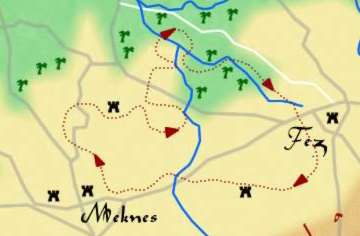
The trip begins with a meet up in Rabat and a transfer to Mekenes. Our ride starts to the foot of the mountain range of Zerhound. Lots of sandy fields offer many chances to canter before we reach Volubilis, an ancient Roman city with houses, like those found in Pompeii, ancient temples, bath houses, and a palace. Beautiful mosaics give you a picture of what life was like in those days. The road will take us to Moulay, across olive tree forests, up to the peak of the Zegota. We will have a magnificent view of the Rif mountains up to the springs of Dezala Des Ben Ammar. We ride across the white mountain range of the Rif and descend towards the Oued Mikkes. We follow this stream with many small windy roads and cross many Arab villages. When we enter Death Valley we encounter completely sterile land with colors alternating between yellow, white, and beige. We ride through many small Berber villages and across sandy fields until we reach the royal city of Fez, where we will visit the Medina, the University, and the Souk with its small shops. The ride continues from hill to hill and occasionally through small villages. Once in awhile we have the opportunity to race each other in a long gallop alongside fields where grapes and melons grow. After an emotional goodbye with our horses, a private car takes you to the Medina of Meknes and onto Rabat where you will spend the last night in a hotel.
|
Camping Ride with vehicle support
Progressive Ride (no camping)
|
|
Meeting:
|
Rabat hotel
|
|
Airport:
|
Rabat-Sale Airport (RBA)
|
|
Transfer:
|
--
|
|
Riders:
|
Min
3 riders
Max
9 riders
|
|
Trip Brochure (PDF)  Trip Rating

|
|
|
|
Rates and Dates for 2026
Rates include*:
Accommodations, All meals & 6 riding days
| A | 2026 | 8 day trip (Camp) | 8d / 7n | €1200 | $1440 |
| Small group supplement (2 pax only), pp | €270 | $325 |
| Single supplement | €135 | $165 |
| B | 2026 | 8 day trip (Hotel) | 8d / 7n | €1535 | $1845 |
| Small group supplement (2 pax only), pp | €270 | $325 |
| Single supplement | €270 | $325 |
* prices are per person based on double/twin occupancy
Transfer and Other Charges:
|
2026
|
Transfers not available. Meeting is at the reception in Hotel Bouregreg in Rabat at 8:00pm on the first day of the trip.
|
€
0
|
$0
|
|
2026
|
Transfer by taxi from hotel in Rabat to Casablanca Airport ~ approximate rates
- to be paid locally
|
€
80
|
$95
|
|
2026
|
Transfer by taxi from hotel in Rabat to Rabat Airport ~ approximate rates
- to be paid locally
|
€
25
|
$30
|
Transfers are not available for this trip. Meeting is at the reception in Hotel Bouregreg in Rabat at 8:00pm on the first day of the trip.
Tour Dates for 2026
Check here for details and availability
|
| A |
2026
|
05/23
- 05/30
|
8d / 7n
|
8 day trip (Camp)
|
3
/9
|
Expired
|
| B |
2026
|
05/23
- 05/30
|
8d / 7n
|
8 day trip (Hotel)
|
3
/9
|
Expired
|
| B |
2026
|
05/30
- 06/06
|
8d / 7n
|
8 day trip (Hotel)
|
3
/9
|
Expired
|
| A |
2026
|
05/30
- 06/06
|
8d / 7n
|
8 day trip (Camp)
|
3
/9
|
Expired
|
| A |
2026
|
09/12
- 09/19
|
8d / 7n
|
8 day trip (Camp)
|
3
/9
|
Reserve
|
| B |
2026
|
09/12
- 09/19
|
8d / 7n
|
8 day trip (Hotel)
|
3
/9
|
Reserve
|
| B |
2026
|
09/19
- 09/26
|
8d / 7n
|
8 day trip (Hotel)
|
3
/9
|
Sold Out
|
| A |
2026
|
09/19
- 09/26
|
8d / 7n
|
8 day trip (Camp)
|
3
/9
|
Sold Out
|
| A |
2026
|
09/26
- 10/03
|
8d / 7n
|
8 day trip (Camp)
|
3
/9
|
Reserve
|
| B |
2026
|
09/26
- 10/03
|
8d / 7n
|
8 day trip (Hotel)
|
3
/9
|
Reserve
|
| B |
2026
|
10/03
- 10/10
|
8d / 7n
|
8 day trip (Hotel)
|
3
/9
|
Reserve
|
| A |
2026
|
10/03
- 10/10
|
8d / 7n
|
8 day trip (Camp)
|
3
/9
|
Reserve
|
|
|
Rates do not include:
Transfers from/to airports, Entrance fees and sightseeings (7 Euros per place), Alcoholic beverages, Drinks in hotels & Gratuities for porters (~10-20 Dirham) and grooms (~70 Euros)
 Sample Itinerary- subject to changes
Day 1 (Saturday): Arrival at Casablanca
Sample Itinerary- subject to changes
Day 1 (Saturday): Arrival at Casablanca
If arriving at Casablanca airport, travel by train to Rabat (not included). The train journey (1.5 – 2 hours) provides a glimpse into the rich diversity of the Moroccan countryside. If you have the time, you can visit Rabat to get a first impression of the Eastern lifestyle. You can take a walk in the Medina, the garden of Oudaiya or the Hassan tower.
We meet at the hotel with the guide and spend the night there.
Meals included: Dinner
Overnight at Hotel in Rabat (hotel + camping option)
Day 2 (Sunday): Ride to Volubilis
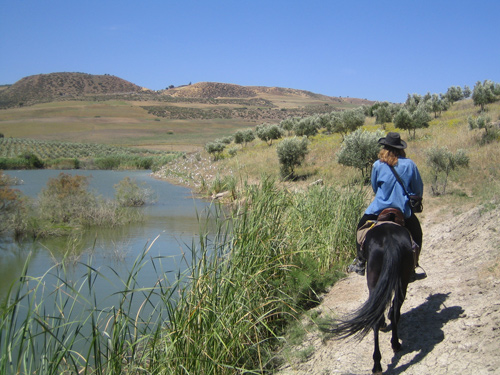
In the early morning a private car takes you to the city of Meknes where your horse awaits. They are Berber-Arab, small but very strong with a lot of stamina. A first trip takes us to the foot of the mountain range of Zerhoun. The road winds through many small villages with clay houses and olive trees, sunflowers and cornfields. We follow alongside a small river with beautiful flowers up to the village of Sainte de Sidi Ali. From here we have a splendid view of Meknes and its surroundings. Lots of sandy fields offer chances to canter before we reach Volubilis, an ancient Roman city with houses, like those found in Pompeii, ancient temples, bath houses, and a palace. Beautiful mosaics provide a picture of what life was like in those days. We eat and sleep close to the Roman ruins, beside a small river.
Meals included: Breakfast, Lunch & Dinner
Overnight at Riad in Moulay idriss (hotel option) or camping near Volubilis (camping option)
Day 3 (Monday): Volubilis to Moulay Idriss
Today, the road takes us to Moulay Idriss, across olive tree forests, up to the peak of the Zegota. We have a magnificent view of the Rif Mountains up to the springs of Dezala Des Ben Ammar. The rocky ground does not allow many crops to grow here: only a few olive trees can grow in a rare open space. Before we arrive at the springs we travel through a country devoided of human life and completely deserted. A few human beings can always be found around a water well where animals drink. Culturally, these places are the Moroccan version of western ‘water coolers’ and provide a gathering place to discuss current rumors. We sleep in tents under olive trees.
Meals included: Breakfast, Lunch & Dinner
Overnight at Riad in Moulay idriss (hotel option) or camping near Café Albrtqizia (camping option)
Day 4 (Tuesday): Moulay Idriss to Oued Mikkes
Today we ride across the white mountain range of the Rif. Here and there you see a small village at the very bottom of a valley or small houses made out of clay. Agriculture here is done in an old fashioned way: with bare hands and we see many women doing hard work on the fields. After the picnic, we descend towards Oued Mikkes to follow a stream that leads us across many winding roads and near numerous Arab villages. After this we will climb up a mountain to reach our camping spot for the night.
Meals included: Breakfast, Lunch & Dinner
Overnight at Hotel in Moulau Yacoub (hotel option) or camping near Oued Mikkes (camping option)
Day 5 (Wednesday): Oued Mikkes to Fez
Today we enter the Death Valley which is named for its river: the water is so salty that it cannot sustain the plants, animals or humans in the area. To get water in this area, local people are forced to fetch water at places that are up to 3 hours away. The land here in the Death Valley is completely sterile and the color is always changing between yellow, white and beige. The road takes us through many small Berber villages via sandy fields from Moulay Yakoud up to Fez. The horses wait at the gates of the city and a car takes us to Fez to our hotel. In the afternoon we will visit Fez, the Medina, the old University, and the Souk with its small shops. Dinner will be in the Medina and accommodation in the pretty Riad.
Meals included: Breakfast, Lunch & Dinner
Overnight at Riad in Fez (hotel + camping option)
Day 6 (Thursday): Fez to Ain Taoujdate
After breakfast we will leave the royal city. We will ride through the fields on top of hills with beautiful views in the desert valleys. Long canters over the mountain ranges are unforgettable. After the lunch, we will ride in the salt valley. In dry weather, the salt crystallize and the whole valley is shining in white. In the middle of the valley stands an impressive black mountain. The salt valley is surrounded by rose mountains. A way goes in the middle of the salty plane. Soon we will arrive at the blue shiny lake. On the border we will find the camp (for camping option, or riad in Fez for hotel option) where we'll have dinner and spend the night.
Meals included: Breakfast, Lunch & Dinner
Overnight at Riad in Fez (hotel option) or camping near Ain Taoujdate (camping option)
Day 7 (Friday): Ride back to the stables
Today we will ride on soft ways, along a little river, which is curving through the valley. Bushes and trees grow beside the water. The farmers are planting vegetable in small well kept fields. Many little creeks are running along the way and crossing over the way so that the horses will jump the water. Enjoy this lonely valley with sheep herd grazing. Long canter will bring us back to the riding stables by noon. After an emotional goodbye with our horses, a private car will take you to the Medina of Meknes where you will have a short time to go through the souks. Afterwards the car brings you back to Rabat where you will spend the night in the hotel.
Meals included: Breakfast, Lunch & Lunch
Overnight at Hotel in Rabat (hotel + camping option)
Day 8 (Saturday): Departure
Return by train to Casablanca to catch the flight home. You can also go directly from Casablanca to Rabat by plane.
Meals included: Breakfast
Meeting:
Rabat hotel
Airport:
Rabat-Sale Airport (RBA)
Train station:
Rabat-Agdal
Transfer:
--
Distance:
15 km / 9 miles
Transfers are not available for this trip. Meeting is at the reception in Hotel Bouregreg in Rabat at 8:00pm on the first day of the trip.
|
Tack:
|
|
English trekking
|
|
Horses:
|
|
Arab, Berber stallions & mares
|
|
Pace:
|
|
Fast with many trots and canters, up to 8 hours and up to 50 km. Riders must have at least 5 years experience
|
Walk |
Trot |
Canter |
|
|
Level:
|
|
 (3.5
to
4
out of 5) Strong Intermediate
(3.5
to
4
out of 5) Strong Intermediate
|
|
Weight:
|
|
Max
190 lbs / 85 kg
|
|
Riders:
|
|
Min
3 riders
|
Max
9 riders
|
|
 Horses
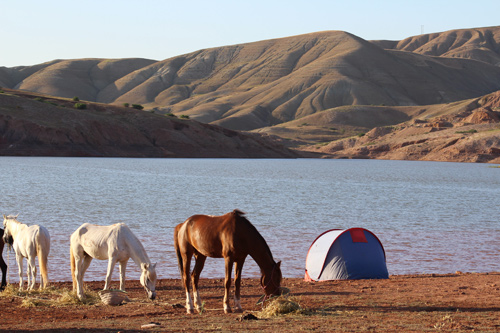
You will ride small but very surefooted Arabian Berber horses with a great courage and stamina. Mares and stallions go together on the ride. Stallions and mares go well together, but some of the stallions need extra space when two are in the same area. A whip is suggested for the stallions, as they need strict orders. This does not make them difficult to ride, they just require more firm direction and more attention. These horses can get very attached to their riders and are always ready to please.
Tack
Mostly English and some military tracking saddles. Some people bring their own gel-cushion or sheep-skin cover to put over the saddle since we ride for long hours.
Staff
Driss and Rena have been organizing treks on horseback in Morocco since 1982.
Rena, once a schoolteacher in Switzerland, came to Meknes in the year 1984 to realize her dream of living in harmony with horses and nature. In love with Morocco and its inhabitants, she will help you discover another Morocco, away from the beaten track, authentic and enchanting, as your guide on the treks.
Driss is a riding instructor who used to work for the National Studfarm of Meknes. He has more than 25 years of experience with horses and he has taught a great many students (a lot of them French) who for the most part have gone on to be high level riders).
Passport and Visa Requirements:
PassportsPassport valid for at least six months from date of entry required by all nationals referred to in the chart.Passport NoteVisitors should ensure that their passports are stamped when they ent. more
Fes area
|
Month
|
Jan
|
Feb
|
Mar
|
Apr
|
May
|
Jun
|
Jul
|
Aug
|
Sep
|
Oct
|
Nov
|
Dec
|
|
Average High Temperature (°F)
|
62
|
64
|
69
|
73
|
79
|
88
|
96
|
96
|
89
|
80
|
70
|
64
|
|
Average Low Temperature (°F)
|
41
|
43
|
45
|
49
|
54
|
60
|
66
|
67
|
62
|
56
|
49
|
43
|
|
Average High Temperature (°C)
|
17
|
18
|
21
|
23
|
26
|
31
|
36
|
36
|
31
|
27
|
21
|
18
|
|
Average Low Temperature (°C)
|
5
|
6
|
7
|
9
|
12
|
16
|
19
|
19
|
17
|
13
|
9
|
6
|
Source: NOAA
Seasons
Fes enjoys a warm Mediterranean climate.
Spring (March to May)
Spring is generally warm and sunny.
Summer (June to August)
Summers are hot and dry. However, there are sometimes thunderstorms and hard rain, but only for short periods of time.
Autumn (September to November)
This time of the year is pleasant and a popular season to visit.
Winter (December to February)
Winters are usually is cool and can be quite wet with an average of 10 rainy days a month in Fes.
Sunny weather all year! Isn't that great!? Actually, you can expect warm to hot weather with a nice breeze in the open country. At noon, we typically siesta to stay out of the hottest sun. Expect sunny weather most of the time, so bring light yet comfortable clothes with you. The most comfortable clothes in warm environments are covering your body yet are light and airy to make sure that the air can circulate.
Nights can be chilly however, so be sure to take some warm clothes as well. Any moment of the year you may have a thunderstorm - so better you bring a rain coat with you too!
Morocco is a country where almost everybody is Muslim. They are very welcoming towards foreigners, but still it might be better to dress modestly and not to show a lot of uncovered skin, especially when you're a woman.
Recommended equipment
- Warm sleeping bag
- Comfortable riding clothes
- Flashlight
- Multipurpose shoes (riding and walking)
- Non-revealing city clothes for occasional visits to towns and hotels
- A warm sweater and coat
- Raincoat
- Sunhat
- Sunscreen
- Swimsuit
- Towel
- Water bottle
- Pocket knife
Note that old clothes and riding equipment you no longer need are very welcome.
Sorry, no video is currently available for this tour.
*Important Notice: The following ratings have been submitted by guests and do not necessarily represent the views of Hidden Trails, its partners or employees.
Every care is taken to ensure accuracy but Hidden Trails is not liable for any errors or omissions.
..view other reports for different trips
 Accommodations
This is a wilderness ride, so nights will be spent in different locations.
Description
Camp option: 3 nights in hotels and 4 nights camping
Hotel option: all nights in hotels/ riads
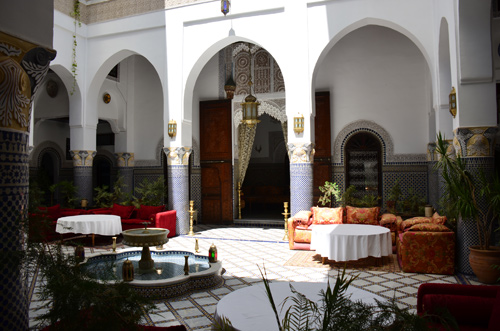
All hotel/ riad options contain private washrooms and free WIFI. A riad is a old house turned into a guest house. They often have very beautiful mosaics and wooden decoration. They are old homes from very rich people which often look like little palaces. They have few bedrooms but in style of 4* to 5* hotels. Hotel rooms are mostly naturally air-cooled and most of the hotels have their sun-warmed swimming pool! The average hotel has a small bar.
Laundry can be arranged in hotels. Inquire at the hotel for price.
Camp Itinerary - subject to changes based on availability
Night 1 & 7: Hotel in Rabat
Night 2: Camping in Volubilis
Night 3: Camping near Café Albrtqizia
Night 4: Camping near Oued Mikkes
Night 5: Riad in Fes
Night 6: Camping in Ain Taoujdate
Hotel Itinerary - subject to changes based on availability
Night 1 & 7: Hotel in Rabat
Night 2 & 3: Riad in Moulay idriss
Night 4: Hotel in Moulau Yacoub
Night 5 & 6: Riad in Fes
Camping
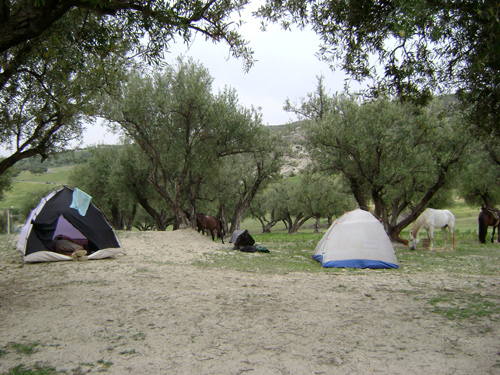
You will overnight in comfortable dome tents with ground mats. There are rustic portable toilets (no flush) on site and no showers. There will be some rivers along the ride where you can bathe and wash up. Make sure to being your own sleeping bag!
Hotel in Rabat
Ideally located in Rabat’s city center, close to the old medina and its vibrant souks, this hotel has 69 rooms spread over 3 floors. All air-conditioned rooms include a telephone, a TV, WIFI internet access and a private bathroom.
Riad in Moulay idriss
Restored in the authentic Moroccan style, this riad offers individually decorated rooms and private washrooms. The sun terrace and outdoor pool are great for relaxation. There is free Wi-Fi access at this property.
Hotel in Moulau Yacoub
This small hotel offers simple accommodations in either bungalows or bedrooms with a small balcony. All accommodations include air conditioning and ensuite bathroom. Wi-Fi is available in public areas and is free of charge. The hotel features a restaurant with panoramic views of the surrounding mountains and an outdoor pool.
Riad in Fes
This beautiful 16th century Riad used to be the home of a rich merchant and has recently been restored in order to provide comfortable accommodation to guests. The architecture of this Riad is very typical of the area with water fountains and beautiful mosaics. Each room is tastefully decorated in the Moroccan style and comes equipped with air conditioning, satellite TV, free Wi-Fi access and ensuite facilities. The hotel also has a spa and a swimming pool. Laundry can be arranged for an additional fee.
Room Occupancy
Single supplement is mandatory if we are unable to find another rider to share.
 Meals
Meals
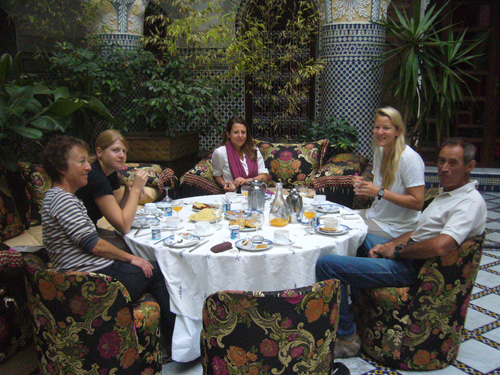
All meals are included from dinner on Day 1 to breakfast on the last day.
You will enjoy a mix of food: some "western food" and some very good local specialties!
Some days a car will meet us for lunch and on some days we will have a picnic on the trail - you will take the food with you in your saddle bags.
Drinks in hotels or restaurants and alcoholic drinks on the ride are not included. In general, tap water should not be used for drinking but only for washing.
Dietary Restrictions
We can cater to dietary restrictions if given prior notice.
This trip
can accommodate special dietary requests.
|
Tack:
|
|
English trekking
|
|
Horses:
|
|
Arab, Berber stallions & mares
|
|
Pace:
|
|
Fast with many trots and canters, up to 8 hours and up to 50 km. Riders must have at least 5 years experience
|
Walk |
Trot |
Canter |
|
|
Level:
|
|
(3.5
to
4
out of 5) Strong Intermediate
|
|
Weight:
|
|
Max
190 lbs / 85 kg
|
|
Riders:
|
|
Min
3 riders
|
Max
9 riders
|
|
Horses
You will ride small but very surefooted Arabian Berber horses with a great courage and stamina. Mares and stallions go together on the ride. Stallions and mares go well together, but some of the stallions need extra space when two are in the same area. A whip is suggested for the stallions, as they need strict orders. This does not make them difficult to ride, they just require more firm direction and more attention. These horses can get very attached to their riders and are always ready to please.
Tack
Mostly English and some military tracking saddles. Some people bring their own gel-cushion or sheep-skin cover to put over the saddle since we ride for long hours.
Staff
Driss and Rena have been organizing treks on horseback in Morocco since 1982.
Rena, once a schoolteacher in Switzerland, came to Meknes in the year 1984 to realize her dream of living in harmony with horses and nature. In love with Morocco and its inhabitants, she will help you discover another Morocco, away from the beaten track, authentic and enchanting, as your guide on the treks.
Driss is a riding instructor who used to work for the National Studfarm of Meknes. He has more than 25 years of experience with horses and he has taught a great many students (a lot of them French) who for the most part have gone on to be high level riders).
Passports
Passport valid for at least six months from date of entry required by all nationals referred to in the chart.
Passport Note
Visitors should ensure that their passports are stamped when they enter the country.
Visas
Not required by all nationals referred to in the chart above for stays of up to three months.
Visa Note
(a) Visa extensions are possible upon request at the nearest police station. (b) Nationals not referred to in the chart above are advised to contact the embassy to check visa requirements.
| Passport Required? |
| British |
Yes |
| Australian |
Yes |
| Canadian |
Yes |
| USA |
Yes |
| Other EU |
Yes |
| Visa Required? |
| British |
No |
| Australian |
No |
| Canadian |
No |
| USA |
No |
| Other EU |
No |
| Return Ticket Required? |
| British |
No |
| Australian |
No |
| Canadian |
No |
| USA |
No |
| Other EU |
No |
This information is not being updated on a regular basis. Hidden Trails does not
take any responsibility for the accuracy of the above information. Please, consult
the embassy or consulate for updated info.
|

|
|
|
Cities of Kings
Tour Code:
PG-MRT8
8 days /
7 nights
Dates :
Apr-Jun & Sep-Oct
Trip Rating :
Difficulty :

Riding Level Explained | A | Beginner
 | Beginner A rider who has limited experience, is unable to post the trot and does not canter. | | B | Novice
 | Novice A rider who is capable of mounting and dismounting unassisted, capable of
applying basic aids, comfortable and in control at the walk, moderate length posting
trots, and short canters. | | C | Intermediate
 | Intermediate A rider who has a firm seat, is confident and in control at all paces
(including posting trots, two point canters and gallops), but does not ride regularly. |
| D | Strong Intermediate
 | Strong Intermediate An intermediate rider who is currently riding regularly and is comfortable in the saddle for at least 6 hours per day. | | E | Advanced
 | All of the above, plus an independent seat, soft hands, and capable of handlinga spirited horse in open country. |

|