|
Horseback riding tours
Rides in
Romania
Intro to Romania
----------------------------
![]() Albania Albania![]() Serbia Serbia![]() Bulgaria Bulgaria![]() Slovenia Slovenia![]() Hungary Hungary
|

|
|

|
|
|
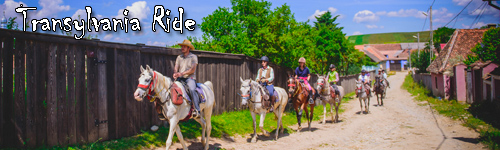
Transylvania Ride
Transylvania
Romania
Enjoy Transylvania’s historical landscape of endless rolling hills adorned by wild flower meadows, forests and tiny villages, set against the backdrop of the Carpathian mountain range. This may well be Europe’s last riding heaven! Transylvania may be closely associated as the homeland of Count Dracula, but is also part of the dramatic history of the Austro-Hungarian Empire, and boasts well-preserved Medieval villages and excellent Romanian wines. We invite you to discover Transylvania as it once was in the 1800's.
The concept of our treks is to introduce our guests right into the heart of our culture – where horses have kept their original role. The ride is led through unmarked terrain, over hills and through forests, connecting one small village to another by unnoticeable tracks used by horses and carts. Up to 8 riders are led by 2 local guides. The small groups (often made up of a number of people who have booked separately) make for friendly and interesting riding.
The rides have often been described as a Tolstoy-esque experience, being accommodated at Count Kalnoky’s Castle and at King Charles III’s private retreat; but our guests are also fond of getting an insight into the reality of the region by staying 2 nights in villager's homes during the 5-day ride. Evening meals are served together as table d’hôte at the accommodations.
You ride out of Miklósvár (Micloşoara), a remote village situated in the foothills of the Carpathian Mountains, from which you will be able to explore Transylvania freely, past and present. Miklósvár is the oldest documented settlement of the region. Its castle was first mentioned in 1211 AD as a border fortress between the territory donated to the Knights of the Teutonic Order and the rest of the of the Kingdom of Hungary. Today's castle was started in the 1500s as a hunting manor for the family and still contains many Renaissance elements, including its lovely painted wall decorations. It has been abandoned during the last fifty years and is currently under restoration.
Your hosts, the Kálnokys, are one of the most ancient families of Transylvania! Their history reaches back to obscure medieval times. In 1252 AD the family was documented in this eastern part of Transylvania. The current 25th generation came back after 50 years of exile in the West and are now reshaping their lost heritage.
|
Progressive Ride (no camping)
|
|
Meeting:
|
Miklosvar
|
|
Airport:
|
Bucuresti Otopeni
|
|
Transfer:
|
Brasov train station
|
|
Riders:
|
Min
3 riders
Max
8 riders
|
|
Trip Brochure (PDF)  Trip Rating

|
|
|
|
Rates and Dates for 2026 | 2027
Rates include*:
Accommodations, All meals, Luggage transfers & 5 riding days or 3 riding days (depending on program)
Saddle bags are provided
| A | 2026 | 7 days Trip (long ride) - peak season | 7d / 6n | €1990 | $2390 |
| B | 2026 | 7 days Trip (long ride) | 7d / 6n | €1750 | $2100 |
| C | 2026 | 7 days Trip (short ride) peak season | 7d / 6n | €1600 | $1920 |
| D | 2026 | 7 days Trip (short ride) | 7d / 6n | €1370 | $1645 |
* prices are per person based on double/twin occupancy
Rates Note:
** possible with 3 riders without supplement but with slightly modified itinerary (different guest house in some days, but amount of riding and scenery to see will be almost the same as original program).
Transfer and Other Charges:
|
2026
|
Transfer from the Brasov train station, pp, one way (2-3 pax) - approx. Cost
- to be paid locally
|
€
35
|
$45
|
|
2026
|
Transfer from Bucharest airport, pp, one way (2-3 pax) - approx. Cost
- to be paid locally
|
€
90
|
$110
|
|
2026
|
Transfer from Sibiu airport, pp, one way (2-3 pax) - approx. Cost
- to be paid locally
|
€
80
|
$95
|
|
2026
|
Transfer from Cluj Napoca airport, pp, one way (2-3 pax) - approx. Cost
- to be paid locally
|
€
100
|
$120
|
|
2026
|
Transfer from Bucharest downtown, pp, one way (2-3 pax) - approx. Cost
- to be paid locally
|
€
100
|
$120
|
|
2026
|
Transfers for singler rider- double transfer cost
|
€
0
|
$0
|
|
2026
|
Single supplement (where available), per night
- to be paid locally
|
€
40
|
$50
|
|
2026
|
Transfer from Augustin train station to Miklósvár is free of charge
|
€
0
|
$0
|
|
2026
|
Additional day in Miklosvar or Valea Zălanulu, with meals and activities, (dbl), pp
|
€
220
|
$265
|
|
2026
|
Additional day in Miklosvar or Valea Zălanulu, with meals and activities, (sgl), pp
|
€
240
|
$290
|
|
2026
|
Bear watching (min 2 pax), pp
- to be paid locally
|
€
70
|
$85
|
|
2026
|
Private Ride Supplement, min. 8 pax, or add supplement per free spot
|
€
625
|
$750
|
There are easy and frequent train connections from Bucharest to Brasov (best to book first class seats for a few extra dollars).
A private transfer from Bucharest can be arranged on request for an extra fee
Tour Dates for 2026 | 2027
Check here for details and availability
|
| A |
2026
|
06/14
- 06/20
|
7d / 6n
|
7 days Trip (long ride) - pe...
|
3
/8
|
Expired
|
| A |
2026
|
06/28
- 07/04
|
7d / 6n
|
7 days Trip (long ride) - pe...
|
3
/8
|
Expired
|
| B |
2026
|
07/12
- 07/18
|
7d / 6n
|
7 days Trip (long ride)
|
3
/8
|
Expired
|
| B |
2026
|
07/26
- 08/01
|
7d / 6n
|
7 days Trip (long ride)
|
3
/8
|
Expired
|
| B |
2026
|
08/09
- 08/15
|
7d / 6n
|
7 days Trip (long ride)
|
3
/8
|
Expired
|
| B |
2026
|
08/23
- 08/29
|
7d / 6n
|
7 days Trip (long ride)
|
3
/8
|
Reserve
|
| B |
2026
|
09/06
- 09/12
|
7d / 6n
|
7 days Trip (long ride)
|
3
/8
|
Reserve
|
| B |
2026
|
09/20
- 09/26
|
7d / 6n
|
7 days Trip (long ride)
|
3
/8
|
Reserve
|
| B |
2026
|
10/04
- 10/10
|
7d / 6n
|
7 days Trip (long ride)
|
3
/8
|
Sold Out
|
| B |
2026
|
10/18
- 10/24
|
7d / 6n
|
7 days Trip (long ride)
|
3
/8
|
Reserve
|
|
Short rides are available on request only (depending on availability) - please inquire
|
Rates do not include:
Additional sightseeing, Alcoholic drinks, Personal insurance (mandatory), Use of telephones and/or fax machines, Gratuities & Pick-up and Drop-off transfers.
 Sample Itinerary: Long Ride Program -
 s ubject to changes
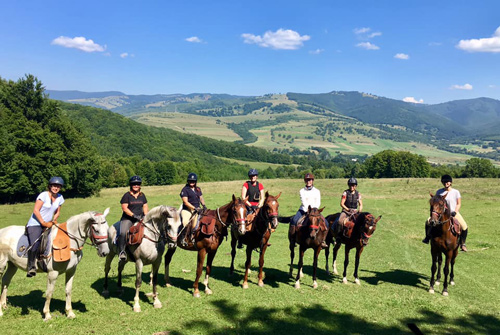
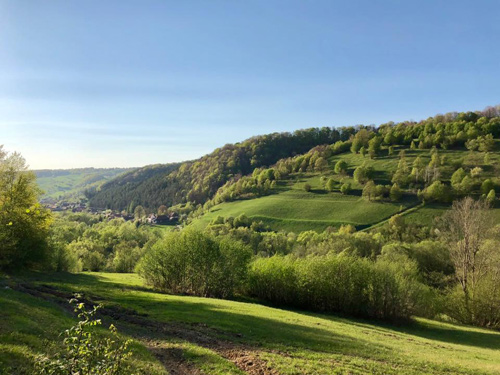
This is the standard itinerary available from the beginning of April to the beginning of November. Around 4-6 hours are spent in the saddle daily and a variety of terrain is traversed as you travel through wild hills and forest landscapes. The villages are situated at 450-700m, the hills reach 800-900m. This whole region is called Erdővidék, or “Woodlands”, and has been looking very much the same for the last centuries.
Day 1 (Sunday): Arrival
You will arrive at Miklósvár / Miclosoara after being transferred from the airport/station.
The village of Miklósvár was part of the Kálnoky family estate and the old hunting manor is on the edge of the village. The area was part of the Austro-Hungarian empire and became Romanian during the 1st World War. A number of the traditional houses in the village have been carefully restored in order to preserve their original Transylvanian charm. .
Meet Countess Anna Kálnoky to discuss about the horses you will be riding during the tour.
Meals included: Dinner
Overnight at Count Kalnoky’s Castle in Miklosvar
Day 2 (Monday): Ride to Malnas Bai
Transfer to the riding centre at Valea Crisului (Sepsikőröspatak, “Round Brook”), 40 min. by car. The ride starts ascending slowly onto a ridge, where we are heading north on high pastures with magnificent views stretching to the high Carpathian Range. We leave the villages of Kálnok and Zalán to our right below us down in the valley, meet shepherds and their flocks on the pastures. At the end of the day, we descend through the forest to reach Malnas Bai (Málnásfürdő, “Raspberry Baths”), where the riders stay for the night as guests of a local hunter’s family (bathrooms might have to be shared). It is a thriving spa village with plenty of mineral water springs and typical wooden turn-of-the-century Transylvanian architecture.
Riding approx. 4-5 hours (21 kn)
Meals included: Breakfast, Lunch & Dinner
Overnight in Malnas Bai
Day 3 (Tuesday): Malnas Bai to Batanii
We ascend back up into the deep forests of the Hatod region, where 6 villages share the same woods (hatod = “one sixth”). We travel along a quiet forest track, where bear traces are often to be found. After having ridden around the extinct volcano called “Murgó”, we descend on gentle grassy slopes to the Batanii villages (“Big Bacon and Little Bacon”) to reach our accommodations in village houses at lovely “Little Bacon” where we shall have common dinner at a local family. The villagers here are known to be especially hospitable and friendly, and before dinner they will take pride at showing you their still functioning watermill and traditional looms.
Riding approx. 5 hours (22 km)
Meals included: Breakfast, Lunch & Dinner
Overnight in Malnas Bai
Day 4 (Wednesday): Batanii to Miklosvar
We head northwest through forests and hay meadows, to climb up to Szép Arca (“Pretty Face”) hill on the southern slopes of the Hargita Range. Wide views open out on distant Barót and Olt Valley. We descend south and cross a valley to reach the hills south of Barót where we will have our picnic at a small lake. It is the result of a collapsed mine and is situated at the old mining settlement 'Köpecbánya' which is now mainly populated by gypsies. From here, we follow the lower line of the forest along the beautiful valley of the Olt river, reaching Miklosvar's manor grounds and stables in the afternoon. Visit the castle, its museum and park in the afternoon and hang out at the Stone Pub for pre-dinner drinks in the evening.
Riding approx. 6 hours (25 km)
Meals included: Breakfast, Lunch & Dinner
Overnight at Count Kalnoky’s Castle in Miklosvar
Day 5 (Thursday): Miklosvar to Valea Zalanului
We leave Miklósvár and head east along forests and pastures, passing through Szárazajta / Aita Seaca (‘Dry’ Ajta village), to climb up to the ridge above Zalánpatak valley. Wide views open out on the distant Carpathian mountain range. We descend southeast to the village of Zalánpatak / Valea Zalanului, which was part of the Kálnoky family estate as a glass manufacture and now harbours H.R.H. King Charles III's private retreat. Several traditional houses in the village have been carefully restored, where you will be accommodated for the next 2 nights. Before dinner, you will have a walk in the evening on the estate to watch wildlife venturing out onto the meadows at sundown.
Riding approx. 5-6 hours (21 km)
Meals included: Breakfast, Lunch & Dinner
Overnight in Valea Zalanului
Day 6 (Friday): Back to the Stables
From Zalánpatak, we return to Kőröspatak crossing the hills and brooks. This trip was very common for many a generation of the Kálnoky family who had to ride often between the two villages. It is a medium ride through spectacular surroundings with wonderful views from the high pastures. After crossing the ancient village of Kálnok, the final canter will reach the ruins of the old tower above Kőröspatak. Before reaching the stables you will dip the horse's legs in the little stream crossing the village. You will be transferred back to Zalánpatak guesthouse for the evening.
Riding approx. 4 hours (19 km)
Meals included: Breakfast, Lunch & Dinner
Overnight in Valea Zalanului
Day 7 (Saturday): Departure
Depart after breakfast, or adding on a few days of relaxation and tours based at Count Kalnoky’s Guesthouses in Miklosvar.
Meals included: Breakfast
 Sample Itinerary: Short Ride Program -
 s ubject to changes
Day 1 (Sunday): Arrival
You will arrive at Miklósvár / Miclosoara after being transferred from the airport/station.
The village of Miklósvár was part of the Kálnoky family estate and the old hunting manor is on the edge of the village. The area was part of the Austro-Hungarian empire and became Romanian during the 1st World War. A number of the traditional houses in the village have been carefully restored in order to preserve their original Transylvanian charm. .
Meet Countess Anna Kálnoky to discuss about the horses you will be riding during the tour.
Meals included: Dinner
Overnight at Count Kalnoky’s Castle in Miklosvar
Day 2 (Monday): Sightseeing (no riding)
Discover the estate and its craftsmen who will help you create your own Transylvanian crafts item which you can take back home. Then, the cooks will help you make our traditional Szekler 'Chimney Cake' over open fire. Your own cake will be served for desert or tea. The local blacksmith will show you how he beats hot iron into shape in the old smithy.
The rest of the day will be spent at the renaissance manor which has recently been restored. Discover its interiors which reflect lifestyles of past centuries. Have tea on the southern terrace sheltered by the manor's towers and ancient elmtrees, discover the english park or relax at the pond or the formal garden.
Meet your guide or Countess Anna Kálnoky to discuss about the horses you will be riding during the tour.
Meals included: Breakfast, Lunch & Dinner
Overnight at Count Kalnoky’s Castle in Miklosvar
Day 3 (Tuesday): 'Middle Ajta' Ride
Transfer to the riding centre at Valea Crisului (Sepsikőröspatak, “Round Brook”), 45 min. by car. The ride starts ascending onto a ridge with a good canter, where we are heading west on high pastures with magnificent views stretching to the high Carpathian Range. We will meet shepherds and their flocks on the pastures and at the end of the day we descend into a meandering valley to reach the picturesque village of 'Middle Ajta'. From there, a short way over the hill will lead us back to Miklósvár. Pre-dinner drinks in the Stone Pub, then dinner in the wine cellar.
Riding approx. 6-7 hours (25 km)
Meals included: Breakfast, Lunch & Dinner
Overnight at Count Kalnoky’s Cottage in Miklosvar
Day 4 (Wednesday): Miklósvár to Zalánpatak / Valea Zalanului
We leave Miklósvár and head east along forests and pastures, passing through Szárazajta / Aita Seaca (‘Dry’ Ajta village), to ascend the ridge above Zalánpatak valley. Wide views open out on the distant Carpathian mountain range. We descend southeast to the village of Zalánpatak / Valea Zalanului, which was part of the Kálnoky family estate as the region's first glass manufacture and now harbours H.R.H. King Charles III's private retreat. Several traditional houses in the village have been carefully restored, where you will be accommodated for the next 3 nights. Before dinner, you will have a walk in the evening on the estate to watch wildlife venturing out onto the meadows at sundown.
Riding approx. 5-6 hours (21 km)
Meals included: Breakfast, Lunch & Dinner
Overnight in Valea Zalanului
Day 5 (Thursday): Ride back to Stables
From Zalánpatak, we return to Kőröspatak crossing the hills and brooks. This trip was very common for many a generation of the Kálnoky family who had to ride often between the two villages. It is a medium ride through spectacular surroundings with wonderful views from the high pastures. After crossing the ancient village of Kálnok, the final canter will reach the ruins of the old tower above Kőröspatak. Before reaching the stables, you will dip the horse's legs in the little stream crossing the village. You will be transferred back to Zalánpatak guesthouse with a stopover at the local spa 'Raspberry Baths' for a refreshing dip in mineral water (bring your swimming gown!).
Riding approx. 4 hours (19 km)
Meals included: Breakfast, Lunch & Dinner
Overnight in Valea Zalanului
Day 6 (Friday): Relax (no riding)
Relax at the estate with the villagers by carving your own walking stick from hazel branches, helping to make hay, discovering the tiny village museum or going to the bear-hide in the evening. It's the perfect place to unwind after 3 days in the saddle!
Meals included: Breakfast, Lunch & Dinner
Overnight in Valea Zalanului
Day 7 (Saturday): Departure
Departure after breakfast. You can also add a few days of relaxation and discovery based at Count Kálnoky’s Guesthouses in Miklósvár or at King Charles III's private retreat.
Meals included: Breakfast
Meeting:
Miklosvar
Airport:
Bucuresti Otopeni
Train station:
Brasov
Transfer:
Brasov train station
Distance:
3 hours
There are easy and frequent train connections from Bucharest to Brasov (best to book first class seats for a few extra dollars).
A private transfer from Bucharest can be arranged on request for an extra fee
|
Tack:
|
|
English
|
|
Horses:
|
|
Shagya-Arabian, Lipizzaner, Gidran, and Lipizzaner’s sure-footed crosses with Hutzuls. They range from 14.2hh to 17hh
|
|
Pace:
|
|
Moderate with many opportunities for trots and canters each day - about 3 - 6 hours daily. 5 days of riding for the long program and 3 days od riding for the short program
|
Walk |
Trot |
Canter |
|
|
Level:
|
|
 (3
to
5
out of 5) Intermediate
(3
to
5
out of 5) Intermediate
|
|
Age:
|
|
Min
12
|
|
|
Weight:
|
|
Max
198 lbs / 90 kg
|
|
Riders:
|
|
Min
3 riders
|
Max
8 riders
|
|
 Riding Experience
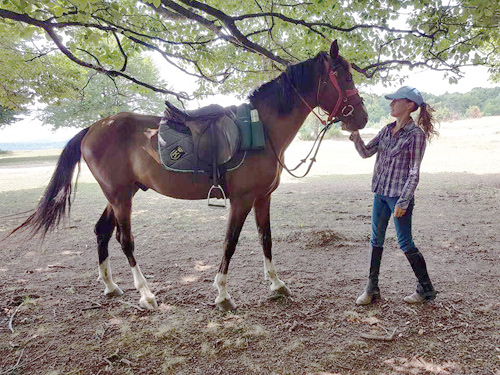
To participate in these rides you should have a reasonable amount of previous riding experience. The minimum requirement is that you are comfortable and secure in the saddle at a walk, trot and canter and are used to riding in open country and over different types of terrain. You should also be reasonably riding fit to take part and we recommend you ride regularly at home before you go to accustom yourself to the hours you will spend in the saddle.
The horses used are sensible and well-mannered to ride so they are well suited to people of intermediate riding ability and above.
Terrain
The area you ride through is very unspoilt and little touched by tourism. Some of the riding is through forest and up and down mountains and there are one or two places where riders might need to dismount to walk over rough ground, depending on conditions - a good chance to stretch your legs! However overall the area is excellent for riding, with plenty of space, wonderful open mountain pastures full of wild flowers in the spring, varied scenery and many wonderful views.
Pace
The full trail ride takes 5 days in the saddle, a shorter 3-day version and day-rides are also possible.
Riding days are generally between 3 and 6 hours in the saddle, with breaks to rest and for lunch.
The rides are at a moderate pace overall, with routes taking you through forest and up and down mountain tracks. There are many opportunities for trots and canters each day as much of the riding is across open grassland. There is a little road work each day (some on tar roads) in the vicinity of the villages you pass through, but roads are generally very quiet with little motorized traffic.
The terrain is varied and you cover about 150km during the course of the week.
Horses
Our current breeds are Shagya-Arabian, Gidran, Lipizzaner and Lipizzaner cross with Hutzuls, the Carpathian mountain ponies. They range from around 14.2hh to 17hh.
They are keen and spirited, adaptable and well suited to the trails, which can get rough and steep in places. They are also of calm temperament and sensible to handle.
As every horse and every rider are different, we match horse-rider couples during a personal meeting before the trek.
Tack
English general-purpose saddles are used and saddle bags are provided. The horses are ridden in snaffle bits.
Please note that there are NO Western Saddles available. However, we have some American style saddles.
Guides & Staff
Rides are led by two guides (one English speaking). When moving accommodations, luggage is transported for you by back-up vehicle.
In 2023, many rides will be guided by the Kálnoky family’s eldest son, 28-year-old certified riding guide count Mátyás Kálnoky, who is eager to show you the marvels of the wonderful region he has grown up in and calls his home.
Non-Riders
Non riders are welcome on this trip. We can arrange activities such as walking, cycling, bird watching and traveling by horse-drawn carriage. Specialist guides can be provided for walking and cycling. Riders and non-riders stay in the same overnight accommodation, and on some days meet for lunch.
 Passport and Visa Requirements:
Passport valid for at least three months beyond length of stay required by all nationals referred to in the chart except:(a) 1. EU nationals holding a valid national ID card. Not required by all natio. more
Miercurea Ciuc area
|
Month
|
Jan
|
Feb
|
Mar
|
Apr
|
May
|
Jun
|
Jul
|
Aug
|
Sep
|
Oct
|
Nov
|
Dec
|
|
Average High Temperature (°F)
|
29
|
34
|
45
|
57
|
67
|
72
|
76
|
76
|
68
|
57
|
43
|
31
|
|
Average Low Temperature (°F)
|
11
|
14
|
23
|
32
|
40
|
46
|
49
|
47
|
40
|
32
|
25
|
16
|
|
Average High Temperature (°C)
|
-1
|
1
|
7
|
14
|
19
|
22
|
24
|
24
|
20
|
14
|
6
|
0
|
|
Average Low Temperature (°C)
|
-12
|
-10
|
-5
|
0
|
5
|
8
|
9
|
8
|
4
|
0
|
-4
|
-9
|
|
Average Precipitation (days of rain)
|
5
|
5
|
5
|
8
|
10
|
11
|
10
|
9
|
6
|
5
|
5
|
6
|
Source: NOAA
Seasons
Most rides are run from set dates between April and October when the weather in the area is best. In spring and early summer the ground is scattered with wild flowers; in August and September the hay fields are harvested and the countryside is busy with horse drawn carts; later in September and in October the forests are full of color with the changing leaves.
Rain is possible at any time so come prepared.
The climate in Transylvania is that of continental Europe. The summers are generally hot; however, the temperature can drop during the night, so pack a warm jumper. In the winter, warm, waterproof clothing and boots is a must, especially for those wishing to leave the fireside and venture forth into the forest!
Walking boots and a rucksack are essential if you intend to explore the surrounding countryside or participate in more adventurous activities. Hikers might want to bring along their own compass (maps can be provided). Be prepared for hot weather by packing a hat, as well as a good sunscreen. Insect repellent is also useful in certain areas. A good waterproof jacket (and possibly trousers) is also useful for unexpected rain showers. Those with an interest in wildlife should bring along their binoculars, as well as nature guides to help with the identification of birds, plants, mushrooms, and animal tracks. A handy torch is advised, as the village is poorly lit during the night (and there is also the occasional electricity cut). Please bring your own hats, gelly pads or sheep skins, gloves, boots, etc.
Since Miklósvár is a Szekler Hungarian village, the local population speak Hungarian, so feel free to include a phrasebook. Your efforts are most appreciated by the locals!
Finally, you should bring along an open mind.
For those with an interest in fishing, we have some rods, but please feel free to bring along your own if you prefer.
| This list is only a guideline for you |
|
|
| Travel documents and Voucher |
| Flight tickets |
| Passport |
| Visa (check with your consulate) |
|
|
| RIDING GEAR |
| Riding pants or Jodhpurs (used if possible!) |
| Riding boots (short) + full or Mini-chaps |
| Riding helmet (recommended for all trips - you need to bring your own helmet) |
| Riding gloves |
| Hat (with chin strap) for sun protection |
| Waterproof jacket and pants |
|
|
| PERSONAL CLOTHING |
| Windproof jacket |
| Comfortable T-Shirts/Shirts |
| Jeans |
| Warm jacket and hat for cool evenings |
| Underwear and socks |
| Pyjamas |
| Bag for dirty clothes |
| Trekking boots/ comfortable shoes |
| Swimsuit |
| |
| ADDITIONAL THINGS TO BRING |
| Personal Toiletries |
| Insect protection |
| Personal medications |
| Sore cream (for an emergency) |
| Sewing kit |
| Flashlight |
| Adapter for electric appliances |
| Camera and enough extra batteries |
| Water bottle |
| Sun glasses with strap |
| Sun tan lotion and lip balm |
Sorry, no video is currently available for this tour.
*Important Notice: The following ratings have been submitted by guests and do not necessarily represent the views of Hidden Trails, its partners or employees.
Every care is taken to ensure accuracy but Hidden Trails is not liable for any errors or omissions.
..view other reports for different trips
 Accommodation
Both the long and short ride option are progressive rides whit nights spent at different locations.
Description
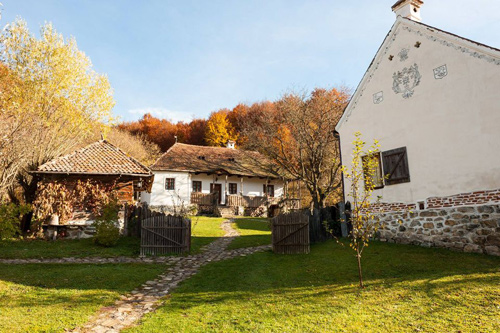
Accommodation on the ride is quite varied and you will experience life as the locals live in the village, but also enjoy the vernacular charms of Count Kalnoky’s and King Charles III’s Private Retreat.
While staying at villager's homes bathrooms might have to be shared.
Long Ride Accommodation Itinerary - subject to changes based on availability
Night 1: Count Kalnoky’s Castle in Miklosvar
Night 2: Accommodation in Malnaș Băi
Night 3: Accommodation in Bățanii Mici
Night 4: Count Kalnoky’s Castle in Miklosvar
Night 5 & 6: King Charles III’s Private Retreat in Valea Zălanului
Short Ride Accommodation Itinerary - subject to changes based on availability
Night 1-3: Count Kalnoky’s Castle in Miklosvar
Night 4-6: King Charles III's Private Retreat in Valea Zălanului
 Count Kalnoky’s Castle in Miklosvar
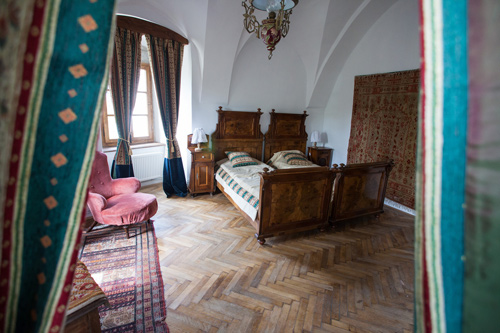
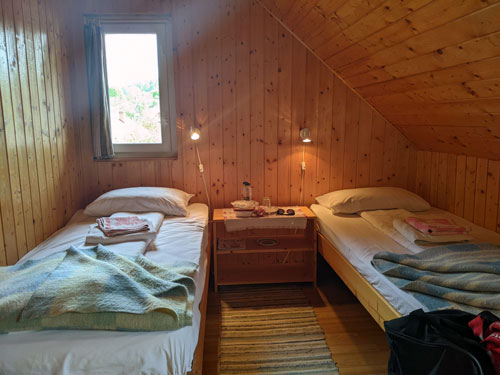
From 2023, you will now be able to sleep at the Count's castle. This beautiful Transylvanian Castle (late Renaissance) has been carefully restored by the family over the years. Each of the 5 bedrooms is furnished with antique Transylvanian furniture and has an ensuite bathroom.
There is free Wi-Fi available at the property.
 King Charles III's Private Retreat in Valea Zălanului
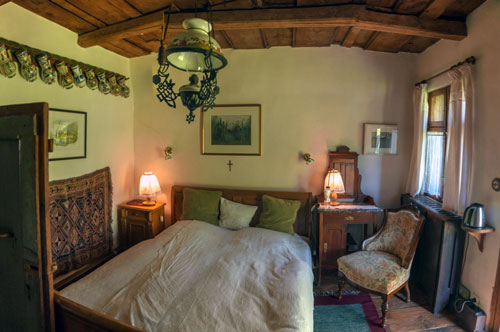
All the rooms have been lovingly restored and furnished with authentic antiques and textiles from Transylvania. The way we restore derelict houses is barely noticeable, rather would it seem that the buildings have aged gently and gradually without recent intervention. In order to create an atmosphere of peace and tranquility, there is no television or radio; instead, you will find plenty of interesting books on the shelves. Each room has an electric kettle, with tea and coffee provided. All bathrooms are private, most are en-suite (although the old Transylvanian village cottages were conceived without bathrooms).
There is a saltwater-filled bath barrel where you can relax in the evening, while enjoying the view over the pastures.
 Other Accommodations
While sleeping in local family houses the rooms are more basic but always clean and comfortable. You might have to share bathrooms during 1 or 2 nights.
Wi-fi internet access
There is wi-fi access in the main house and reception area in Miklosvar. There is also wi-fi access with weaker signal at King Charles III’s Private Retreat. Wi-fi access is not available in all accommodations throughout the itinerary but on most places it will be.
 Meals
Meals
All meals are included.
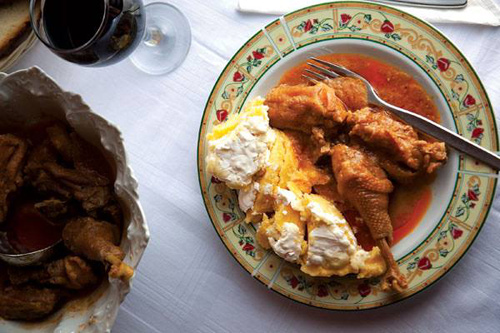
Food in rural Romania is generally organic and full of flavor and you will have the chance to sample some traditional dishes although the choice can be limited by what vegetables, etc are in season. Meals at the guesthouses are taken together as 'table d'hôte'. Food is prepared on site by local staff, mostly from local ingredients as available. Menus are set for every day of the week and no choice 'à la carte' is possible. Food is locally grown and fresh, however usually only one menu is prepared at the guesthouses and there is limited choice.
Breakfast is eaten at your guesthouse or inn and is typically a selection of eggs, cheese or cold meats, bread or toast and butter and jam, with perhaps a choice of tea or coffee to drink with some milk (which is often straight from the cow!).
Lunch is generally a very simple picnic out riding - ham or cheese sandwiches with fruit for dessert.
Dinner, which is eaten at your guesthouse or inn, is often soup (a strong point of Romanian cooking!), then a main course which will sometimes include a regional specialty such as wild boar or venison stew, peppers stuffed with meat or vegetables, different types of sausage, seasoned minced-meat wrapped in cabbage or vine leaves or perhaps spicy meatballs, followed by a cake or fruits.
Dinner includes mineral water, tea or coffee. Alcoholic drinks are not included. Mineral water is carried in saddle bags while riding and for lunch (soft drinks and alcohol are not usually available). Tea (chai) in Romania is not often the black, PG Tips style - but more commonly green or herbal - so you may want to take your own tea bags.
You will also be offered 'Köményes' the local caraway seed brandy quite regularly - be warned that it can be very strong! (It is perfectly acceptable to decline!)
It is possible to purchase wine during all dinners for an extra cost (to be paid at the end of the trip by card or cash).
Dietary Restrictions
Vegetarians can of course be catered for, but please let us know in advance.
This trip
can accommodate special dietary requests.
|
Tack:
|
|
English
|
|
Horses:
|
|
Shagya-Arabian, Lipizzaner, Gidran, and Lipizzaner’s sure-footed crosses with Hutzuls. They range from 14.2hh to 17hh
|
|
Pace:
|
|
Moderate with many opportunities for trots and canters each day - about 3 - 6 hours daily. 5 days of riding for the long program and 3 days od riding for the short program
|
Walk |
Trot |
Canter |
|
|
Level:
|
|
(3
to
5
out of 5) Intermediate
|
|
Age:
|
|
Min
12
|
|
|
Weight:
|
|
Max
198 lbs / 90 kg
|
|
Riders:
|
|
Min
3 riders
|
Max
8 riders
|
|
Riding Experience
To participate in these rides you should have a reasonable amount of previous riding experience. The minimum requirement is that you are comfortable and secure in the saddle at a walk, trot and canter and are used to riding in open country and over different types of terrain. You should also be reasonably riding fit to take part and we recommend you ride regularly at home before you go to accustom yourself to the hours you will spend in the saddle.
The horses used are sensible and well-mannered to ride so they are well suited to people of intermediate riding ability and above.
Terrain
The area you ride through is very unspoilt and little touched by tourism. Some of the riding is through forest and up and down mountains and there are one or two places where riders might need to dismount to walk over rough ground, depending on conditions - a good chance to stretch your legs! However overall the area is excellent for riding, with plenty of space, wonderful open mountain pastures full of wild flowers in the spring, varied scenery and many wonderful views.
Pace
The full trail ride takes 5 days in the saddle, a shorter 3-day version and day-rides are also possible.
Riding days are generally between 3 and 6 hours in the saddle, with breaks to rest and for lunch.
The rides are at a moderate pace overall, with routes taking you through forest and up and down mountain tracks. There are many opportunities for trots and canters each day as much of the riding is across open grassland. There is a little road work each day (some on tar roads) in the vicinity of the villages you pass through, but roads are generally very quiet with little motorized traffic.
The terrain is varied and you cover about 150km during the course of the week.
Horses
Our current breeds are Shagya-Arabian, Gidran, Lipizzaner and Lipizzaner cross with Hutzuls, the Carpathian mountain ponies. They range from around 14.2hh to 17hh.
They are keen and spirited, adaptable and well suited to the trails, which can get rough and steep in places. They are also of calm temperament and sensible to handle.
As every horse and every rider are different, we match horse-rider couples during a personal meeting before the trek.
Tack
English general-purpose saddles are used and saddle bags are provided. The horses are ridden in snaffle bits.
Please note that there are NO Western Saddles available. However, we have some American style saddles.
Guides & Staff
Rides are led by two guides (one English speaking). When moving accommodations, luggage is transported for you by back-up vehicle.
In 2023, many rides will be guided by the Kálnoky family’s eldest son, 28-year-old certified riding guide count Mátyás Kálnoky, who is eager to show you the marvels of the wonderful region he has grown up in and calls his home.
Non-Riders
Non riders are welcome on this trip. We can arrange activities such as walking, cycling, bird watching and traveling by horse-drawn carriage. Specialist guides can be provided for walking and cycling. Riders and non-riders stay in the same overnight accommodation, and on some days meet for lunch.
Passports
Passport valid for at least three months beyond length of stay required by all nationals referred to in the chart except:
(a) 1. EU nationals holding a valid national ID card.
Visas
Not required by all nationals referred to in the chart above for the following lengths of visit:
(a) nationals of EU countries for a three-month period (those intending to stay for a longer period than three months must apply for a registration certificate issued by the Romanian Authority for Aliens);
(b) 2. nationals of Australia, Canada and the USA for touristic stays of up to three months.
Visa Note
Nationals not referred to in the chart above are advised to contact the embassy to check visa requirements
| Passport Required? |
| British |
Yes |
| Australian |
Yes |
| Canadian |
Yes |
| USA |
Yes |
| Other EU |
1 |
| Visa Required? |
| British |
No |
| Australian |
No/2 |
| Canadian |
No/2 |
| USA |
No/2 |
| Other EU |
No |
| Return Ticket Required? |
| British |
No |
| Australian |
Yes |
| Canadian |
Yes |
| USA |
Yes |
| Other EU |
No |
This information is not being updated on a regular basis. Hidden Trails does not
take any responsibility for the accuracy of the above information. Please, consult
the embassy or consulate for updated info.
|

|
|
|
Transylvania Ride
Tour Code:
IT-RORT01
7 days /
6 nights
Dates :
April - October
Trip Rating :
Difficulty :

Riding Level Explained | A | Beginner
 | Beginner A rider who has limited experience, is unable to post the trot and does not canter. | | B | Novice
 | Novice A rider who is capable of mounting and dismounting unassisted, capable of
applying basic aids, comfortable and in control at the walk, moderate length posting
trots, and short canters. | | C | Intermediate
 | Intermediate A rider who has a firm seat, is confident and in control at all paces
(including posting trots, two point canters and gallops), but does not ride regularly. |
| D | Strong Intermediate
 | Strong Intermediate An intermediate rider who is currently riding regularly and is comfortable in the saddle for at least 6 hours per day. | | E | Advanced
 | All of the above, plus an independent seat, soft hands, and capable of handlinga spirited horse in open country. |

|